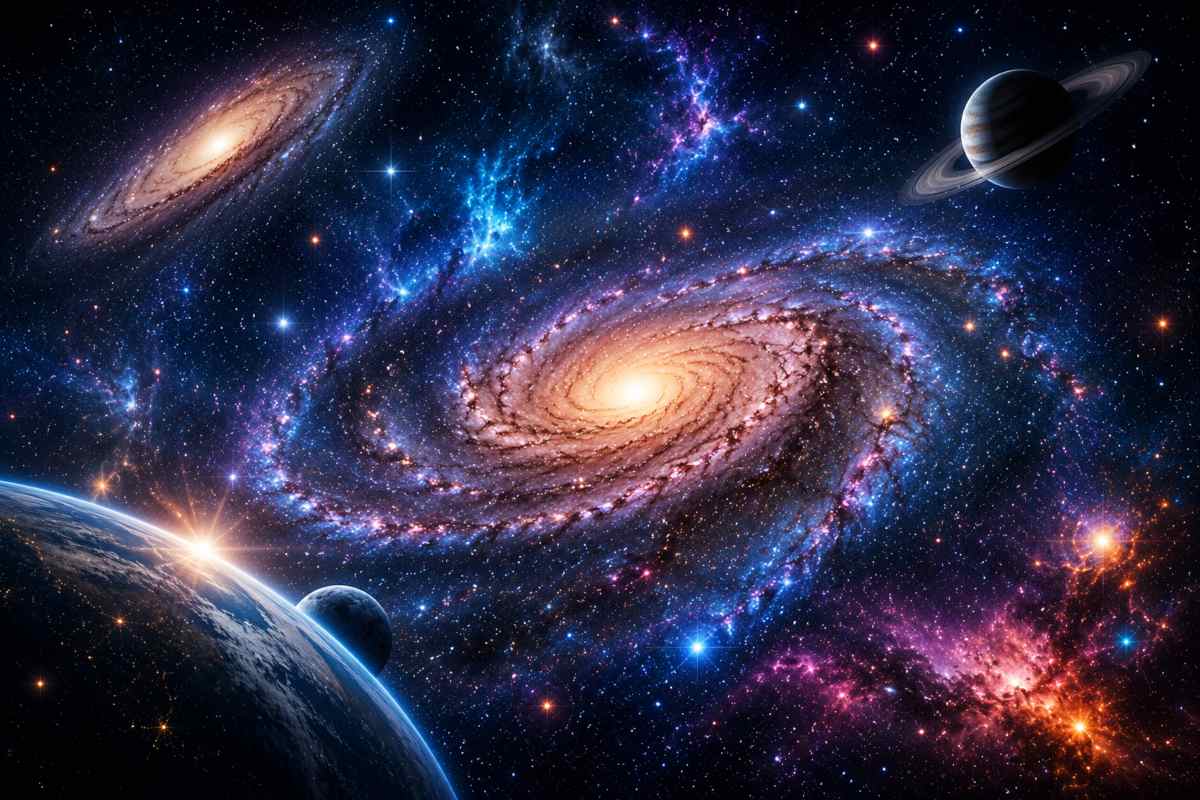
Space facts are quick, verified bits of trivia about the universe, from how many stars exist to what really happens to the human body in zero gravity, and there are more of them than any one person could learn in a lifetime. NASA’s Hubble Space Telescope alone has captured over 1.5 million observations since 1990, and each new image tends to surface facts that rewrite what we thought we knew about space just a decade ago.
This guide pulls together more than 150 of the best space facts out there: the fun ones you’ll want to repeat at dinner, the creepy ones that make deep space feel a little less friendly, the funny ones about life in zero gravity, and the kid-safe ones perfect for a classroom or car ride. You’ll also find a dedicated section on the International Space Station, since “living in space” turns out to be one of the most fact-rich corners of the entire topic.
Whether you’re here for trivia night, a school project, or just five minutes of genuine “wait, really?” you’re in the right place.
Why Space Facts Never Get Old
Space facts stay fascinating because the universe keeps changing the answer key. New telescopes, new missions, and discoveries mean that what counted as a “wild space fact” ten years ago is often just settled science today. The James Webb Space Telescope, for example, has already identified galaxies dating back to within 300 million years of the Big Bang, pushing our understanding of the early universe further than Hubble ever could.
That constant motion is exactly what makes space trivia so replayable. Unlike a lot of general knowledge, space facts don’t get stale; they get upgraded. A fact about Mars you learned in school might now be outdated, incomplete, or flatly disproven, which means there’s always a new layer to uncover.
This guide covers that full range in one place: fun facts for casual curiosity, funny ones about the absurdities of zero gravity, creepy facts that lean into the genuine strangeness of deep space, kid-friendly trivia safe for classrooms and family game night, and a dedicated look at life aboard the International Space Station. No matter which flavor of “space facts” brought you here, it’s covered below.
Amazing and Fun Space Facts
Space facts range from the practical to the almost unbelievable, and the general trivia in this category is the foundation for everything else in this guide the facts most likely to come up in conversation, trivia night, or a quick Google search. Below are three sets covering the classics, the surprising, and the genuinely staggering.
20 Fun Facts About Space You Probably Didn’t Know
- A day on Venus is longer than its year. Venus takes about 243 Earth days to rotate once but only 225 Earth days to orbit the sun.
- The sun makes up 99.8% of the mass in our solar system. Everything else all eight planets, moons, and asteroids accounts for the rest. (For a deeper breakdown of how the planets stack up, see these facts about the solar system.)
- Neutron stars are so dense that a teaspoon would weigh about a billion tons. They form when massive stars collapse after a supernova.
- Space isn’t completely silent, but sound can’t travel the way it does on Earth. Without air molecules to carry vibrations, sound waves have nothing to move through.
- The footprints on the Moon will likely stay there for millions of years. There’s no wind or water on the Moon to erode them.
- One million Earths could fit inside the Sun. Its diameter is about 109 times that of Earth. (Curious how Earth compares to other planets? Check out how many Earths can fit in Jupiter.)
- Saturn would float in water if you could find a bathtub big enough. Its density is lower than water’s, thanks to its mostly gas composition.
- The Milky Way galaxy is on a collision course with Andromeda. Astronomers estimate the two galaxies will merge in about 4.5 billion years.
- There are more stars in the universe than seeds of sand on every beach on Earth. Current estimates put the number in the range of hundreds of sextillions.
- A year on Mercury is just 88 Earth days. It’s the fastest-orbiting planet in the solar system.
- Jupiter has the shortest day of any planet, at just under 10 hours. Despite its massive size, it spins faster than any other planet.
- The International Space Station orbits Earth roughly every 90 minutes. Astronauts aboard see about 16 sunrises and sunsets every day.
- Light from the sun takes about 8 minutes to reach Earth. If the sun suddenly vanished, we wouldn’t know for those 8 minutes.
- There’s a planet made largely of diamond, according to astronomers. 55 Cancri e is believed to have a carbon-rich composition dense enough to form diamond.
- Olympus Mons on Mars is the largest volcano in the solar system. It’s roughly three times the height of Mount Everest.
- Space is completely silent for astronauts outside their suits and spacecraft. Communication relies entirely on radio equipment.
- The coldest known place in the universe is the Boomerang Nebula. Its temperature drops to about -458°F, colder than deep space itself.
- A full NASA spacesuit costs around $12 million. Most of that cost goes into the life-support backpack system.
- Uranus rotates on its side. Its axis is tilted about 98 degrees, likely from a massive collision billions of years ago.
- The observable universe is about 93 billion light-years across. That figure keeps expanding as our instruments improve.
Random Space Facts That Sound Fake (But Aren’t)
Some space facts sound like they belong in science fiction, yet they’re fully documented and peer-reviewed. There’s a planet, HD 189733b, where scientists believe it rains molten glass sideways, driven by winds reaching 5,400 miles per hour. Astronauts who spend extended time in orbit can actually grow up to two inches taller, since the lack of gravity lets their spines decompress, though they return to normal height once back on Earth. And in one of the more unsettling facts about space, the Voyager 1 spacecraft, launched in 1977, is now more than 15 billion miles from Earth and still transmitting data, making it the most distant human-made object in existence.
Mind-Blowing Facts About the Universe
At the largest scale, the universe stops resembling anything intuitive. Scientists estimate there are more than 2 trillion galaxies in the observable universe, each containing hundreds of billions of stars, meaning the total star count is almost incomprehensibly large. The universe is also still expanding, and it’s doing so at an accelerating rate, a discovery that earned the 2011 Nobel Prize in Physics. Perhaps most disorienting of all: because light takes time to travel, looking into deep space is the same as looking backward in time; some of the light reaching telescopes today left its source billions of years before Earth even existed. For more discoveries like this across scientific fields, browse these facts related to science.
Funny Space Facts
Funny space facts tend to come from one place: gravity disappearing and the human body having no idea how to cope. Life in orbit turns ordinary routines eating, sleeping, using the bathroom into genuinely comedic engineering problems, and NASA has documented no shortage of them.
Hilarious Things That Happen in Zero Gravity
Without gravity pulling fluids downward, astronauts’ faces puff up, and their sinuses stay perpetually stuffy, which is why many describe feeling like they have a permanent head cold for the first few days in orbit. Tears don’t fall in zero gravity either; instead of streaming down the face, they form floating balls of liquid that stick to the eyes until wiped away, or they merge into a larger blob.
Snoring becomes a genuine hazard too, since sound-carrying vibrations and loose objects can drift, meaning astronauts have to strap themselves into sleeping bags attached to the wall just to stay in place overnight. Even simple movements go wrong in funny ways. For example, a light push in one direction sends an astronaut drifting the opposite way, so first-timers often spend their initial days on the ISS bouncing gently off walls until they adjust.
Weird Astronaut Bathroom and Food Facts
Space toilets rely on suction instead of gravity, using airflow to pull waste away from the body, and astronauts train for days on a toilet trainer with a camera positioned to check alignment, since missing the opening in zero gravity creates a mess that floats. Food isn’t much simpler: crumbs are treated like small hazards because they can drift into equipment or an astronaut’s eyes, which is why tortillas replaced bread on the ISS menu almost entirely; bread crumbles too easily in microgravity.
Astronauts also season their food with liquid salt and pepper instead of shakers, since loose granules would simply float away rather than land on the plate. Even something as basic as drinking requires a pouch with a straw, because liquid poured into an open cup would form a floating sphere instead of staying put a fact that sounds like a joke but is standard operating reality on every mission.
Creepy and Scary Space Facts
Creepy space facts don’t need embellishment; the raw science of the universe is unsettling enough on its own. From sounds that shouldn’t exist in a vacuum to objects that can erase matter, deep space is full of phenomena that feel more like horror fiction than astronomy.
10 Creepy Facts About the Universe That Will Give You Chills
- There’s a “Great Attractor” pulling our entire galaxy toward it, and scientists still don’t fully understand what it is. It sits hidden behind the dense center of the Milky Way, making direct observation nearly impossible.
- NASA has recorded eerie, otherworldly sounds from space using radio wave data converted to audio. Saturn’s radio emissions, for example, produce haunting tones that sound almost vocal.
- The universe is mostly empty and mostly invisible. Roughly 95% of it is made up of dark matter and dark energy, substances scientists can detect only through their effects, never directly.
- Rogue planets drift through space with no star to orbit. These “orphan” worlds wander in permanent darkness, untethered from any solar system.
- A star can die, and its light can still reach Earth years later. Because light takes time to travel, some stars visible in the night sky may no longer exist.
- There’s a nebula shaped almost exactly like a human skull. Officially named NGC 246, it’s nicknamed the “Skull Nebula” for obvious reasons.
- Astronauts have reported strange, unexplained noises aboard spacecraft with no clear source. Most are later attributed to equipment, but not always immediately.
- A planet exists where the atmosphere rains glass sideways at hurricane force. HD 189733b’s silicate winds make it one of the most hostile environments ever detected.
- The universe could be far larger than the observable portion we can ever study. Some models suggest what we can see is a small fraction of what actually exists.
- Gamma-ray bursts release more energy in seconds than the sun will in its entire lifetime. If one aimed directly at Earth from a nearby galaxy, it could strip the planet’s atmosphere.
Scary Truths About Black Holes and Deep Space
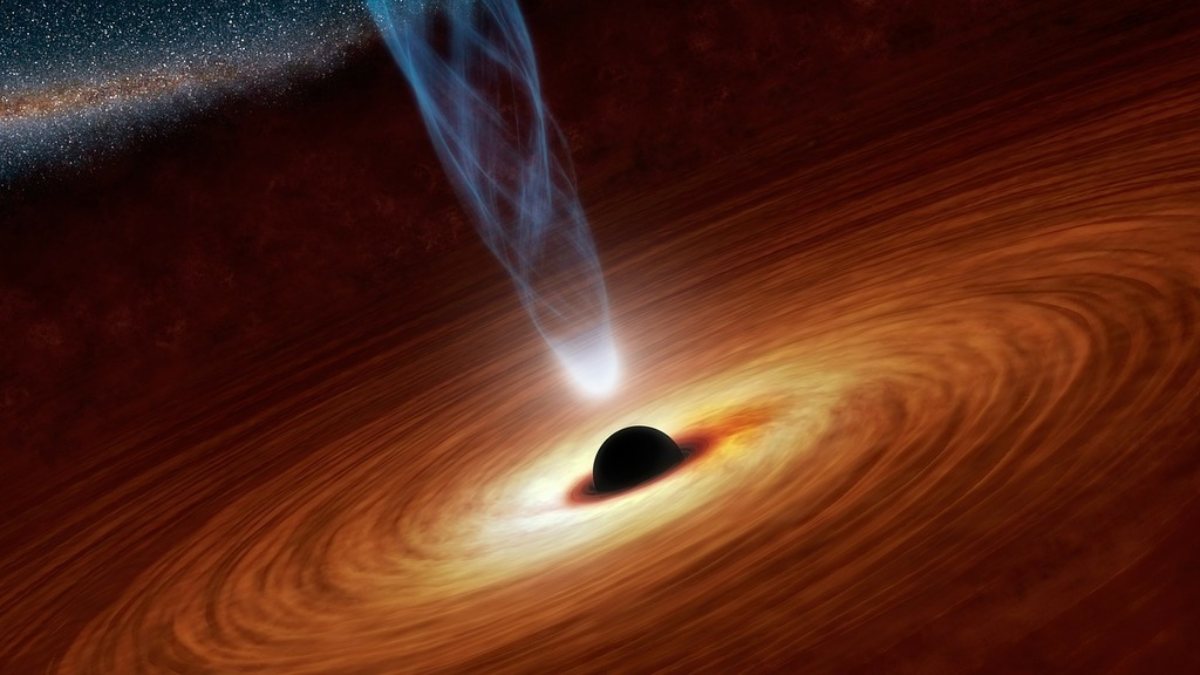
Black holes are less like empty voids and more like matter-destroying machines with gravity so extreme that nothing, not even light, can escape once it crosses the event horizon. Near a black hole, the process of “spaghettification” stretches any object into a thin strand of matter as gravitational force intensifies unevenly across its length. At the center of the Milky Way sits Sagittarius A*, a supermassive black hole roughly 4 million times the mass of the Sun, quietly anchoring our entire galaxy’s rotation. Perhaps the most disturbing part: physicists still can’t fully explain what happens to matter once it passes the event horizon, since the known laws of physics break down inside.
Strange Space Phenomena Scientists Still Can’t Explain
Some of the creepiest space facts aren’t about danger; they’re about genuine scientific uncertainty. Fast radio bursts, powerful and extremely brief flashes of radio energy from deep space, were only discovered in 2007, and astronomers still don’t agree on what causes most of them. The “Wow! signal,” a strong radio burst detected in 1977 that matched patterns astronomers look for in potential extraterrestrial transmissions, has never been detected again despite decades of searching the same region of sky. And dark energy, the force believed to be accelerating the universe’s expansion, makes up an estimated 68% of all energy in the universe. Yet, no experiment has directly detected or explained what it actually is.
Space Facts for Kids
Space facts for kids work best when they’re short, easy to picture, and a little bit amazing the kind of fact a child can repeat to a friend the next day. This section keeps things simple, accurate, and classroom-safe, covering everything from the basics to trivia, perfect for a family game night.
Easy Space Facts to Teach Kids
The Earth is one of eight planets that travel around the sun, and it’s the only one known to have life. You can dig deeper into this with these interesting Earth facts. The moon doesn’t make its own light; it simply reflects light from the sun, which is why it looks different (full, half, or a thin crescent) depending on where it is in its orbit. A year on Earth is 365 days because that’s how long it takes our planet to travel all the way around the sun, but other planets take much longer or much shorter; a year on Jupiter, for example, lasts almost 12 Earth years.
Stars aren’t actually small twinkling dots; they’re enormous balls of hot gas, and our own sun is a star too, just much closer than the ones we see at night. Astronauts float inside the International Space Station because there’s very little gravity to hold them down, which is also why they have to strap themselves in to sleep.
Fun Space Trivia for Classroom or Family Game Night
A few lighthearted questions can turn space facts into an easy trivia game for kids: How many planets are in our solar system? (Eight.) What is the closest planet to the Sun? (Mercury.) What galaxy is Earth located in? (The Milky Way.) How long does it take the moon to orbit the Earth? (About 27 days.) Which planet is known for its rings? (Saturn, though Jupiter, Uranus, and Neptune have fainter rings too.)
These questions work well written on cards for a quiz night, and each one comes with a fact simple enough for a young learner to remember and repeat. If your family enjoys this kind of game night trivia, this geography trivia collection pairs well as a follow-up round.
Space Facts Perfect for School Projects
For reports or presentations, kids often need facts that are both accurate and easy to explain to a class. Mars is nicknamed the “Red Planet” because iron minerals in its soil rust, giving the surface its reddish color a great one-sentence fact for a poster. The sun is so large that about 1.3 million Earths could fit inside it, which is a striking way to help classmates visualize scale. NASA’s Voyager 1 spacecraft, launched in 1977, has traveled farther from Earth than any other human-made object and is still sending back data today, a strong example of how space exploration keeps producing discoveries decades after a mission begins.
International Space Station (ISS) Facts
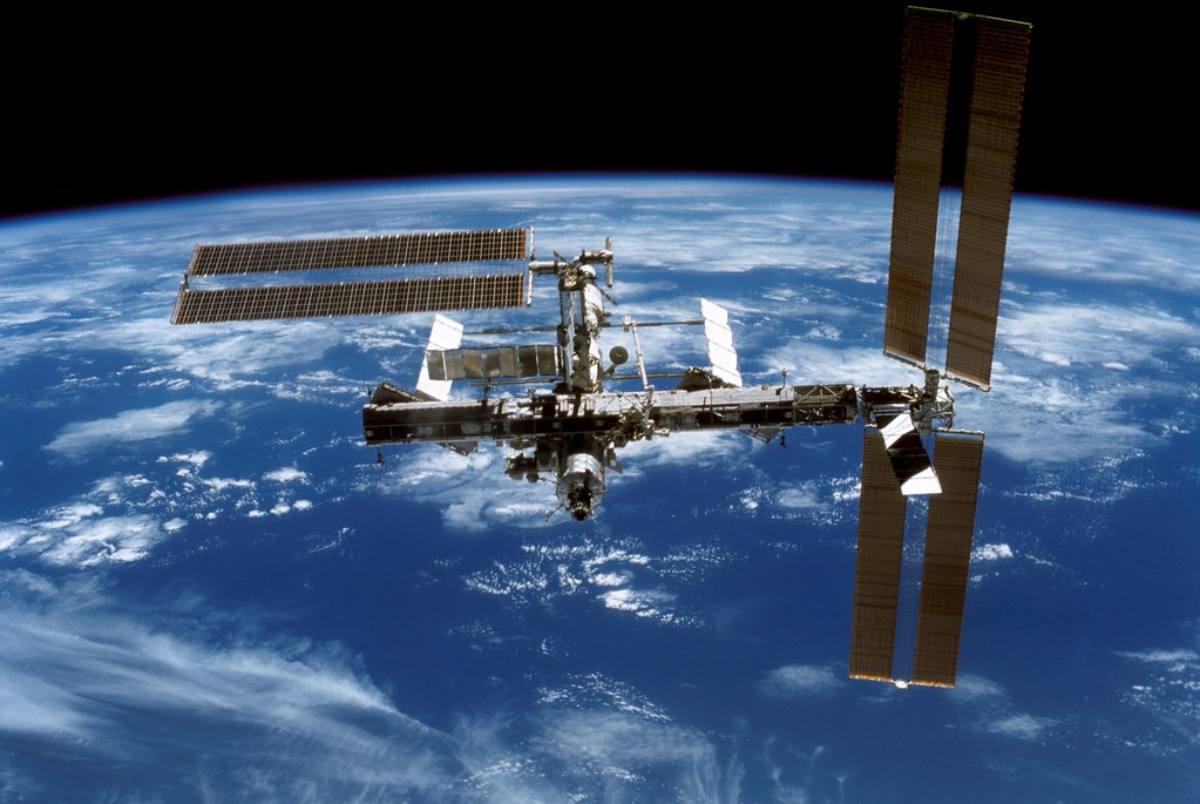
The International Space Station is an orbiting laboratory roughly the size of a football field, circling Earth at about 17,500 miles per hour and completing a full orbit every 90 minutes. It’s been continuously occupied since November 2000, making it one of the longest-running collaborative achievements in human history, involving space agencies from the United States, Russia, Europe, Japan, and Canada.
How Astronauts Live on the ISS
Life aboard the ISS runs on a strict schedule built around science, maintenance, and exercise. Because muscles and bones weaken without gravity working against them, astronauts exercise for about two hours a day using specialized equipment designed to simulate resistance, helping prevent the bone density loss and muscle atrophy that extended time in microgravity would otherwise cause. Sleep happens in small crew cabins about the size of a phone booth, where astronauts zip themselves into sleeping bags attached to the wall so they don’t drift around the cabin overnight. Communication with mission control happens constantly, and most crew members stay in orbit for roughly six months per rotation, though some missions have run considerably longer for research purposes.
Fun Facts About Life Aboard the Space Station
Astronauts on the ISS see 16 sunrises and 16 sunsets every single day, a direct result of orbiting Earth every 90 minutes rather than experiencing one 24-hour day-night cycle. Growing taller is a real, if temporary, side effect of the mission; astronauts can gain up to two inches in height because the spine decompresses without gravity compressing it.
However, they return to their normal height within weeks of landing back on Earth. Water is treated as one of the most valuable resources onboard, and the station’s recycling systems are so effective that even the crew’s sweat and urine are purified and reused as drinking water. Fresh produce is rare, so when resupply missions bring items like fresh fruit, it’s treated as a genuine celebration among the crew.
Space Exploration Milestones Worth Knowing
The ISS itself represents one of many milestones in a broader timeline of space exploration achievements. The first human spaceflight came in 1961, when Soviet cosmonaut Yuri Gagarin orbited Earth aboard Vostok 1. Eight years later, in 1969, NASA’s Apollo 11 mission landed the first humans on the moon, a moment watched by an estimated 650 million people worldwide at the time. More recently, private companies have entered the picture: SpaceX became the first private company to send astronauts to the ISS in 2020, opening a new chapter in commercial spaceflight that continues to expand what’s possible in low Earth orbit and beyond.
Deep Space and Science-Backed Facts
Deep space facts are the ones grounded most firmly in observed data and peer-reviewed research the discoveries that have reshaped astronomy in just the past few years. This section moves past trivia and into the science currently driving how researchers understand the universe, from galaxy formation to the makeup of our own solar system.
Facts About Black Holes, Galaxies and Dark Matter
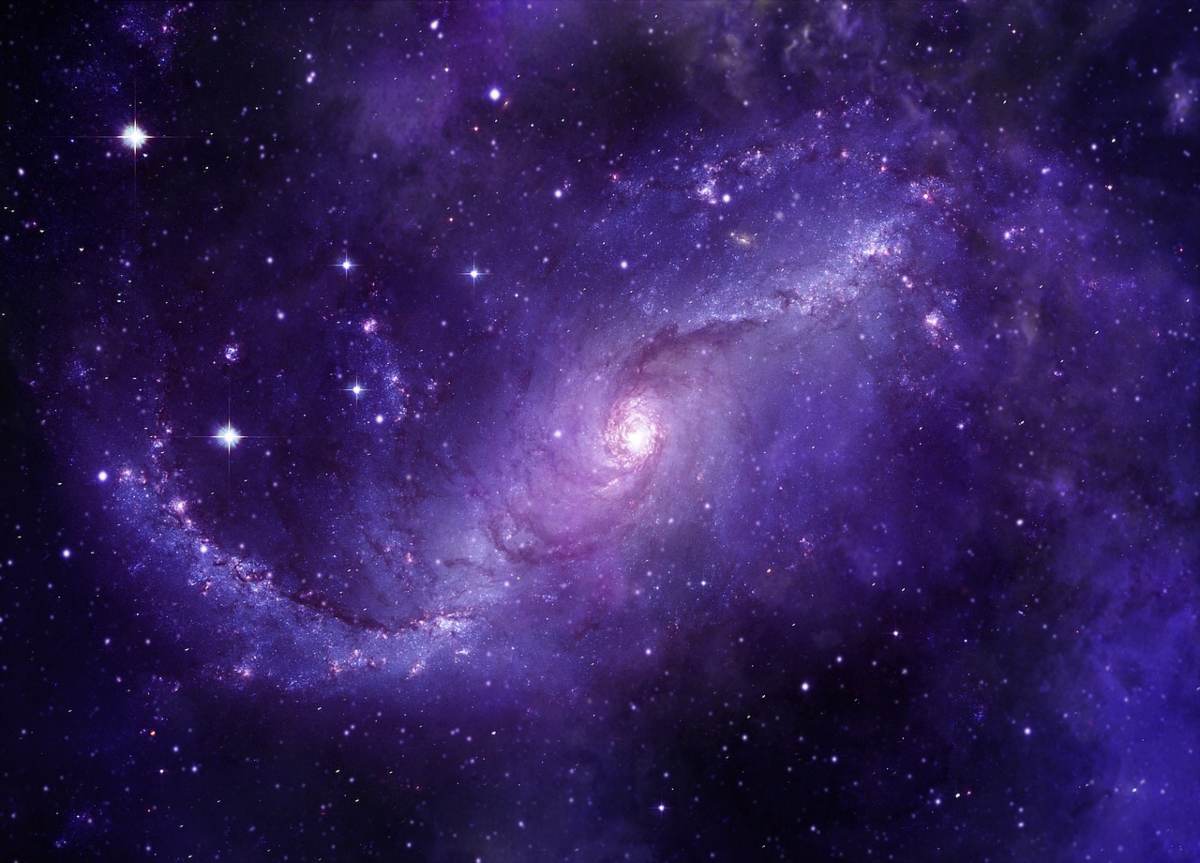
Every large galaxy, including the Milky Way, appears to have a supermassive black hole at its center, and astronomers believe this isn’t a coincidence but a fundamental part of how galaxies form and evolve over billions of years. In 2019, the Event Horizon Telescope project captured the first-ever direct image of a black hole, located in the galaxy M87, confirming decades of theoretical predictions with actual visual evidence.
Galaxies themselves come in distinct shapes: spiral, elliptical, and irregular, and current estimates place the number of galaxies in the observable universe at more than 2 trillion, a figure revised upward significantly after deeper Hubble imaging in 2016. Underlying all of this is dark matter, an invisible substance that doesn’t emit or absorb light but is believed to make up about 27% of the universe’s total mass-energy content, detectable only through its gravitational pull on visible matter.
What NASA Has Discovered Recently
Recent missions have added new specifics to what scientists already suspected about the universe’s structure and history. The James Webb Space Telescope, which became fully operational in 2022, has identified galaxies dating back to within roughly 300 million years of the Big Bang, pushing the observable timeline of galaxy formation earlier than any previous instrument could confirm.
NASA’s Perseverance rover, which landed on Mars in 2021, has collected rock samples containing organic molecules not direct evidence of life, but exactly the kind of chemical building blocks scientists look for when investigating a planet’s potential to have once supported life. Meanwhile, NASA’s DART mission successfully altered the orbit of an asteroid moonlet in 2022, marking the first time humanity demonstrated the ability to change the trajectory of a celestial object a foundational test for future planetary defense.
Facts About Planets and Our Solar System
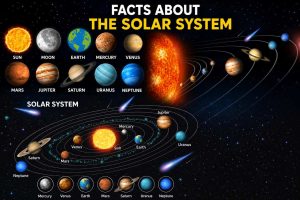
Our solar system contains eight recognized planets, orbiting a sun that accounts for roughly 99.8% of all the mass in the system, a topic covered in more depth in these facts about the solar system. Jupiter, the largest planet, has a mass more than twice that of every other planet in the solar system combined, and its Great Red Spot is a storm that has been raging continuously for at least 350 years. To put Jupiter’s scale in perspective, take a look at how many Earths can fit in Jupiter; the number is larger than most people guess.
Mars, meanwhile, is home to Olympus Mons, the tallest known volcano in the solar system at nearly three times the height of Mount Everest. Beyond the planets, the solar system also includes the asteroid belt between Mars and Jupiter, along with the more distant Kuiper Belt, home to dwarf planets like Pluto, reclassified from full planet status in 2006 after astronomers redefined what qualifies as a planet.
Conclusion
Space facts endure because the universe is still actively being discovered; every telescope launch, rover landing, and data release adds new material to what’s already one of the richest topics for genuine curiosity. From the funny reality of eating tortillas instead of bread in zero gravity to the unsettling truth that 95% of the universe is made up of dark matter and dark energy we still can’t directly observe, this collection covers the full range of what makes space endlessly interesting.
Whether it was the kid-friendly trivia perfect for a classroom project, the creepy facts about black holes and unexplained radio signals, or the day-to-day details of life aboard the International Space Station, hopefully at least a few of these facts are now stuck in your head, ready to bring up at the next dinner conversation or trivia night.
Frequently Asked Questions(FAQs)
What is the weirdest fact about space?
One of the weirdest facts about space is that there’s a planet, HD 189733b, where astronomers believe it rains molten glass sideways, driven by winds reaching roughly 5,400 miles per hour.
What is a creepy fact about space?
A creepy fact about space is that roughly 95% of the universe is made up of dark matter and dark energy, substances scientists can’t directly see, touch, or measure, only infer through their gravitational effects on visible matter.
What are 5 facts about space for kids?
Five easy space facts for kids: Earth is one of eight planets orbiting the Sun. The moon doesn’t glow on its own; it reflects sunlight. A year on Jupiter lasts almost 12 Earth years because it takes that long to orbit the sun.
How many facts about space are there?
There’s no fixed number; space facts are effectively limitless, since discoveries from missions like the James Webb Space Telescope and NASA’s Mars rovers continually add fresh, verified information.
What a scary fact about the universe?
A scary fact about the universe is that gamma-ray bursts, the most energetic explosions known to science, release more energy in a matter of seconds than the sun will produce in its entire lifetime.

)
&description=&image=https://litefacts.com/jihujem/2026/07/Space-Facts-1024x683.jpg)