
The ocean conceals more than 70% of Earth’s surface, yet scientists have explored less than 5% of it, making it the least understood environment on the planet. Buried beneath that darkness are some genuinely strange ocean facts: creatures that glow in total blackness, fish with transparent heads, and depths so extreme they crush solid steel.
This collection of ocean facts moves beyond the familiar trivia about whale sizes and coral reefs to focus on what makes the deep sea feel almost alien. From bioluminescent predators that lure prey with living light to graveyards of shipwrecks preserved by cold, oxygen-starved water, these are the truths that reveal just how little of our own planet we’ve actually seen. Some are fascinating, some are unsettling, and a few are the stuff of genuine nightmares, but all of them prove that Earth’s oceans remain one of its last great unexplored frontiers.
Why the Ocean Still Surprises Scientists
Scientists have mapped and explored less than 5% of the world’s oceans in detail, meaning the vast majority of Earth’s largest habitat remains a genuine mystery. That gap between how much ocean there is and how little we’ve actually seen is exactly why new ocean facts keep emerging every year, from bizarre deep-sea creatures to entire ecosystems discovered by accident.
The ocean isn’t just big; it’s actively hostile to exploration. Crushing pressure, permanent darkness below 1,000 meters, and near-freezing temperatures mean that even modern submersibles can only reach a fraction of the seafloor. Every expedition that does make it down tends to return with something unexpected: a new species, an unexplained sound, or a geological feature that doesn’t match existing geography trivia. That combination of scale and inaccessibility is what keeps the ocean surprising even the researchers who study it professionally.
How Much of the Ocean Have We Actually Explored?
Despite covering 71% of the planet, an estimated 80–95% of the ocean remains unmapped, unobserved, and unexplored, according to NOAA. Humans have better maps of the surface of Mars and the Moon than we do of our own seafloor, largely because light cannot penetrate past roughly 1,000 meters and water pressure at extreme depths can exceed 1,000 times that at sea level. Most of what scientists know about the deep ocean comes from sonar mapping and a small number of manned or robotic dives, not direct human observation.
Quick Ocean Stats at a Glance
The ocean holds roughly 1.35 billion cubic kilometers of water, accounts for about 97% of all water on Earth, and reaches its deepest known point at the Challenger Deep in the Mariana Trench, nearly 11,000 meters down. It also produces more than half of the planet’s oxygen, most of it from marine phytoplankton rather than rainforests, and hosts an estimated 91% of ocean species that have yet to be formally identified or described.
Amazing And Fascinating General Ocean Facts
The ocean isn’t just the planet’s largest habitat; it’s home to some of the strangest phenomena in the natural world, from mountain ranges longer than any on land to sound waves that can travel for thousands of miles underwater. These general ocean facts cover the scale, the trivia, and the sheer weirdness that makes the sea one of the most enchanting places on Earth.
Mind-Blowing Size and Scale Facts
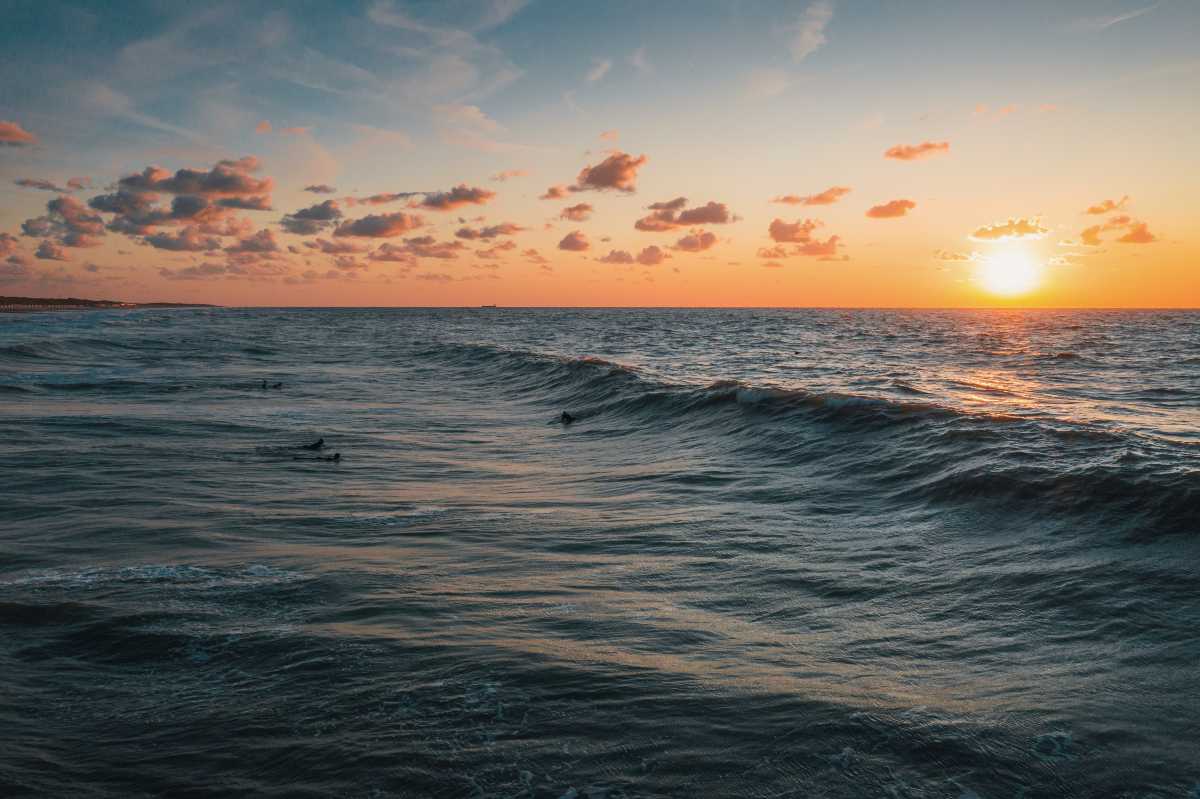
The ocean’s scale is difficult to grasp in ordinary terms: it holds enough water to fill roughly 352 quintillion gallons, and its longest mountain range, the Mid-Ocean Ridge, stretches more than 65,000 kilometers, making it far longer than any of the tallest mountains in the world laid end to end.
If Mount Everest were dropped into the Mariana Trench, its peak would still sit more than 2,000 meters below the surface, a scale difference that puts even the question of how long it takes to climb Mount Everest into perspective, since the ocean’s deepest point dwarfs the planet’s highest one. The ocean also contains 99% of Earth’s living space by volume, since life exists at every depth, from the sunlit surface to the crushing darkness of the abyssal zone.
Random Fun Ocean Facts You’ve Never Heard
Some ocean trivia sounds almost invented: a single blue whale’s heart can weigh as much as a small car, and its heartbeat can be heard from over a mile away underwater. Sound itself travels about four times faster in seawater than in air, which is why whale calls can carry across entire ocean basins. There’s also a real phenomenon called “marine snow”, a constant drift of organic debris, dead organisms, and waste falling from upper waters to the seafloor, forming the primary food source for many deep-sea creatures that never see sunlight.
Weird and Strange Ocean Phenomena
Certain ocean phenomena defy easy explanation, like “brinicles” icicle-like tubes of extremely cold, salty water that form under polar sea ice and freeze anything they touch on the seafloor within minutes. Underwater lakes and rivers also exist, formed when dense brine pools sit on the ocean floor, with visible shorelines and waves, distinct from the surrounding seawater. Bioluminescence adds another layer of strangeness: an estimated 76% of deep-sea animals can produce their own light, using it to hunt, hide, or communicate in a world where sunlight never reaches.
Facts by Ocean Region
Each of the world’s oceans has its own defining characteristics, from the Pacific’s record-breaking depth to the Arctic’s rapidly disappearing ice. Understanding these regional differences reveals why marine life, climate patterns, and even shipping routes vary so dramatically depending on which body of water you’re looking at.
Atlantic Ocean Facts
The Atlantic Ocean is the second-largest ocean on Earth, separating the Americas from Europe and Africa, and it’s also the saltiest of the major oceans due to high evaporation rates and little freshwater input in certain regions. It formed roughly 140 million years ago as the supercontinent Pangaea broke apart, and it continues to widen by about 2.5 centimeters every year as tectonic plates drift. The Atlantic is also home to the Sargasso Sea, the only sea on Earth with no land boundaries, defined instead by ocean currents that circle it and along its western edge, its coastline shapes protected coastal ecosystems like those found across the East Coast National Parks.
Indian Ocean Facts
The Indian Ocean is the most benevolent of the world’s oceans, with surface temperatures that rarely drop as low as those in the Atlantic or Pacific, making it a major driver of monsoon weather patterns across South Asia and East Africa. It’s also the youngest of the major oceans geologically, and it holds the record for one of the most active monsoon systems on the planet, influencing rainfall for over a billion people. Roughly 40% of the world’s offshore oil production comes from the Indian Ocean, making it economically vital and climatically significant.
Pacific Ocean Facts
The Pacific Ocean is the biggest and deepest ocean on Earth, covering more surface area than all of the planet’s landmasses combined and containing the Mariana Trench, the deepest understood point on the planet at nearly 11,000 meters. It also contains the “Ring of Fire,” a horseshoe-shaped zone responsible for roughly 90% of the world’s earthquakes and most of its active volcanoes. The Pacific alone holds more water than all other oceans combined, accounting for about 50% of the planet’s total ocean volume.
Antarctic And Southern Ocean Facts
The Southern Ocean, officially recognized in 2000, encircles Antarctica and is defined not by landmasses but by the Antarctic Circumpolar Current, the strongest ocean current on Earth. This current moves more water than any other in the world, an estimated 130 million cubic meters per second, and it plays a critical role in regulating global climate by isolating Antarctica’s cold waters from warmer currents further north. The Southern Ocean is also the coldest, with surface temperatures that can drop below the freezing point of freshwater because of its high salinity.
Arctic Ocean Facts
The Arctic Ocean is the northernmost of the world’s oceans, and it’s the only one that freezes over extensively each winter, forming sea ice that can cover most of its surface. Arctic sea ice has declined by roughly 13% per decade since satellite records began in 1979, making it one of the clearest indicators of global climate change. Despite its small size, the Arctic Ocean is rich in biodiversity adapted to extreme cold, including species such as narwhals and polar cod that occur almost nowhere else.
Caribbean Sea Facts
The Caribbean Sea is technically a marginal sea of the Atlantic Ocean. Still, it’s distinct enough in ecology and geology to warrant its own facts. It contains the second-longest barrier reef system in the world, the Mesoamerican Reef, stretching over 1,000 kilometers along Central America’s coast. The Caribbean also sits atop its own tectonic plate, and it’s home to the Cayman Trough, the deepest point in the Atlantic basin at around 7,600 meters.
Warm Caribbean waters also fuel a significant share of Atlantic hurricanes, as heat energy from the sea surface feeds storm systems moving toward North America, a stark contrast to the arid conditions found across the largest desert in the world, a reminder of how differently water and heat interact across the planet.
Deep Ocean And Trench Facts
The deep ocean, generally defined as anything below 1,000 meters, makes up more than 90% of the ocean’s total volume. Yet, it remains almost entirely unexplored due to extreme pressure and total darkness. The Mariana Trench, the deepest point in any ocean, plunges to nearly 11,000 meters, meaning the water pressure there is more than 1,000 times greater than at sea level. For scale, that’s a depth roughly eight times the height of the Burj Khalifa, the world’s tallest building, stacked vertically. Life still exists at these depths, including creatures adapted to survive without sunlight, relying instead on chemical energy from hydrothermal vents or organic material drifting down from above.
Creepy And Terrifying Ocean Facts
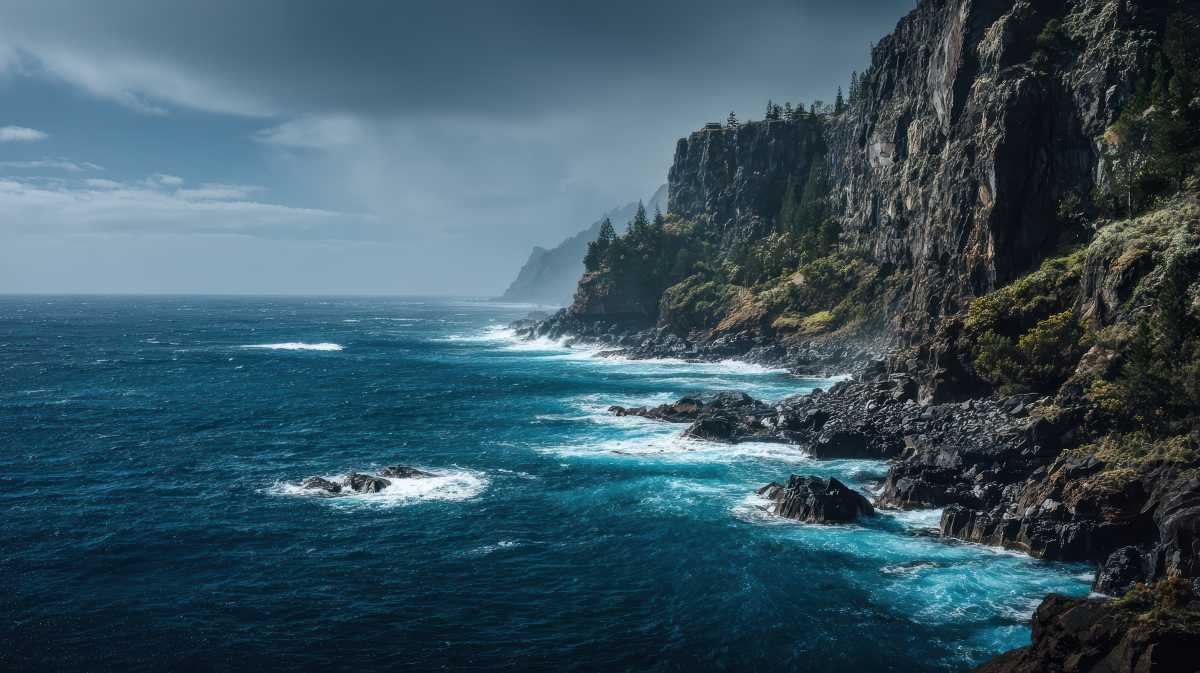
The ocean’s deepest zones hide some of the most unsettling creatures and phenomena on Earth, from fish that hunt with living lures to sounds recorded from thousands of miles away that scientists still can’t fully explain. These creepy ocean facts reveal why the deep sea remains one of the most genuinely frightening environments humans have ever tried to study.
Scariest Creatures in the Deep
The anglerfish is one of the deep ocean’s most disturbing predators, using a bioluminescent lure dangling from its head to attract prey directly into its jaws in total darkness. In some species, the much smaller male permanently fuses to the female’s body, losing his own organs and existing solely to provide sperm. The goblin shark, a living fossil largely unchanged for over 100 million years, has a protruding snout and jaws that snap forward to catch prey, a feature so unusual it’s rarely captured on camera. Perhaps most unsettling is the giant isopod, a deep-sea crustacean that can grow over 30 centimeters long and survive years without eating by drastically slowing its metabolism in the cold, food-scarce depths.
Unexplained Ocean Mysteries
In 1997, NOAA hydrophones recorded an extremely powerful, ultra-low-frequency sound dubbed “the Bloop,” loud enough to be detected by sensors more than 5,000 kilometers apart across the Pacific Ocean. While later attributed to icequakes from breaking Antarctic ice, the sound’s origin remained genuinely unknown for over a decade, fueling speculation about undiscovered deep-sea life. Similarly mysterious are the “upsweep” and “Julia” sounds, unexplained acoustic signals detected by underwater microphones that still don’t have fully confirmed sources. These recordings highlight just how much ocean activity happens beyond the reach of direct observation.
The Ocean’s Most Dangerous Zones
The “midnight zone,” beginning around 1,000 meters down, receives no sunlight at all and is home to some of the most extreme pressure conditions on the planet. A single square inch at these depths experiences more than 1,000 pounds of force, enough to instantly crush an unprotected human body. The Bermuda Triangle, though scientifically explained by heavy shipping traffic, sudden weather changes, and navigational hazards, remains one of the ocean’s most enduring danger zones in the public imagination. Hydrothermal vent fields, meanwhile, pose a different kind of threat: water temperatures near these vents can exceed 400°C, yet the surrounding water remains near freezing, creating one of the most extreme temperature gradients in nature.
Ocean Life And Creature Facts
The ocean supports an extraordinary range of life, from stationary animals that behave like plants to mammals that dive deeper than any submarine built for casual exploration. These ocean creature facts cover some of the sea’s most overlooked residents as well as its most iconic ones.
Ocean Anemone Facts
Sea anemones are animals, not plants, despite their flower-like appearance and rooted lifestyle on rocks and reefs. They capture prey using stinging cells called nematocysts on their tentacles, paralyzing small fish and invertebrates before drawing them into a central mouth. One of the most well-known anemone relationships is with clownfish, which develop immunity to the anemone’s sting and live protected among its tentacles in exchange for cleaning it and driving off potential predators. Some anemone species can also live for decades, even over a century, in captivity, making them among the longest-lived animals in the ocean relative to their simple body structure.
Ocean Sponge Facts
Sponges are among the oldest multicellular animals on Earth, with fossil evidence suggesting they’ve existed largely unchanged for more than 500 million years. They have no brain, no muscles, and no organs, instead filtering water through a porous body structure to extract oxygen and food particles. A single sponge can filter thousands of liters of water in a single day. Despite their simplicity, sponges play a critical ecological role, providing habitat and shelter for countless smaller marine species while also helping keep ocean water clean through constant filtration.
Ocean Eel Facts
Eels undergo one of the most unusual life cycles in the ocean, beginning life as transparent, leaf-shaped larvae before transforming into the elongated adults most people recognize. The European eel makes an especially remarkable journey, traveling thousands of kilometers from freshwater rivers across the Atlantic to breed in the Sargasso Sea, a migration scientists only partially understand even today, not unlike the way ancient trade and migration routes shaped fascinating aspects of Greece and its Mediterranean neighbors centuries ago. Electric eels, meanwhile, aren’t true eels at all but a type of knifefish, capable of generating electric shocks up to 600 volts, enough to stun prey or deter predators, and among the strongest bioelectric discharges in the animal kingdom.
Ocean Mammal Facts (Whales, Dolphins, Seals)
Marine mammals include some of the ocean’s most intelligent and physically extreme animals, led by the blue whale, the biggest animal ever known to have existed, reaching lengths of up to 30 meters and weighing up to 200 tons. Dolphins demonstrate remarkable cognitive abilities, using signature whistles that function similarly to names, allowing individuals to identify and call out to specific pod members. Elephant seals hold one of the most extreme diving records among mammals, capable of descending more than 2,000 meters and holding their breath for up to two hours, far surpassing the diving capacity of any human without mechanical assistance.
Conclusion
The ocean remains the most under-explored environment on Earth, with more than 80% of it still unmapped despite covering over 70% of the planet’s surface. That gap between scale and knowledge is exactly what makes ocean facts endlessly compelling: every trench dived, every hydrophone recording, and every deep-sea expedition tends to surface something scientists didn’t expect, whether it’s a bioluminescent predator, an unexplained sound, or an ecosystem thriving without sunlight.
What ties all of these facts together, from the eerie to the record-breaking, is a simple reality: humans have better maps of the Moon than of our own seafloor. As underwater exploration technology improves, the percentage of the “unknown ocean” will continue to shrink. Still, for now, the deep sea remains one of the last true frontiers on Earth, closer to us than outer space yet, in many ways, just as mysterious.
Frequently Asked Questions (FAQs)
What Is One Interesting Fact About the Ocean?
One of the most interesting ocean facts is that it produces more than half of the world’s oxygen, and most of that comes from marine phytoplankton, not rainforests, as many people assume.
What Percentage of the Ocean Is Unexplored?
An estimated 80–95% of the ocean remains unmapped and unexplored, according to NOAA, despite covering more than 70% of the planet’s surface. This is largely because sunlight cannot penetrate past roughly 1,000 meters, and the crushing pressure at extreme depths makes direct human exploration extremely difficult.
Which Ocean Is the Most Dangerous?
The Southern Ocean is widely considered the most dangerous due to its extreme cold, powerful currents, and unpredictable storms driven by the Antarctic Circumpolar Current, the strongest ocean current on Earth.
What Are Some Creepy Facts About the Ocean?
Among the creepiest ocean facts is the anglerfish’s hunting method, using a glowing lure to draw prey directly into its jaws in total darkness, with some male anglerfish permanently fusing to females and losing their own organs in the process.