Water covers roughly 71% of Earth’s surface. Yet, less than 1% of it is actually accessible fresh water that humans can drink, farm with, or rely on daily, a gap that explains why water remains one of the most studied, misunderstood, and quietly extraordinary substances on the planet. It’s the only natural substance found on Earth in all three physical states, solid, liquid, and gas, within the planet’s normal temperature range, which alone sets it apart from almost everything else we interact with.
Despite being so common that most people never think twice about it, water behaves in ways that defy expectation. It expands rather than contracts when it freezes. It can climb upward against gravity through plant stems and paper towels alike. It has powered civilizations, shaped continents through slow erosion, and makes up around 60% of the average adult human body.
This guide pulls together the most fun, weird, scientific, and genuinely surprising facts about water, covering everything from the water cycle and hydropower to conservation, purification, and what water actually does inside your body. Whether you’re looking for quick trivia to share or a deeper understanding of how water works, the facts below cover it all.
What Makes Water So Unique
Water is the only common substance on Earth that exists naturally as a solid, liquid, and gas within the same everyday temperature range. This property sets it apart from virtually every other molecule on the planet. Most substances become denser as they cool, but water does the opposite once it nears freezing: it expands, which is why ice floats instead of sinking. This single quirk is why lakes freeze from the top down rather than the bottom up, allowing fish and other aquatic life to survive winter beneath the ice. This phenomenon shows up in some striking ways at deep, cold freshwater lakes, such as the scary facts about Lake Tahoe that reveal what lies beneath its icy surface.
Water’s molecular structure also gives it unusually strong “stickiness,” known as cohesion and adhesion. These forces let water climb through narrow spaces against gravity, a process called capillary action, which is how trees pull moisture from their roots to their leaves, which can be over 300 feet in the air, as seen in California’s coastal redwoods. No other liquid found in nature combines this level of surface tension, temperature range, and molecular pull, which is part of why scientists consider water essential not just to life on Earth, but to the very possibility of life existing at all.
How Much Do You Really Know About Water?
Most people underestimate how limited Earth’s usable water actually is, since oceans make up about 97% of the planet’s total water supply, leaving less than 3% as fresh water, and only a sliver of that easily accessible. For a deeper look at what lies within that vast 97%, these ocean facts explore just how much of Earth’s water and its mysteries remain in the sea. Of that small fresh-water share, most is locked away in glaciers, ice caps, and deep underground aquifers, meaning the water available in lakes, rivers, and reservoirs for daily human use accounts for a tiny fraction of what exists on Earth.
This scarcity is easy to overlook because water feels endlessly abundant in daily life; it flows from a tap, falls as rain, and fills oceans stretching to every horizon. But the reality is that fresh, drinkable water is a finite and unevenly distributed resource, which is exactly why understanding basic water facts matters beyond trivia. The sections ahead break down the science, history, and everyday realities of water, from how it moves through the environment to how it functions inside the human body. Hence, the next fact you learn actually changes how you see something you use every single day.
Fun And Interesting Facts About Water
Water has dozens of surprising properties that make it far more than just a liquid you drink, from its ability to store heat to its strange behavior at extreme temperatures. These fun and interesting facts about water reveal just how unusual this everyday substance really is.
Cool and Curious Water Facts
Water has one of the highest heat capacities of any common substance, meaning it can absorb and store large amounts of heat without a dramatic change in temperature. This property helps regulate the Earth’s climate and keeps coastal regions milder than inland areas at the same latitude. This same trait is why oceans warm up and cool down far more slowly than land, acting as a massive thermal buffer for the entire planet.
Another curious fact: pure water is technically tasteless and odorless, yet most people can distinguish subtle differences between tap, bottled, and mineral water. That’s because what people are actually tasting isn’t the water itself but the trace minerals like calcium, magnesium, or sodium dissolved within it, which vary depending on the source. This same principle of subtle mineral and chemical differences is part of what trained palates rely on when evaluating other beverages, as explored in this guide to becoming a wine connoisseur.
Weird and Unusual Water Facts
Hot water can freeze more quickly than cold water under certain conditions, a genuinely counterintuitive phenomenon known as the Mpemba effect. Scientists have repeatedly observed and documented this, though the exact reason it happens is still debated, with factors such as evaporation rates, dissolved gases, and convection currents.
Water can also be “supercooled” below its normal freezing point of 32°F (0°C) without turning to ice, as long as it’s kept undisturbed and free of impurities that would normally trigger crystallization. The moment it’s disturbed, even by a slight vibration, supercooled water can freeze almost instantly, turning liquid to solid ice in a matter of seconds right before your eyes. Freezing behavior like this also plays a surprising role in food and drink production, as seen in the unique process behind ice wine, where grapes are deliberately left to freeze on the vine.
Funny Water Facts to Share
The human body is roughly 60% water, which technically means most people are more “water” than anything else, a fact that makes “I’m mostly made of water” less of a joke and more of a biological reality. Even bananas get in on the irony: they’re about 75% water, making them juicier by percentage than most people realize when they bite into one expecting something dry and starchy.
And in one of water’s quirkier claims to fame, a single cloud can weigh over a million pounds despite floating effortlessly overhead, proof that water’s relationship with gravity, density, and air pressure is stranger than it looks from the ground.
Scientific Facts About Water
Water’s chemistry is deceptively simple on paper: two hydrogen atoms and one oxygen atom, yet that basic structure produces one of the most complex and essential substances in nature. These scientific facts about water explain why it behaves so differently from nearly every other liquid on Earth.
The Water Molecule Explained
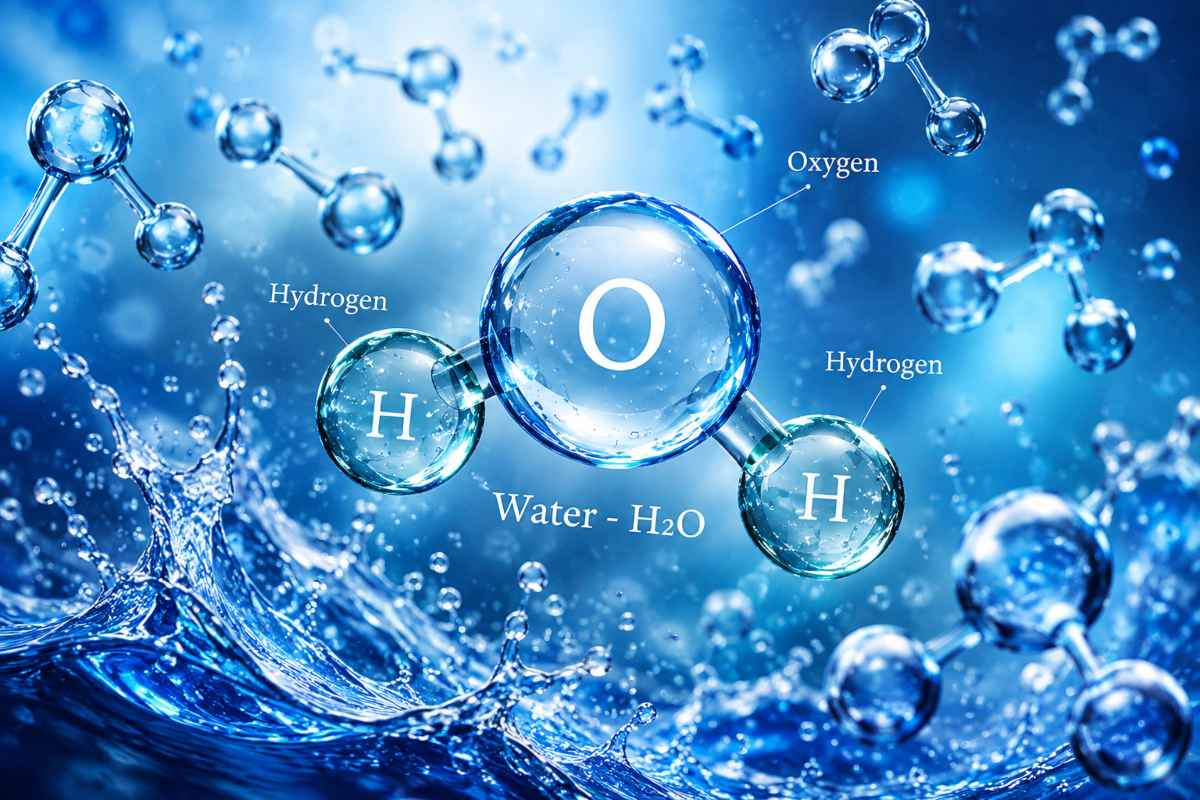
Water’s chemical formula, H₂O, describes a molecule in which two hydrogen atoms bond to a single oxygen atom at an angle of about 104.5 degrees, rather than in a straight line. This bent shape gives water molecules a slightly negative charge near the oxygen atom and a slightly positive charge near the hydrogen atoms, making water what chemists call “polar.”
That polarity is the reason water molecules are drawn to one another and to other polar substances, forming temporary hydrogen bonds that constantly break and reform. This bonding behavior underlies nearly every unusual property water has, from its high surface tension to its unusually high boiling point compared to similarly sized molecules.
Properties That Make Water Extraordinary
Water is often called the “universal solvent” because its polar structure allows it to dissolve more substances than any other liquid, from table salt to gases in the atmosphere. This ability is critical to biology, since it’s how nutrients, minerals, and oxygen move through blood, soil, and cells in nearly every living organism on Earth.
Water also has an unusually high boiling point of 212°F (100°C) at sea level, despite being made of such small, light molecules, a temperature far higher than similar-sized compounds would suggest. This is entirely due to hydrogen bonding, which requires extra energy to break before water molecules can turn to vapor, making water more stable across a wider temperature range than most liquids.
How Water Causes Erosion
Water is one of the most powerful natural forces shaping the Earth’s surface, gradually wearing down rock, soil, and mountains through a process called erosion. Even something as slow-moving as the Colorado River has carved the Grand Canyon over roughly 5 to 6 million years, cutting through solid rock layer by layer to create a canyon over a mile deep in places.
Erosion happens through several mechanisms: moving water physically dislodging particles, freeze-thaw cycles cracking rock as water expands in crevices, and chemical weathering slowly dissolving minerals over time. Together, these processes mean that nearly every canyon, valley, and river delta on Earth owes its shape, at least in part, to water’s relentless, patient reshaping of the landscape.
The Water Cycle: Amazing Facts
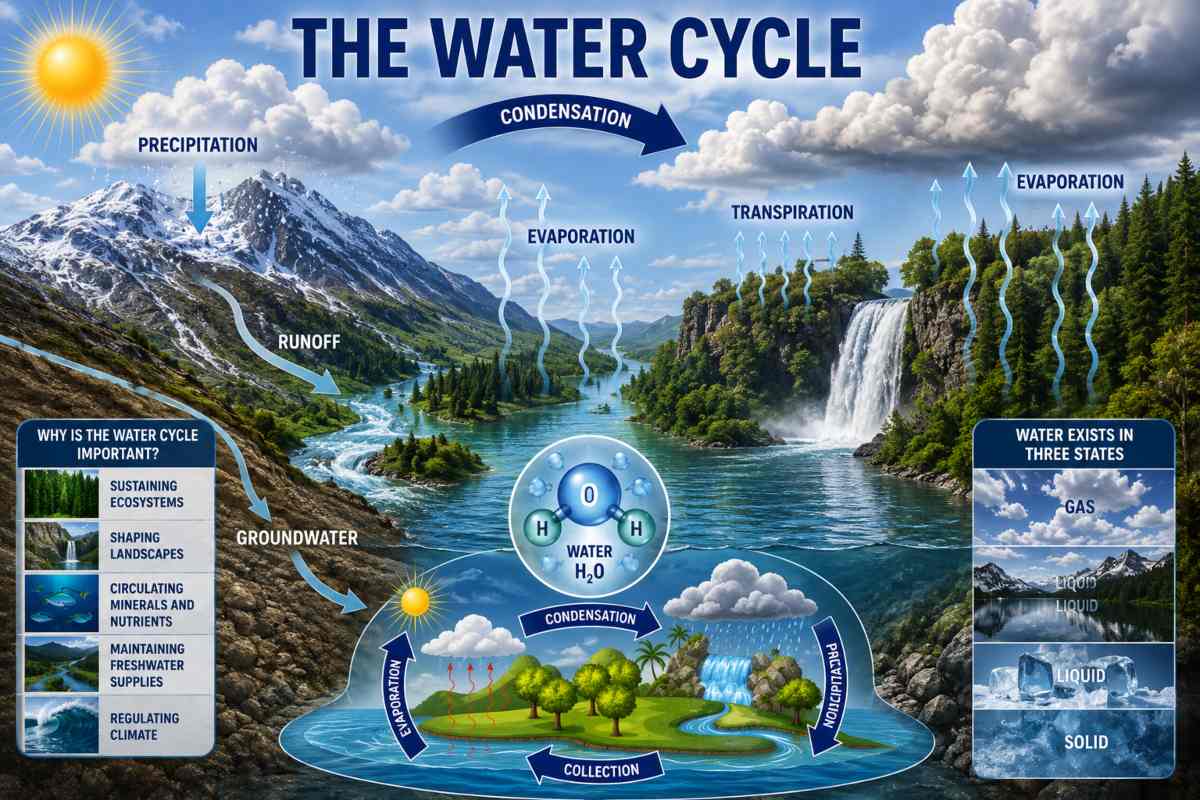
The water cycle is the continuous movement of water between the Earth’s surface and atmosphere, driven by evaporation, condensation, and precipitation working in an endless loop. This natural system has been recycling the same finite supply of water for roughly 4 billion years, meaning the water falling as rain today has likely existed on Earth since before complex life began.
Evaporation, Condensation and Precipitation
The water cycle starts with evaporation, when heat from the sun turns liquid water in oceans, lakes, and rivers into water vapor that rises into the atmosphere. Plants contribute to this process too through a similar mechanism called transpiration, releasing water vapor from their leaves. Together, evaporation and transpiration move an estimated 1,170 cubic kilometers of water into the atmosphere every single day.
As that vapor rises and cools, it undergoes condensation, clustering around tiny particles of dust or pollen to form the clouds visible in the sky. When enough water droplets gather and become too heavy to remain suspended, they fall back to Earth as precipitation: rain, snow, sleet, or hail, completing one cycle before the process begins again almost immediately.
Fun Facts About the Water Cycle in Nature
A single water molecule can spend anywhere from a few days to thousands of years in a particular stage of the cycle, depending on where it ends up. A raindrop might return to the ocean within a week, while water trapped in glacial ice can remain frozen for tens of thousands of years before melting. This means the water molecules in a glass of tap water today could have once been part of an ancient rainforest, a dinosaur-era swamp, or a glacier from the last Ice Age.
The water cycle also plays out on a scale most people never consider: a single large tree can release hundreds of gallons of water vapor into the atmosphere through transpiration on a hot summer day, effectively acting as a natural humidifier for the surrounding air. Multiply that across an entire forest, and it becomes clear why deforestation doesn’t just remove trees; it disrupts regional rainfall patterns that depend on that constant cycle of evaporation and condensation.
Types of Water
Not all water on Earth is the same; the planet’s water is split between salt water and fresh water, two categories with vastly different chemical compositions, uses, and availability. Understanding this distinction explains why, despite oceans covering most of the planet, fresh water remains one of Earth’s scarcest resources.
Facts About Salt Water vs Fresh Water
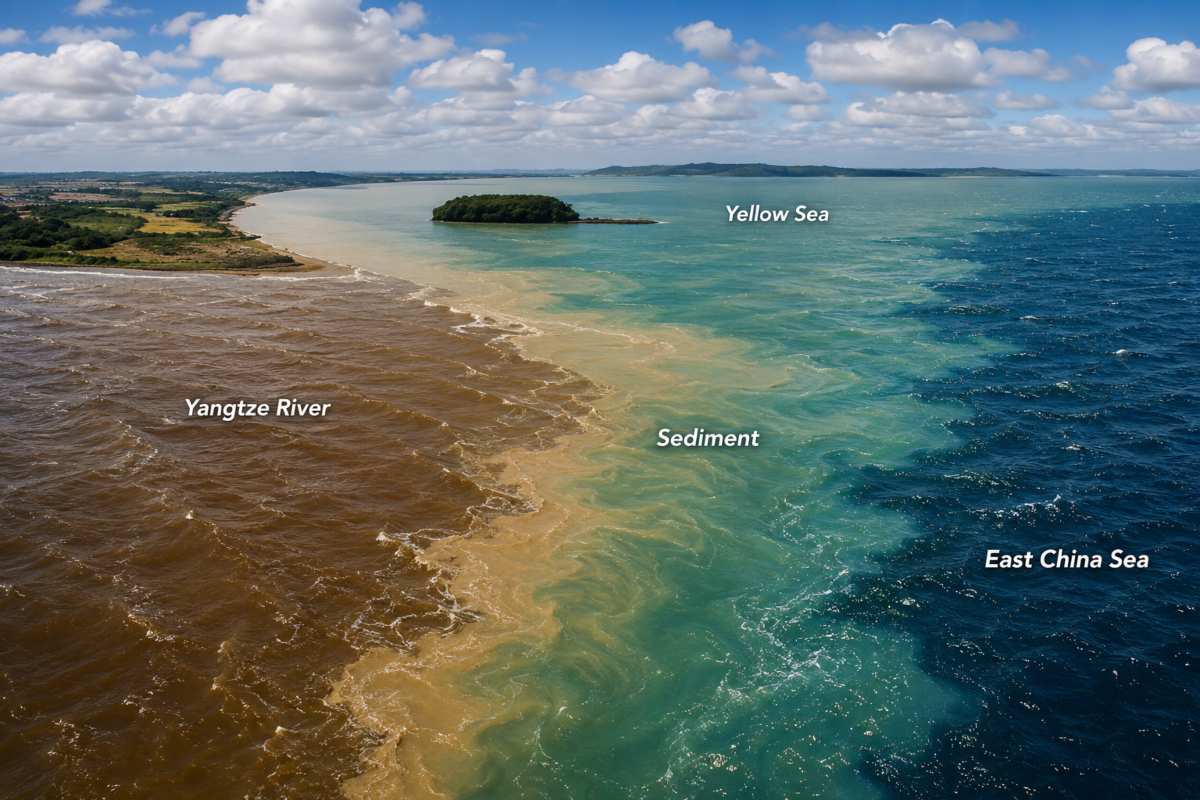
Salt water contains dissolved minerals and salts, primarily sodium chloride, at an average concentration of about 3.5%, which is roughly 35 grams of salt per liter of ocean water. This salinity is what makes ocean water undrinkable and unsuitable for irrigation without extensive desalination. This process strips out the dissolved salts but requires significant energy and infrastructure to do at scale.
Freshwater, by contrast, contains minimal dissolved salts and sustains nearly all terrestrial life, agriculture, and drinking supplies. The difference isn’t just chemical; it’s ecological, too, since freshwater and saltwater environments support entirely different ecosystems, from freshwater bass and river otters to saltwater coral reefs and deep-sea species that couldn’t survive in low-salinity environments.
Where Earth Water Actually Is
Oceans hold about 97% of all water on Earth, leaving just 3% as fresh water, and most of that fresh water isn’t even in a form people can easily use. Roughly 68% of the planet’s freshwater is locked in glaciers and ice caps. At the same time, much of the rest is stored in underground aquifers, leaving less than 1% of Earth’s total water supply available in lakes, rivers, and reservoirs for direct human use. For anyone curious about how these bodies of water and land features fit together globally, this geography trivia collection is a fun way to test that knowledge further.
This distribution explains why water scarcity is a real and growing concern even on a planet that, from space, looks covered in water. The visible abundance of oceans creates a false sense of security, when in reality, the accessible freshwater humans depend on for drinking, farming, and sanitation represents a remarkably small and unevenly distributed slice of the planet’s total supply.
Water and Energy
Water isn’t just essential for drinking and agriculture; it’s also one of the world’s oldest and most reliable sources of electricity, harnessed through the movement and force of flowing or falling water. Hydropower currently supplies about 16% of the world’s electricity, making it the largest source of renewable energy, ahead of wind and solar combined.
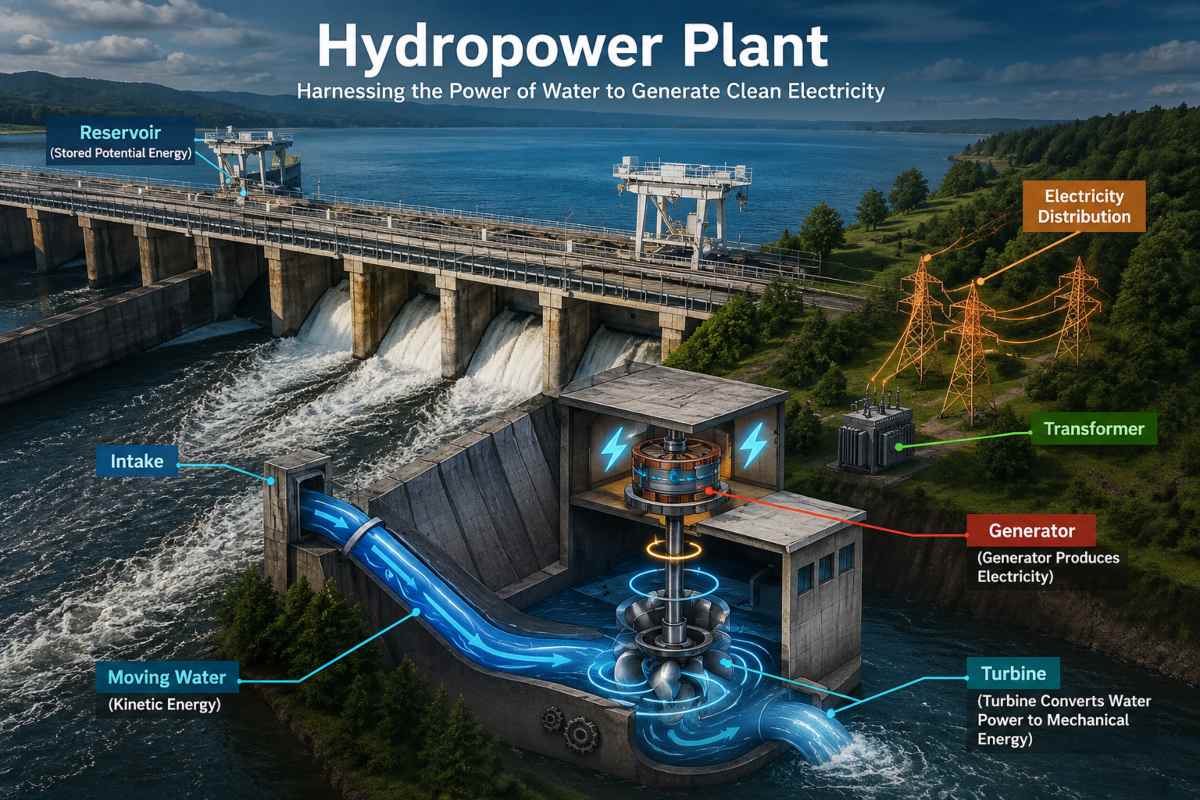
Facts About Water Energy (Hydropower)
Hydropower works by capturing the kinetic energy of moving water and converting it into electricity, typically using dams that control water flow through turbines. As water rushes through these turbines, it spins massive blades connected to generators, producing electricity without burning fuel or releasing direct emissions. This process has powered homes and industries for well over a century.
China’s Three Gorges Dam, the largest hydroelectric power station in the world, can generate up to 22,500 megawatts of electricity, enough to power tens of millions of homes. This single facility illustrates just how much energy can be extracted from water when its natural force is channeled and controlled at scale.
The Power Behind Water Systems
Beyond massive dams, water’s energy potential shows up in smaller, more localized systems, including run-of-river hydro plants that generate power without large reservoirs and tidal energy systems that harness the predictable rise and fall of ocean tides. These smaller-scale systems often have less environmental impact than large dams, since they don’t require flooding vast areas of land to create a reservoir.
What makes water uniquely valuable as an energy source is its consistency, unlike solar or wind, which depend on weather and daylight; flowing water can generate power around the clock as long as the source remains active. That reliability is part of why hydropower remains a foundational piece of the global renewable energy mix, even as newer technologies continue to expand alongside it.
Water and the Human Body
Water makes up roughly 60% of the average adult human body, playing a role in nearly every biological process from regulating temperature to delivering nutrients to cells. Without it, the body can’t perform even basic functions, a fact that makes water far more than just something people drink to quench thirst.
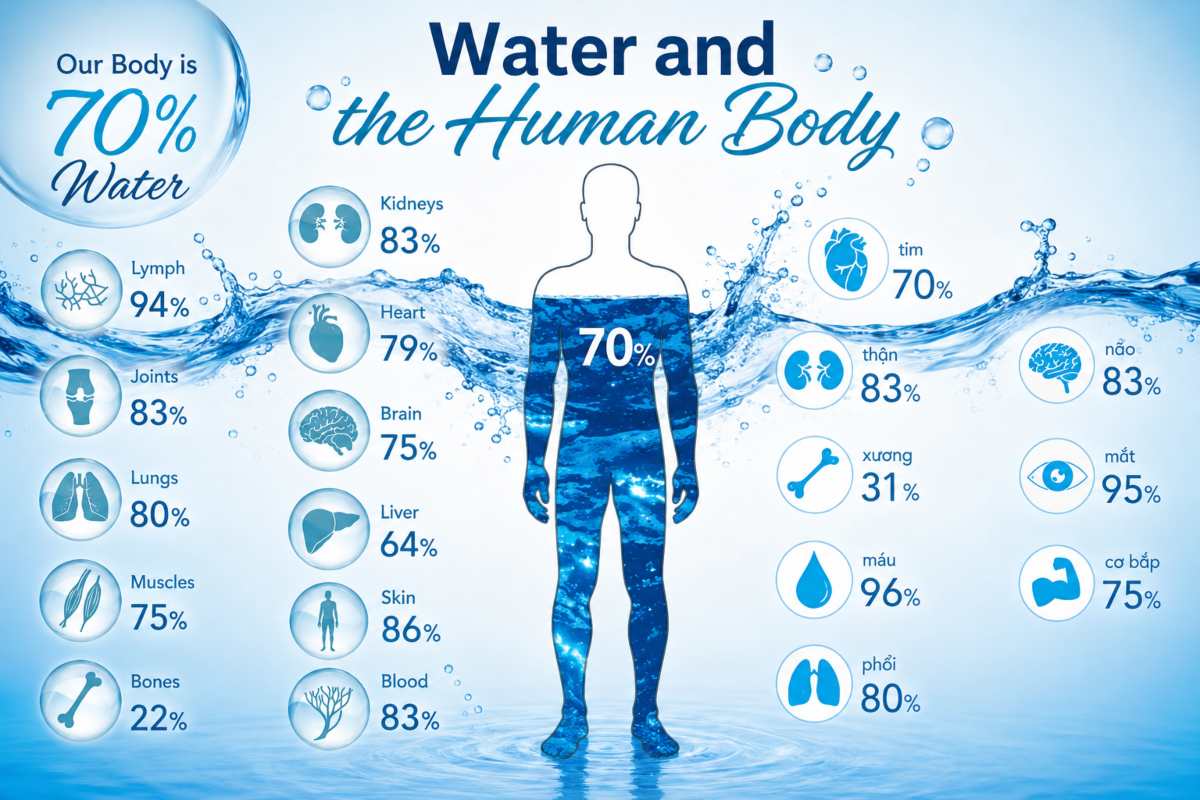
How Much Water Is In Your Body
Water content in the human body varies by age, sex, and body composition. Still, adults typically carry between 55% and 60% water by weight, while infants can be as high as 75% water at birth. This percentage naturally declines with age, since muscle tissue holds more water than fat tissue, and body composition shifts over a lifetime.
Different organs also hold vastly different amounts of water. The brain and heart are each about 73% water, while even bones, which seem completely solid, contain around 31% water within their structure. This distribution explains why dehydration doesn’t just cause thirst; it can impair cognitive function, physical performance, and organ efficiency almost immediately once fluid levels drop.
Fun Facts About Water and Health
Losing just 1% to 2% of the body’s water content through dehydration can measurably impair concentration, mood, and physical coordination, according to research on hydration and cognitive performance. This is a relatively small percentage, often reached simply through a day of light activity without adequate fluid intake. Yet, it’s enough to produce noticeable effects on focus and energy levels. This is part of why many athletes turn to electrolyte-enhanced drinks; these Gatorade nutrition facts break down how such beverages are formulated to replace fluids and minerals lost through sweat.
Water also plays a direct role in regulating body temperature through sweat, cushioning joints, and flushing waste products through the kidneys, making it central to functions most people never consciously think about. Staying properly hydrated isn’t just about avoiding thirst; it’s a baseline requirement for nearly every system in the body to function as intended.
Water Pollution: Sobering Facts
Water pollution occurs when harmful substances, including chemicals, plastics, sewage, and industrial waste, contaminate rivers, lakes, and oceans, disrupting the ecosystems and communities that depend on clean water to survive. Globally, an estimated 2 billion people currently lack access to safely managed drinking water, underscoring how widespread and urgent the pollution problem has become.
Amazing (and Alarming) Pollution Statistics
Roughly 8 million metric tons of plastic enter the world’s oceans every year, much of it breaking down into microplastics that have now been detected in marine life, drinking water, and even human blood. This volume is difficult to visualize, but researchers often compare it to dumping the equivalent of one garbage truck full of plastic into the ocean every single minute of every day.
Agricultural runoff, industrial discharge, and untreated sewage add further strain, with the United Nations estimating that more than 80% of the world’s wastewater is released back into the environment without adequate treatment. This means the majority of wastewater from households, farms, and factories re-enters rivers and oceans, carrying pollutants that were never properly filtered out.
How Pollution Affects Ecosystems
Polluted water disrupts aquatic ecosystems by depleting oxygen levels, a process often triggered by excess nutrients from fertilizer runoff that cause algae blooms to grow rapidly and then decompose. As that decomposition consumes oxygen in the water, it creates “dead zones” where fish and other aquatic life can no longer survive. One of the largest of these, in the Gulf of Mexico, has spanned thousands of square miles in recent years.
Beyond dead zones, pollutants like heavy metals and microplastics accumulate up the food chain through a process called bioaccumulation, meaning small organisms absorb toxins that become increasingly concentrated in the predators that eat them. This is part of why pollution in even a single river or along a coastline can eventually affect species and food supplies far removed from the source of contamination.
Water Conservation Facts
Water conservation refers to the practices and habits that reduce unnecessary water use, protecting a resource that, despite covering most of the planet, remains scarce in its usable fresh form. The average American household uses about 300 gallons of water per day, and a significant portion of that is lost to leaks, inefficient fixtures, and habits that could be adjusted with minimal effort.
Facts About Saving Water at Home
Household water use adds up faster than most people realize, with activities like showering, flushing toilets, and running washing machines accounting for the bulk of daily consumption. A single leaky faucet dripping once per second can waste over 3,000 gallons of water per year, turning what looks like a minor annoyance into a substantial, ongoing loss.
Older toilets and showerheads are often the biggest culprits behind excessive water use, since fixtures manufactured before the 1990s can use nearly twice as much water per use as modern low-flow models. Replacing outdated fixtures with WaterSense-certified alternatives is one of the most effective ways households reduce consumption without changing daily routines at all.
Facts About Water Wastage Worldwide
On a global scale, water wastage extends far beyond individual homes, with agriculture accounting for roughly 70% of all freshwater withdrawn worldwide, much of it lost to inefficient irrigation methods that allow water to evaporate or run off before reaching crops. This makes agricultural water management one of the largest levers available for reducing global water waste, even though it rarely gets the same attention as household conservation.
Municipal water systems also lose significant volumes of treated water to aging infrastructure, with some cities losing over 20% of treated water to leaking pipes before it ever reaches a tap. In regions already facing water scarcity, this kind of infrastructure loss compounds an already difficult supply problem, making repairs and upgrades just as critical as conservation efforts on the consumer side.
Simple Ways to Conserve Water
Small daily adjustments can meaningfully reduce household water use, including shortening shower times, running dishwashers and washing machines only with full loads, and fixing leaks as soon as they’re noticed rather than letting them persist. Outdoor water use offers similar opportunities, since watering lawns and gardens in the early morning or evening reduces water loss to evaporation compared to midday watering.
Beyond individual habits, choosing drought-resistant landscaping and installing rain barrels to collect runoff are longer-term strategies that reduce dependence on treated tap water for non-drinking purposes. None of these changes require major lifestyle shifts. Yet, collectively, they represent some of the most practical tools available for easing pressure on a resource that remains far more limited than its global abundance might suggest.
Water Purification And Filtration Facts
Water purification is the process of removing contaminants, bacteria, and impurities from water to make it safe for drinking, cooking, and other daily uses. Modern purification systems can remove over 99% of harmful bacteria and viruses, making treated water one of the most significant public health advances in human history.
How Purification Works
Purification typically occurs in stages, starting with filtration to remove larger debris and sediment, followed by disinfection methods such as chlorination or ultraviolet light to eliminate bacteria, viruses, and parasites. Some systems add a step called reverse osmosis, which forces water through an extremely fine membrane that blocks even microscopic contaminants and dissolved salts.
Municipal water treatment plants often combine several of these methods to meet safety standards before water ever reaches a household tap, a process that can take anywhere from a few hours to over a day depending on the source water’s initial quality. This layered approach is why tap water in most developed countries is held to strict safety regulations, even though the process itself remains largely invisible to the people who benefit from it daily.
Fun Facts About Water Filters
Not all water filters work the same way. Activated carbon filters, commonly used in household pitchers, work by absorbing chemicals and odors, while reverse osmosis filters physically block particles based on size. This difference means a basic carbon filter can improve taste and remove chlorine, but it won’t necessarily remove dissolved minerals or certain contaminants the way a reverse osmosis system can.
One often-overlooked fact: the same activated carbon technology used in modern water filters dates back centuries, with ancient civilizations using charred wood to purify drinking water long before modern filtration science existed. It’s a reminder that while today’s filters look sleek and high-tech, the core principle behind them, using porous material to trap impurities, is one of humanity’s oldest water treatment methods, refined rather than reinvented.
Conclusion
Water is simultaneously the most familiar substance on Earth and one of the most scientifically remarkable molecules, simple enough to be taught to children, yet complex enough to shape climates, power cities, sustain the human body, and carve canyons over millions of years. From the water cycle’s endless loop of evaporation and precipitation to the sobering reality that less than 1% of Earth’s water is easily accessible fresh water, these facts collectively make the case that water deserves far more attention than its everyday presence usually earns.
Understanding water isn’t just trivia; it’s a foundation for making better decisions, whether that means fixing a leaky faucet, supporting cleaner water policy, or simply appreciating what happens each time a glass of water is poured. The more these facts are shared and understood, the more likely that appreciation translates into the kind of conservation and care this finite resource actually requires.
Frequently Asked Questions(FAQs)
What is one interesting fact about water?
One of the most interesting facts about water is that it’s the only common substance on Earth found naturally as a solid, liquid, and gas within the same everyday temperature range. This unique property is what makes ice float, clouds form, and rivers flow, all from the same molecule.
What is a fun fact about water?
A fun fact about water is that hot water can sometimes freeze faster than cold water, a real phenomenon known as the Mpemba effect. Scientists have documented it repeatedly, though the exact cause is still debated among researchers.
How much of the human body is water?
The human body is roughly 60% water on average, though this varies by age and body composition; infants can be up to 75% water at birth. Even bones, which seem completely solid, contain about 31% water.
How much of Earth water is actually drinkable?
Oceans make up about 97% of Earth’s water, leaving less than 3% as freshwater, and most of that is locked in glaciers, ice caps, and underground aquifers. Less than 1% of all water on Earth is easily accessible for drinking, farming, or daily use.
What percentage of global water use goes to agriculture?
Agriculture accounts for roughly 70% of all fresh water withdrawn worldwide, making it the single largest use of fresh water on the planet. Much of that water is lost to inefficient irrigation methods before it ever reaches crops, which is why improving agricultural water use remains a major conservation priority.