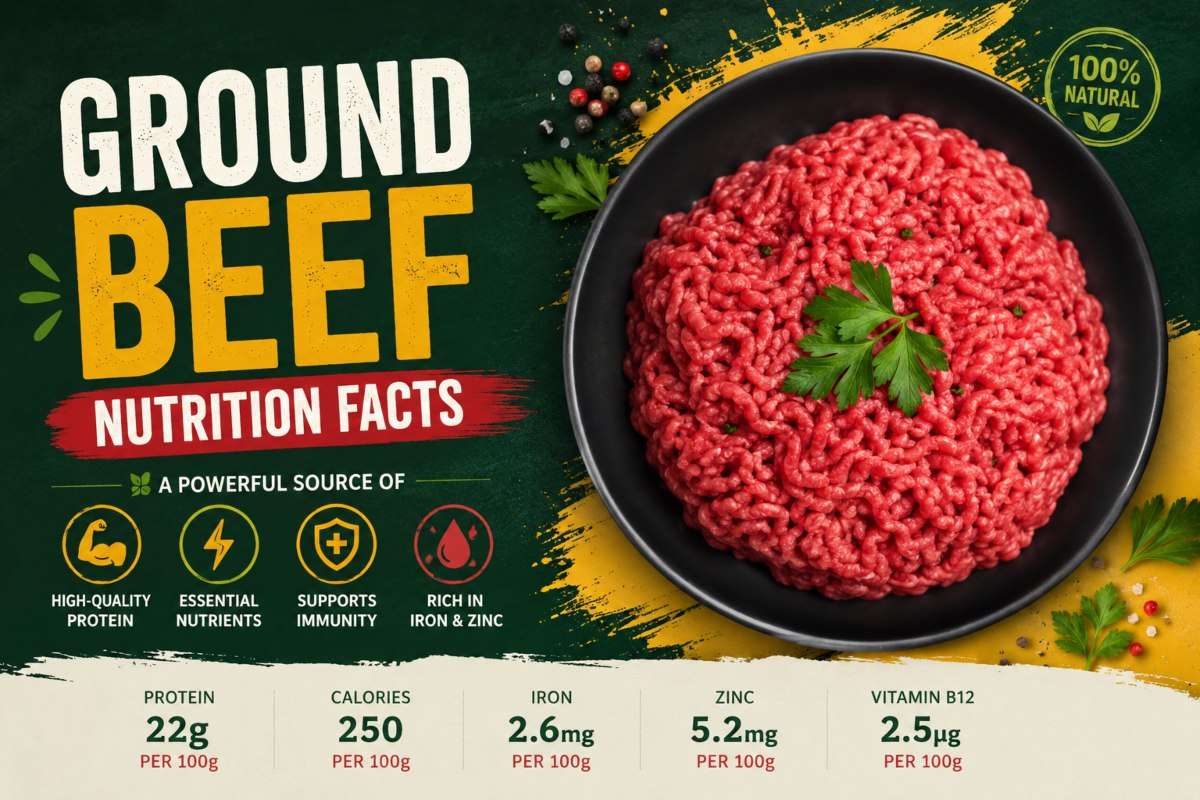
One 4-ounce serving of raw 80/20 ground beef contains about 287 calories, 19 grams of protein, and 23 grams of fat. Still, those numbers shift significantly depending on the lean-to-fat ratio you choose and how much you’re actually serving. Ground beef nutrition facts vary widely across common ratios like 90/10, 93/7, 85/15, and 80/20, since the fat percentage directly drives calorie and macro counts even when the protein content stays relatively stable.
This directory breaks down exact nutrition facts by both ratio and serving size from a 4-ounce portion to a full pound, raw or cooked, so you can find the precise numbers for whatever you’re cooking or tracking, whether you’re comparing it to Costco pizza nutrition facts or building out a full meal plan.
Ground Beef Nutrition Facts at a Glance
Ground beef nutrition facts change primarily based on two variables: the lean-to-fat ratio and the serving size you’re measuring. The table below shows raw ground beef nutrition facts across the most common ratios, so you can compare calories, protein, fat, and carbs side by side before diving into cooked and portion-specific numbers.
| Ratio | Per 100g | Per 4 oz (113g) | Per 1 lb (454g) |
|---|---|---|---|
| 90/10 | 176 cal, 20g protein, 10g fat, 0g carbs | 199 cal, 22.6g protein, 11.3g fat, 0g carbs | 799 cal, 90.8g protein, 45.4g fat, 0g carbs |
| 93/7 | 152 cal, 20.9g protein, 7.2g fat, 0g carbs | 172 cal, 23.6g protein, 8.1g fat, 0g carbs | 690 cal, 94.9g protein, 32.7g fat, 0g carbs |
| 85/15 | 215 cal, 18.6g protein, 15g fat, 0g carbs | 243 cal, 21g protein, 17g fat, 0g carbs | 976 cal, 84.4g protein, 68g fat, 0g carbs |
| 80/20 | 254 cal, 17.2g protein, 20g fat, 0g carbs | 287 cal, 19.4g protein, 22.6g fat, 0g carbs | 1,153 cal, 78g protein, 90.7g fat, 0g carbs |
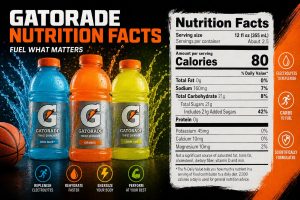
These figures reflect raw, unseasoned ground beef and will shift once fat renders out during cooking. If you’re comparing macros across your full grocery list, it’s worth checking similar breakdowns, like Gatorade nutrition facts or udon noodles nutrition, to get a complete picture of your meal.
What Affects Ground Beef Nutrition? (Lean-to-Fat Ratio Explained)
The lean-to-fat ratio printed on the package, like 90/10 or 80/20, tells you what percentage of the meat is lean muscle versus fat by weight, and it’s the single biggest factor in ground beef’s nutrition facts. A 90/10 blend is 90% lean tissue and 10% fat, which is why it carries fewer calories and less fat per serving than an 80/20 blend, where a full fifth of the weight is fat.
Protein content actually moves in the opposite direction: leaner blends pack slightly more protein per ounce because there’s less fat displacing lean tissue in that same serving weight. This is why a 93/7 blend edges out 80/20 on protein despite weighing the same, roughly 23.6g versus 19.4g per 4-ounce serving.
Raw vs. Cooked Ground Beef Nutrition Facts
Cooked ground beef nutrition facts differ from raw numbers because the meat loses both water and rendered fat during cooking, which concentrates some nutrients while reducing overall weight. A 4-ounce raw portion of 80/20 ground beef typically shrinks to about 3 ounces once cooked, as roughly 25-30% of the weight cooks off, meaning a “4 oz cooked” serving actually started as a larger raw portion.
Fat content also drops measurably during cooking as grease renders out, so cooked 80/20 beef often tests closer to a 73/27 or even leaner effective ratio by the time it hits the plate. For accurate tracking, it’s worth noting whether a nutrition label or recipe is referencing raw or cooked weight, since the difference can shift calorie counts by 15-20% for the same portion.
Nutrition Facts by Lean-to-Fat Ratio
Ground beef nutrition facts shift meaningfully across the five most common lean-to-fat ratios sold in stores, with calories and fat rising and protein slightly falling as the fat percentage climbs. Below is a ratio-by-ratio breakdown so you can pick the right blend for your calorie, protein, or fat targets.
90/10 Ground Beef Nutrition Facts
A 4-ounce raw serving of 90/10 ground beef contains about 199 calories, 22.6 grams of protein, and 11.3 grams of fat, making it one of the leaner, widely available options. This ratio is popular for high-protein diets because it delivers nearly a gram of protein per 5 calories, a ratio that’s hard to beat outside of chicken breast or turkey. A full pound of raw 90/10 beef totals roughly 799 calories and 90.8 grams of protein, which is why it’s a common choice for meal preppers portioning out multiple servings at once.
93/7 Ground Beef Nutrition Facts
93/7 ground beef nutrition facts show the leanest common option, with a 4-ounce raw serving containing approximately 172 calories, 23.6 grams of protein, and just 8.1 grams of fat. This blend consistently tests as the highest-protein, lowest-fat choice among standard grocery-store ratios, offering about 15% more protein per ounce than 80/20 while cutting fat by nearly two-thirds. Because there’s so little fat to render, 93/7 patties can dry out faster on the grill, so many cooks add a small amount of oil or moisture when cooking this ratio specifically.
85/15 Ground Beef Nutrition Facts
A 4-ounce raw serving of 85/15 ground beef runs about 243 calories, 21 grams of protein, and 17 grams of fat, positioning it as a middle-ground blend between the leaner 90/10 and 93/7 options and the fattier 80/20. This ratio is frequently recommended for burgers because the added fat content compared to 90/10 helps keep patties juicy without the excess grease of 80/20. Per pound, raw 85/15 beef totals roughly 976 calories and 68 grams of fat, numbers worth noting if you’re tracking macros across a full recipe rather than a single serving.
80/20 Ground Beef Nutrition Facts
80/20 is the fattiest ratio commonly sold, with a 4-ounce raw serving containing about 287 calories, 19.4 grams of protein, and 22.6 grams of fat, nearly triple the fat of 93/7 at the same weight. This higher fat content is exactly why 80/20 remains a go-to for burgers and meatballs: the rendered fat bastes the meat during cooking, producing a noticeably juicier, more flavorful result than leaner blends. On the nutrition side, a full pound of raw 80/20 beef totals 1,153 calories and 90.7 grams of fat, more than double the fat of an equivalent pound of 90/10.
70/30 and 81/19 Ground Beef Nutrition Facts
70/30 and 81/19 are less common ratios but appear at some butcher counters and specialty grocers, typically as byproducts of specific cuts rather than standard blends. 70/30 ground beef sits at the high-fat end of the spectrum, with a 4-ounce raw serving delivering roughly 332 calories and 26 grams of fat more than any of the standard four ratios, while protein drops to around 17 grams for the same serving. 81/19, by contrast, lands almost identically to 80/20 in nutritional terms, since the one-percentage-point difference in fat content translates into only a few calories per serving, making it functionally interchangeable with 80/20 for most cooking and tracking purposes.
Nutrition Facts by Serving Size
Ground beef nutrition facts scale directly with portion size, so the same ratio can look dramatically different on a label depending on whether it’s measured in ounces, pounds, grams, or cups. Below are the exact nutrition facts across the most commonly searched serving sizes, using raw weight unless noted otherwise.
Per 1 lb / 1 Pound
A full pound of raw 80/20 ground beef contains about 1,153 calories, 78 grams of protein, and 90.7 grams of fat, making it a useful reference point when scaling a recipe that serves four or more people. This is the size most often printed on butcher-counter labels, and it’s especially useful for meal prepping, since dividing a 1-pound package into four equal portions gives you roughly 288 calories per serving, close to the standard 4-ounce figure. Leaner blends shift these numbers considerably: a pound of 93/7 comes in at just 690 calories and 32.7 grams of fat, a difference of over 460 calories compared to 80/20 for the same weight.
Per 4 oz
The 4-ounce serving is the standard reference size used on most nutrition labels and diet-tracking apps, representing roughly a quarter-pound of raw meat before cooking. At this size, 80/20 ground beef delivers about 287 calories, 19.4 grams of protein, and 22.6 grams of fat, while 90/10 comes in leaner at 199 calories and 11.3 grams of fat for the same weight. Because 4 ounces is the size most recipes and fitness apps default to, it’s the easiest benchmark for comparing ratios side by side or estimating macros for a single burger patty.
Per 6 oz and 8 oz
Six- and 8-ounce servings are common for larger burger patties or bulk cooking, and their nutrition facts scale linearly from the 4-ounce figures. A 6-ounce raw serving of 80/20 ground beef contains approximately 431 calories, 29.1 grams of protein, and 34 grams of fat. In contrast, an 8-ounce serving, often used for double-patty burgers, doubles those numbers to roughly 574 calories, 38.8 grams of protein, and 45.2 grams of fat. These larger portions are worth calculating carefully if you’re tracking intake, since it’s easy to underestimate calories when a single restaurant-style patty exceeds the standard 4-ounce reference.
Per 100g (Metric)
For anyone using metric measurements or comparing international nutrition labels, 100 grams of raw ground beef is the standard baseline, roughly equivalent to a 3.5-ounce serving. At this weight, 80/20 ground beef contains about 254 calories, 17.2 grams of protein, and 20 grams of fat, while 93/7 comes in significantly lower at 152 calories and 7.2 grams of fat per 100g. This measurement is particularly useful for precise macro tracking, since 100g is a round, easily scalable number; doubling it gives you 200g, and multiplying by 4.54 approximates a full pound.
Per 1 Cup (Cooked)
A 1-cup serving of cooked, crumbled ground beef weighs approximately 225 grams and reflects the meat’s reduced weight after fat and moisture cook off, distinct from its raw counterpart. One cup of cooked 80/20 ground beef contains roughly 425 calories, 46 grams of protein, and 25 grams of fat, since cooking concentrates protein density while reducing total fat from rendering. This measurement is especially relevant for recipes like chili, tacos, or casseroles that call for pre-cooked crumbled beef by volume rather than raw weight, and it’s worth noting that 1 cup cooked doesn’t correspond neatly to any single raw ounce measurement, closer to 6 ounces of raw meat, once shrinkage is factored in.
Cooked vs Raw: How Cooking Changes the Numbers
Cooking ground beef changes its nutrition facts because heat drives off water and renders out fat, shrinking the total weight while concentrating protein and calories per ounce. Understanding this shift matters most when a recipe or nutrition label doesn’t specify raw versus cooked weight, since using the wrong reference point can throw off calorie tracking by a meaningful margin.
Calorie And Fat Loss During Cooking
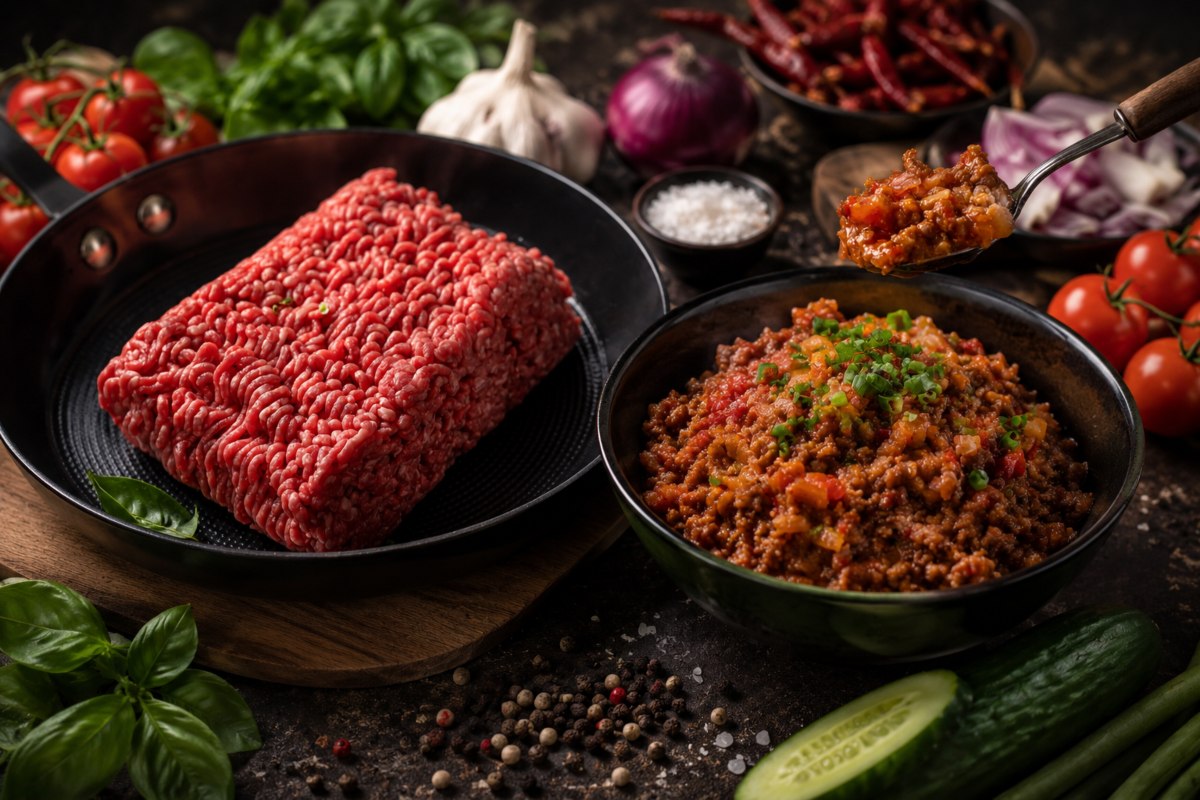
Raw ground beef typically loses 25-30% of its weight during cooking as water evaporates and fat renders out of the meat, which is why a 4-ounce raw patty usually yields closer to 3 ounces once fully cooked. Fat loss specifically depends on the starting ratio: 80/20 ground beef loses a substantial portion of its fat content during pan-frying or grilling, often testing closer to 73/27 or 75/25 by the time it’s drained and served. This shrinkage actually makes cooked ground beef more calorie-dense per ounce than its raw counterpart.
A cooked 3-ounce portion of 80/20 beef can have nearly the same calorie count as the original 4-ounce raw portion, since less water and rendered fat remain to dilute the protein and residual fat. For accurate macro tracking, weighing beef after cooking rather than estimating from raw weight gives a more reliable calorie count, particularly for higher-fat blends where rendering has the biggest impact.
Grass-Fed vs Regular Ground Beef Nutrition
Grass-fed ground beef nutrition facts differ modestly from conventional grain-fed beef, primarily in fat composition rather than total calories or protein. At the same lean-to-fat ratio, grass-fed beef typically contains slightly less total fat and a higher proportion of omega-3 fatty acids. Research has found that grass-fed beef can contain up to twice the omega-3 content of grain-fed beef, though the absolute amounts in either are modest compared to those in fish sources.
Protein content stays nearly identical between the two, generally within a gram or two per serving. Hence, the choice between grass-fed and conventional ground beef has a bigger impact on fat quality and micronutrient profile than on the core calorie or protein numbers most trackers rely on.
Ground Beef Nutrition Label Explained
The nutrition label on a package of ground beef lists calories, protein, fat, and other values per a standardized serving size, usually 4 ounces (112g) raw, which makes it possible to compare products quickly, provided you know how to read past the ratio printed on the front of the package. Understanding this label is key to accurately tracking ground beef nutrition facts across different brands and stores, since packaging conventions can vary even when the underlying meat is nearly identical. The same label-reading skills apply whether you’re checking Reese’s nutrition facts or any other packaged product in your cart.
How to Read the Nutrition Facts Panel
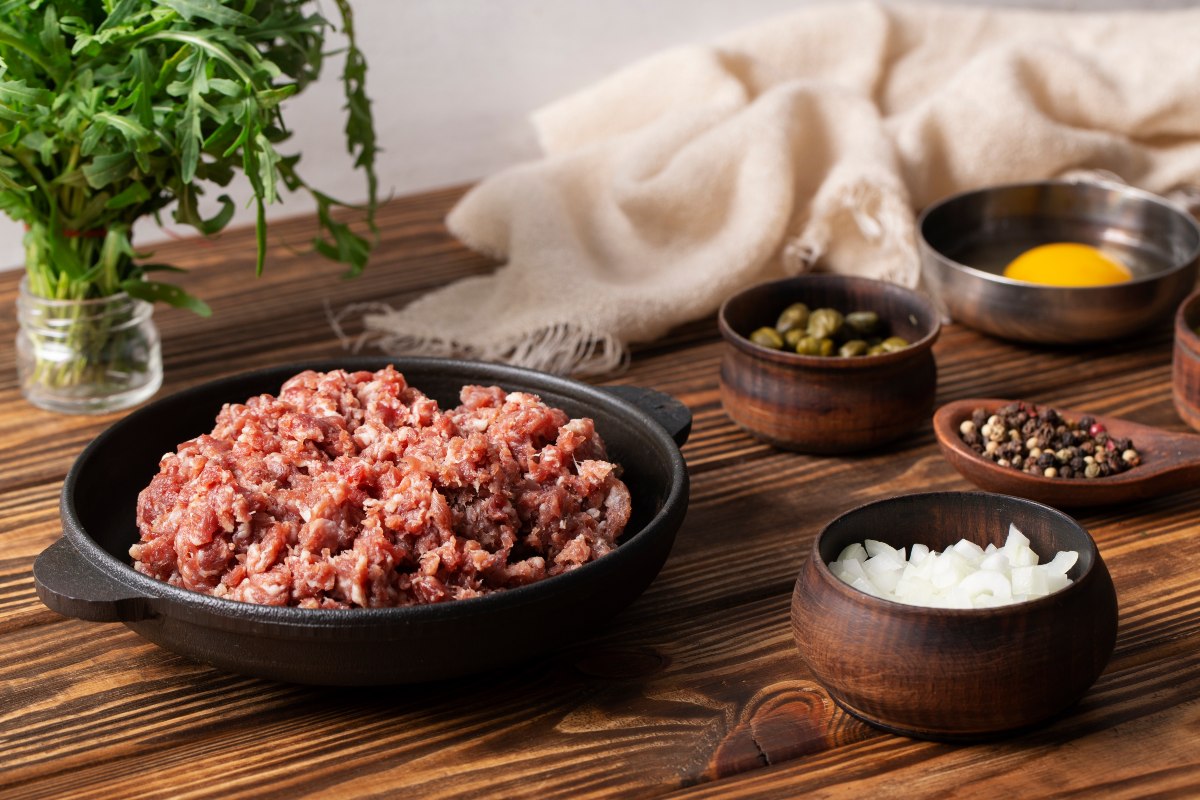
A ground beef nutrition label typically starts with the serving size at the top, followed by calories. A breakdown of total fat, saturated fat, cholesterol, sodium, protein, and, since ground beef is naturally carbohydrate-free, iron, which is usually listed as 0g. The “% Daily Value” column reflects how much of a 2,000-calorie diet each nutrient represents, so a saturated fat listing of 35% DV signals a meaningfully higher-fat cut, useful for quickly comparing an 80/20 package against a 93/7 one without doing the math yourself.
One detail worth noting: the lean-to-fat ratio printed on the front of the package (like “80% lean/20% fat”) describes the raw meat’s composition by weight, not a percentage of daily fat intake. It corresponds directly to the fat grams listed in the nutrition panel. An 80/20 blend showing roughly 20g of fat per 100g serving confirms the ratio claim is accurate.
Aldi And Store-Brand Ground Beef Nutrition Comparison
Store-brand ground beef, including Aldi’s private-label options, generally matches the nutrition facts of national brands at the same lean-to-fat ratio, since USDA labeling standards require consistent fat percentages regardless of who packages the meat. Aldi’s 80/20 ground beef, for example, lists nutrition values nearly identical to name-brand 80/20 beef, around 250-290 calories and 17-19 grams of protein per 4-ounce raw serving, confirming that ratio, not brand, is the primary driver of nutritional content.
The main differences between store brands tend to show up in sourcing (grass-fed versus grain-fed, or added moisture retention solutions in some value-tier products) rather than in the core calorie, protein, and fat numbers, so shoppers comparing labels by ratio can generally expect consistent results across retailers.
Conclusion
Ground beef nutrition facts ultimately come down to two variables you control at the store: the lean-to-fat ratio you choose and the serving size you portion out, with everything else cooking method, brand, even grass-fed versus conventional making comparatively smaller adjustments to the core numbers. A 4-ounce raw serving can range from as low as 172 calories (93/7) to as high as 287 calories (80/20), a difference of nearly 70% for the same weight, which makes the ratio the single most impactful decision for anyone tracking calories, protein, or fat intake.
Whether you’re meal-prepping a pound of 90/10 for lean protein targets or grabbing 80/20 for juicier burgers and pairing it with a treat like Dynasty Flavor Cake once in a while, matching the ratio and portion size to your goals is the most reliable way to get accurate numbers for whatever you’re cooking.
Frequently Asked Questions(FAQs)
How many calories are in 1 lb of 80/20 ground beef?
A full pound of raw 80/20 ground beef contains about 1,153 calories, along with 78 grams of protein and 90.7 grams of fat. Cooked, that total drops somewhat as fat renders out during cooking, though calorie density per ounce actually increases due to water loss.
Is 93/7 ground beef healthier than 80/20?
93/7 ground beef contains less than half the fat and slightly more protein than 80/20 for the same serving size, making it the better choice for lower-calorie, higher-protein diets. That said, “healthier” depends on your goals. 80/20’s extra fat can better suit needs for flavor, moisture, or higher calorie intake.
How much protein is in 4 oz of cooked ground beef?
A 4-ounce cooked serving of 80/20 ground beef delivers roughly 25-26 grams of protein, higher than the raw equivalent because cooking concentrates protein as water and fat cook off. Leaner ratios like 93/7 yield slightly more protein per cooked ounce because less fat displaces lean tissue.
Does grass-fed ground beef have different nutrition facts?
Grass-fed ground beef has nearly identical calories and protein to conventional beef at the same ratio, with the main difference being fat quality; grass-fed beef can carry up to twice the omega-3 content of grain-fed beef. Total fat is also typically slightly lower in grass-fed beef at an equivalent lean-to-fat ratio.