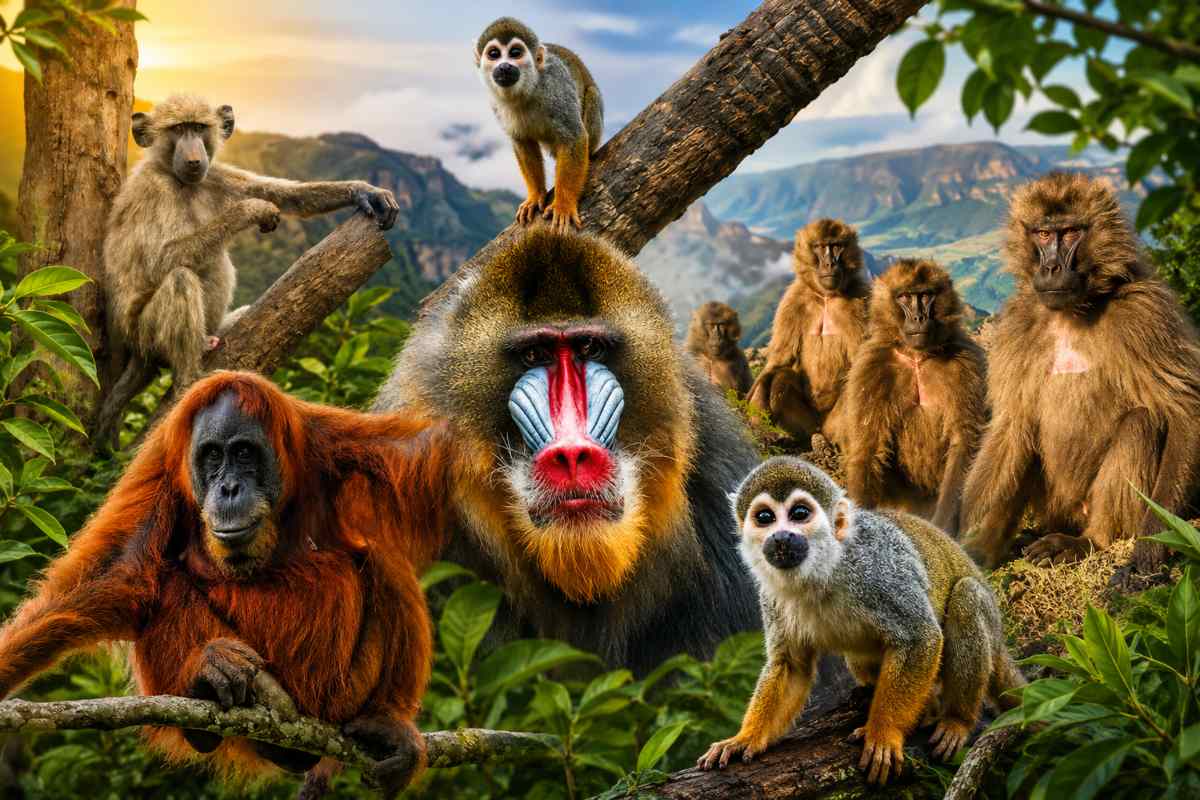
Monkeys are a group of over 260 species of highly intelligent, social primates found across the rainforests, mountains, and grasslands of Africa, Asia, and Central and South America, ranging from the thumb-sized pygmy marmoset to the powerful mandrill, the world’s largest monkey species. What sets monkeys apart from other primates like apes is simple but often misunderstood: most monkeys have tails, apes don’t, and that single trait traces back to millions of years of separate evolutionary paths.
Beyond that basic distinction, monkeys are full of surprises. Capuchins use stone tools to crack open nuts, howler monkeys can be heard up to three miles away thanks to a specialized throat structure, and vervet monkeys communicate with different alarm calls for different predators, essentially a rudimentary vocabulary. Scientists have documented tool use, complex social hierarchies, and even culture-like behavior passed down between generations in several species, making monkeys some of the most behaviorally rich animals on the planet.
This handbook breaks down the most fascinating, kid-friendly, and scientifically grounded monkey facts, covering general trivia, species-specific details, and where these animals actually live, so whether you’re here for a quick fun fact or a deep dive into a specific species, you’ll find it below.
Quick Monkey Facts (At a Glance)
Monkeys make up the largest and most diverse group of primates on Earth, with over 260 recognized species split into two major branches: Old World monkeys (Africa and Asia) and New World monkeys (Central and South America). The two groups evolved independently for roughly 40 million years, which is why New World monkeys have prehensile tails they can grip and hang from, while almost no Old World monkey can do the same.
Top 10 Mind-Blowing Monkey Facts
- The tiniest monkey in the world, the pygmy marmoset, weighs about as much as a stick of butter, roughly 100 grams, and can fit in the palm of an adult hand.
- Capuchin monkeys have been documented using stone tools to crack open nuts and shellfish, a behavior once thought unique to humans and chimpanzees.
- Howler monkeys are the noisiest land animals in the Americas; their calls, produced by an enlarged hyoid bone in the throat, can travel up to three miles through dense forest.
- Vervet monkeys use different alarm calls for different predators: one sound for snakes, another for eagles, another for leopards, allowing troop members to react with the correct escape behavior instantly.
- Mandrills are the largest monkey species alive, with males weighing up to 119 pounds and sporting the most vividly colored face of any mammal. However, for a broader look at animal power rankings, mandrills still fall well short of the strongest animal in the world.
- Some monkey troops, like Japanese macaques, have developed learned traditions such as washing sweet potatoes in water that get passed down through generations, a hallmark of primitive culture.
- Spider monkeys can hang and swing using only their prehensile tail, which functions almost like a fifth limb with its own grip strength.
- Monkeys have color vision in most species, but many New World monkeys, particularly males, are red-green colorblind due to a difference in cone cell genetics.
- Proboscis monkeys, native to Borneo, are named for their oversized noses, which are thought to amplify their calls and signal dominance to rivals.
- Not all primates are monkeys, and not all monkeys are apes. Gorillas, chimpanzees, orangutans, and humans belong to the ape family, which lacks tails completely.
Monkey Facts Cheat Sheet (Stats and Trivia)
For a fast reference, here’s how monkeys stack up on the numbers that come up most often in trivia and classroom questions:
- Total species: Over 260 recognized monkey species worldwide
- Smallest species: Pygmy marmoset (~100 grams, 5–6 inches long)
- Largest species: Mandrill (up to 119 pounds)
- Loudest species: Howler monkey (calls audible up to 3 miles away)
- Lifespan range: Roughly 15–40 years depending on species and habitat
- Native regions: Africa, Asia, Central America, and South America (no monkeys are native to Australia, Antarctica, or Europe)
- Diet: Omnivorous in most species: fruit, leaves, insects, and occasionally small animals or eggs
Fun and Funny Monkey Facts
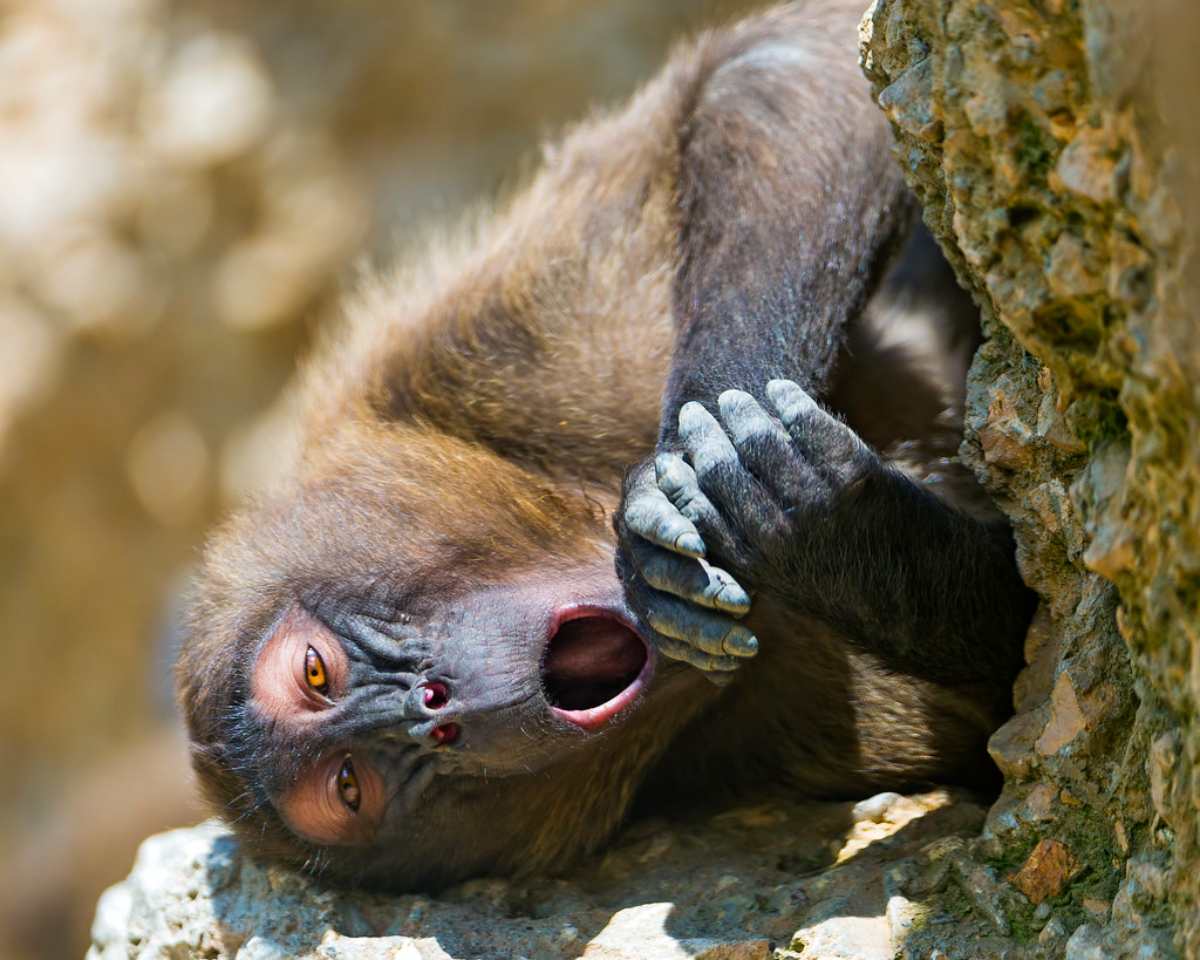
Monkeys are famous for behaviors that seem almost too strange or too human to be real, from throwing tantrums over unequal pay to grooming rituals that double as social currency. These fun and funny monkey facts sit right alongside other weird animal facts that prove nature is stranger than fiction, capturing the quirkier, more entertaining side of primate life that goes beyond the standard biology textbook.
Weird Monkey Behaviors You Won’t Believe
Capuchin monkeys have a documented sense of fairness that borders on comedic outrage: in a well-known 2003 study, capuchins that received cucumber slices for a task while a neighboring monkey got grapes for the same task refused the cucumber and sometimes threw it back at researchers. The experiment has been replicated multiple times and is widely cited as evidence that a sense of inequity isn’t uniquely human.
Japanese macaques, nicknamed “snow monkeys,” have been observed rolling snowballs for no survival-related reason at all, seemingly just for play, a behavior researchers classify as one of the clearest examples of animal recreation. In the same population, one female macaque started cleaning sand off sweet potatoes in a stream decades ago, and the habit spread through the troop and is still practiced by her descendants today.
Some monkey species also use deception. Male vervet monkeys have been recorded giving false alarm calls signaling a predator that isn’t actually there, specifically timed to scatter rivals during mating competition, only to have the trick backfire once other monkeys learn to recognize the pattern and ignore it.
Unusual Monkey Facts Scientists Still Study
Not every strange monkey behavior has a settled explanation, which is part of why primatologists keep monkeys under long-term observation. Grooming is a good example: monkeys spend hours a day picking through each other’s fur, and while parasite removal is one function, researchers now believe the ritual is primarily social, a way of building alliances and reducing group tension, functioning almost like a biological form of small talk.
Tool use is another area of active study. Long-tailed macaques in Thailand use stones to crack open oysters and nuts along the shoreline, and researchers have found that this tool-cracking behavior appears to be passed down and refined across generations rather than reinvented by each monkey, suggesting a form of cultural transmission scientists are still working to map fully.
Perhaps the most debated behavior is self-medication: several monkey species have been observed eating specific plants with no obvious nutritional value, seemingly to treat parasites or digestive issues, a behavior called zoopharmacognosy that researchers are still trying to confirm is intentional rather than incidental, a puzzle not unlike the misunderstood defensive behaviors covered in our look at whether sloths are dangerous.
Monkey Facts for Kids and Preschoolers
Monkey facts for kids are simple, fun animal facts that help young learners understand where monkeys live, what they eat, and how they act, written in easy language that’s perfect for preschool and early elementary lessons. This section breaks monkey facts down into bite-sized pieces that are simple to read, easy to remember, and fun to share.
Easy Monkey Facts for Classroom Learning
Monkeys live in warm places like rainforests, jungles, and mountains, mostly in Africa, Asia, and South America. Most monkeys live in big groups called troops, and they take care of each other by grooming, playing, and even sharing food. A baby monkey is called an infant, and it usually rides on its mother’s back or belly for the first few months of its life, holding on tightly as she climbs and jumps through the trees.
Monkeys are very smart animals. Some monkeys, like capuchins, can use rocks like tools to crack open nuts, which is something scientists once thought only humans and apes could do. Monkeys also “talk” to each other using different sounds and faces. One sound might mean “watch out for a snake,” while another means “there’s food over here.”
One easy way to teach kids the difference between monkeys and apes is the tail rule: almost all monkeys have tails, and apes like gorillas and chimpanzees do not. It’s a simple, memorable fact that works well for classroom games, much like learning to spot the difference between a bison and a buffalo using one clear, easy-to-remember trait.
Printable-Style Fun Facts (Simple Language)
These short, standalone facts are ideal for flashcards, worksheets, or read-aloud activities:
- The smallest monkey in the world is the pygmy marmoset, and it’s about the size of a mouse.
- Howler monkeys are so loud, you can hear them from three miles away.
- Monkeys use their tails to help them balance and swing from tree to tree.
- Some monkeys clean their food before eating it, just like washing hands before a meal.
- Monkeys love to play, chase each other, and even roll in the snow for fun.
- A group of monkeys is called a troop, and troops can have anywhere from a few monkeys to over a hundred.
Monkey Species Deep Dive
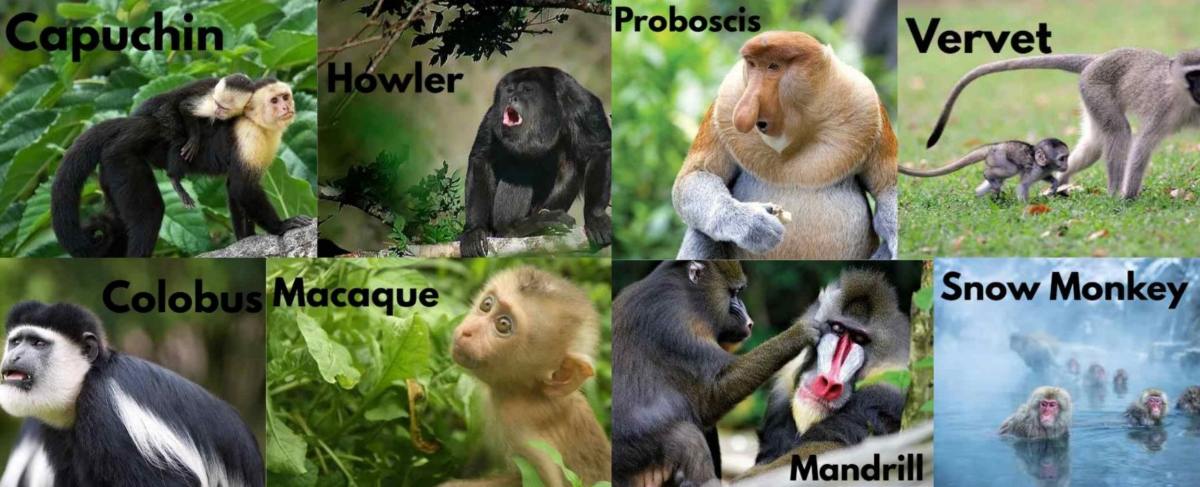
Monkeys aren’t a single animal with minor variations; they’re a group of more than 260 distinct species, each with its own body, behavior, and habitat. This section breaks down eight of the most searched-for and scientifically interesting species, from tool-using capuchins to the world’s largest monkey, the mandrill.
Capuchin Monkey Facts
Capuchin monkeys are small, highly intelligent New World monkeys native to Central and South American rainforests, best known for their distinctive black-and-white “cap” of fur and their use of tools. Capuchins are one of the few non-ape species documented using stone tools in the wild; they crack open nuts and shellfish by pounding them against rocks, a skill that takes young capuchins years to master by watching adults. With brain-to-body size ratios among the highest of any monkey, capuchins are frequently used in cognitive research and have even been trained to assist people with disabilities as service animals.
Howler Monkey Facts
Howler monkeys are large, tree-dwelling monkeys found throughout Central and South America, instantly recognizable by their deep, roaring calls that carry through dense forest. Their volume comes from an enlarged hyoid bone in the throat that acts like a natural amplifier, allowing howler calls to travel up to three miles, making them the loudest land animal in the Western Hemisphere. Despite their intimidating roar, howler monkeys are primarily leaf-eaters, spending most of the day resting to conserve energy since leaves provide relatively little nutrition compared to fruit.
Proboscis Monkey Facts
Proboscis monkeys are large, reddish-brown monkeys found only on the island of Borneo, named for the male’s oversized, pendulous nose that can grow several inches long. Scientists believe the exaggerated nose amplifies vocal calls and signals dominance and health to rival males and potential mates; the bigger the nose, the more attractive and intimidating the monkey. Proboscis monkeys are also strong swimmers and have partially webbed feet, an unusual trait among primates that helps them cross rivers and escape predators in their swampy mangrove habitat.
Vervet Monkey Facts
Vervet monkeys are medium-sized, highly social monkeys native to sub-Saharan Africa, recognized for their black faces framed by white fur and their sophisticated alarm-call system. Vervets use distinct vocalizations for different predators: one call for snakes, another for eagles, another for leopards, the same big cat that shows up in our comparison of cheetahs vs leopards, and researchers have confirmed troop members respond with the correct, predator-specific escape behavior for each sound, essentially functioning as a primitive vocabulary. Vervets live in structured troops with strict social hierarchies, and their behavior has been studied extensively for insight into the origins of human language and social cooperation.
Colobus Monkey Facts
Colobus monkeys are African tree-dwelling monkeys best known for their long, flowing black-and-white fur and the notable absence of thumbs; their name comes from the Greek word for “mutilated,” referring to this reduced digit. Missing thumbs might sound like a disadvantage, but colobus monkeys use their hook-like hands to move rapidly through trees, leaping distances of up to 20 feet between branches. They’re primarily leaf-eaters with a specialized, multi-chambered stomach similar to a cow’s, not unlike the digestive setup behind some fun facts about dual cattle, allowing them to digest tough, fibrous foliage that most other primates can’t process.
Macaque Monkey Facts
Macaques are one of the most widespread monkey genera on Earth, found across Asia and parts of North Africa, and include well-known species like the Japanese macaque and rhesus macaque. Macaques are highly adaptable, thriving in environments ranging from snowy mountains to tropical forests to dense urban areas, which has made them one of the most studied primates in behavioral and medical research. Some macaque populations have developed learned cultural traditions such as washing food or bathing in hot springs that are passed down through generations rather than being instinctive.
Mandrill Monkey Facts
Mandrills are the biggest monkey species in the world, native to the rainforests of West-Central Africa, with males reaching up to 119 pounds and sporting the most vividly colored face of any mammal, a striking combination of blue, red, and purple ridges. That color intensifies with the male’s social status and testosterone levels, making it a visual signal of dominance within the troop. Despite their fearsome appearance, mandrills are primarily omnivorous foragers, feeding on fruit, seeds, insects, and small animals across the forest floor a diet far more varied than what you’d find if you looked at what black bears eat in comparison.
Snow Monkey Facts
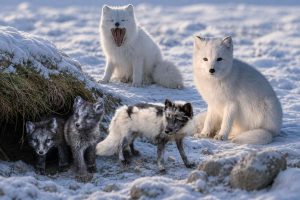
Snow monkeys, more formally known as Japanese macaques, are native to the mountainous areas of Japan and are famous for being the northernmost-living monkey species on Earth, tolerating temperatures well below freezing a level of cold tolerance that puts them in the same conversation as classic cold-climate survivors covered in our Arctic fox facts. They’re best known for bathing in natural hot springs during winter, a learned behavior first observed in a single troop decades ago that has since spread and become a defining trait of the population. Snow monkeys have also been documented rolling and playing with snowballs with no survival benefit, a behavior researchers point to as clear evidence of recreational play in non-human primates.
Where Monkeys Live: Habitat and Rainforest Facts
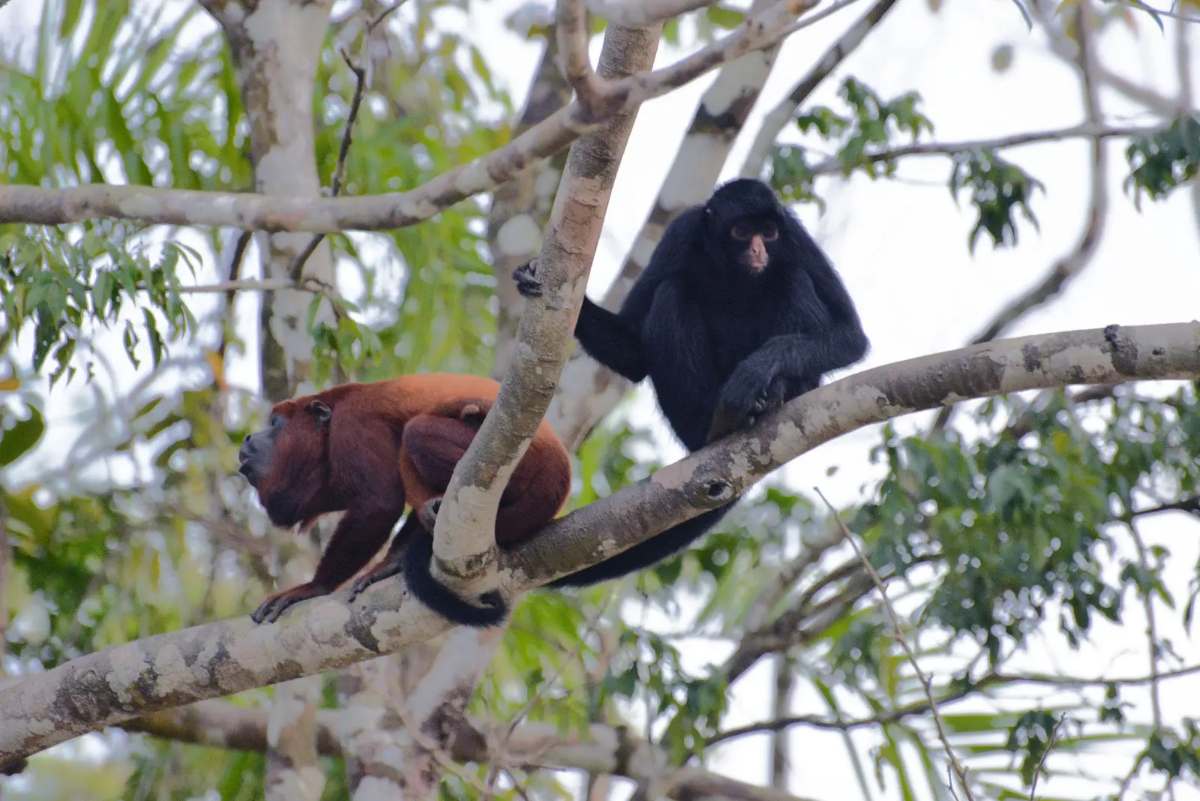
Monkeys live across a wide range of environments. Still, the vast majority an estimated 90% of all monkey species make their home in tropical rainforests across Africa, Asia, and Central and South America. These forests provide the dense canopy cover, year-round food supply, and vertical structure that most monkey species have grown to depend on for survival.
Rainforest Monkeys and Their Ecosystem Role
Rainforest monkeys aren’t just residents of their ecosystem; they’re active architects of it. As monkeys move through the canopy eating fruit, they swallow seeds whole and later disperse them across wide areas through their droppings, making many species critical seed dispersers that help regenerate forest growth far from the parent tree. Some rainforest trees have even evolved fruit specifically suited to monkey digestion, a sign of how deeply intertwined monkey behavior and forest health have become over millions of years.
Rainforest monkeys also occupy a key position in the food chain, serving as prey for large predators like jaguars, eagles, and snakes while themselves controlling insect and small-animal populations through foraging. Their alarm calls are species-specific warnings for different predators and don’t just protect their own troop; other animals in the forest, including birds and deer, have been observed responding to monkey alarm calls as an early warning system of their own.
How Habitat Shapes Monkey Behavior
A monkey’s environment directly shapes its body and behavior, and nowhere is this clearer than in the split between New World and Old World monkeys. New World monkeys, isolated in the dense rainforests of Central and South America for roughly 40 million years, evolved prehensile tails strong enough to grip branches and support their full body weight a trait almost absent in Old World monkeys, which adapted instead to a wider mix of forests, savannas, and even mountainous terrain across Africa and Asia.
Species living outside dense rainforest show just how adaptable monkeys can be. Japanese macaques, or snow monkeys, survive freezing mountain winters by growing thicker fur and using natural hot springs to regulate body temperature, behavior unheard of in tropical species. Similarly, vervet monkeys in Africa’s open savanna rely far more heavily on complex alarm calls than deep-forest species do, since less canopy cover means less protection and a greater need for early predator warnings. In each case, habitat isn’t just where a monkey lives; it’s the primary force driving how that species eats, communicates, and survives.
Conclusion
Monkeys remain one of the most fascinating groups in the animal kingdom not just for their sheer diversity across more than 260 species, but for the intelligence, social complexity, and adaptability they display in habitats ranging from tropical rainforests to snowy mountains. From capuchins cracking nuts with stone tools to vervet monkeys using distinct alarm calls for different predators, these behaviors show that monkeys aren’t just entertaining to watch; they’re genuinely sophisticated animals whose habits continue to reshape how scientists understand primate cognition and communication.
Whether you came here for a quick classroom fact, a deep dive into a specific species like the mandrill or the proboscis monkey, or a better understanding of how rainforest habitat shapes monkey behavior, the throughline is the same: monkeys are far more complex than their reputation as playful, mischievous animals suggests. If you enjoyed this deep dive, you might also like our cats facts, a much more familiar animal with its own surprising quirks. As research continues, particularly around tool use, cultural transmission, and self-medicating behavior, it’s likely that even more surprising monkey facts are still waiting to be discovered.
Frequently Asked Questions(FAQs)
What is the smartest monkey species?
Capuchin monkeys are widely considered the smartest monkey species, largely due to their advanced tool use and one of the highest brain-to-body size ratios of any primate outside the great apes. They’ve been documented using stone tools to crack nuts and shellfish, a skill young capuchins take years to learn by observing adults, and their problem-solving ability has made them a common subject in cognitive research.
How long do monkeys live?
Monkey lifespans vary significantly by species and environment, but most live somewhere between 15 and 40 years. Smaller species like the pygmy marmoset typically live on the shorter end of that range. In contrast, larger, longer-lived species such as capuchins and macaques can survive into their 30s or 40s, especially in protected or captive settings.
What do monkeys eat in the wild?
Most monkeys are omnivores, and their wild diet centers on fruit, leaves, seeds, and insects, with some species occasionally eating eggs or small animals. Diet varies by species and habitat: leaf-eating monkeys like colobus have specialized stomachs to digest tough foliage, while species like capuchins and macaques eat a broader, more opportunistic mix of plant and animal food.
Are monkeys and apes the same?
No, monkeys and apes are different groups of primates. The simplest way to tell them apart is the tail: almost all monkeys have tails, while apes, including gorillas, chimpanzees, orangutans, and humans, do not.







)
&description=&image=https://litefacts.com/jihujem/2026/07/monkey-facts-1024x683.jpg)