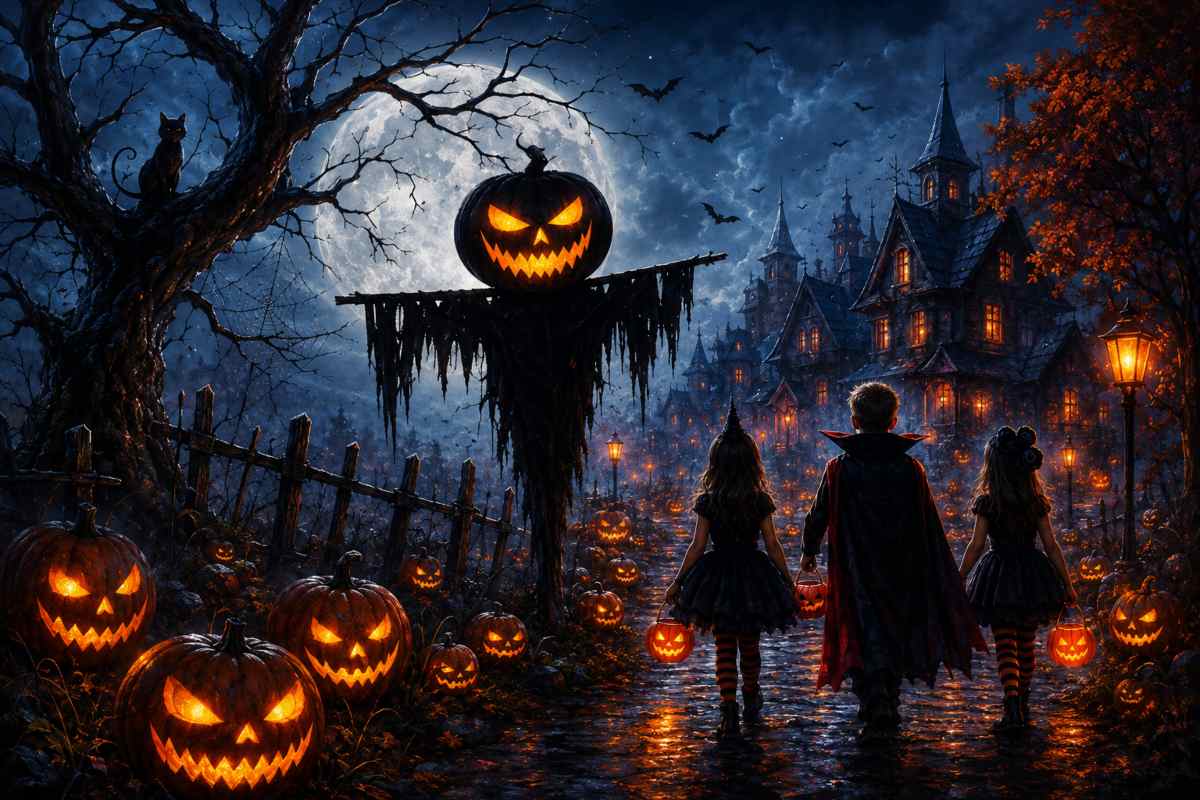
Halloween facts range from ancient Celtic fire rituals to modern candy-spending records that top $3.6 billion a year in the U.S. alone, according to the National Retail Federation. What started roughly 2,000 years ago as the Gaelic festival of Samhain, a night when the boundary between the living and the dead was believed to thin, has evolved into one of the most widely celebrated holidays in the world, blending ancient superstition with costumes, candy, and community.
This directory pulls together more than 200 Halloween facts in one place, organized so you can find exactly what you’re looking for: quick one-liners to drop into conversation, scary and creepy facts for setting the mood, fun and funny facts for kids and adults alike, weird traditions from around the globe, and the real history behind how a Celtic harvest festival became America’s second-biggest commercial holiday.
If you enjoy this kind of seasonal deep dive, you might also like our Christmas fun facts, which cover the other end of the holiday calendar. Whether you’re prepping a classroom lesson, hosting a party, or just curious how much truth is behind the myths, you’ll find it below, broken into clear sections so you can jump straight to the facts that matter most to you.
Quick Halloween Facts (At a Glance)
Halloween facts move fast; this section is built for skimming, sharing, or settling a debate in under a minute. Below you’ll find the holiday’s biggest numbers first, followed by a handful of fast, standalone facts you can drop into any conversation.
Halloween in Numbers
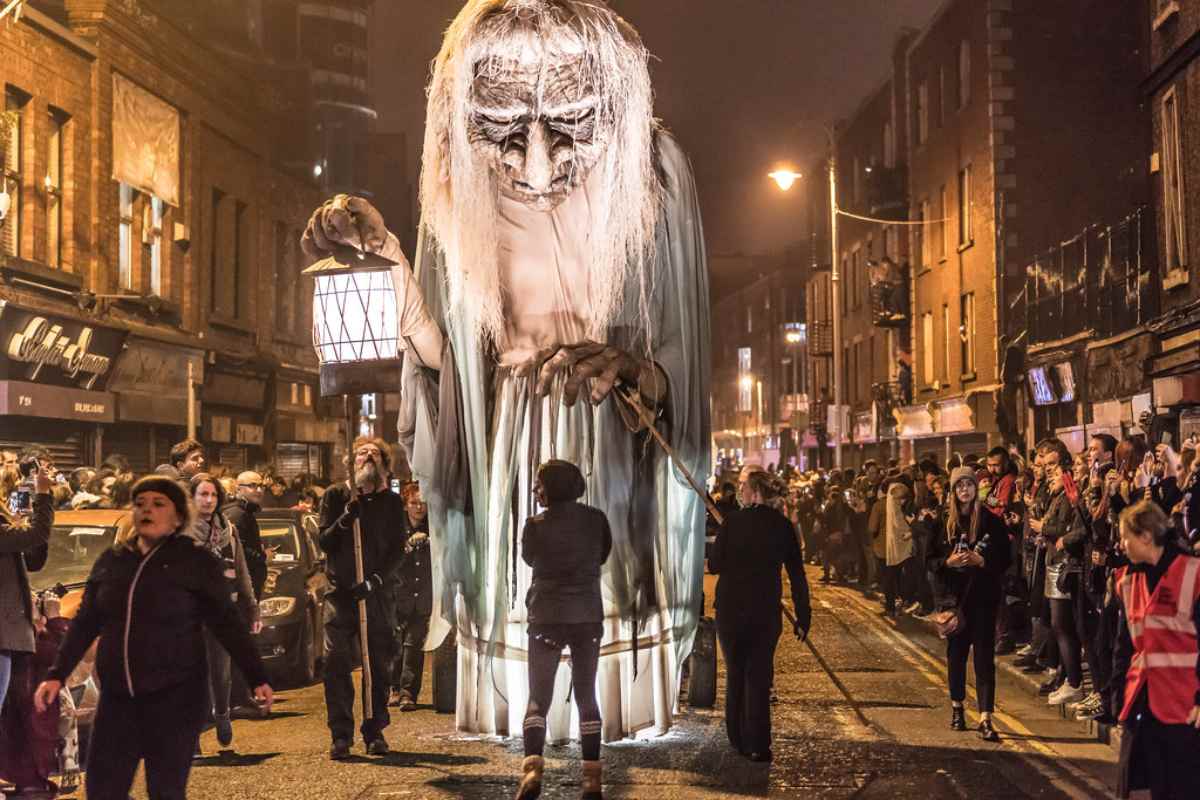
Halloween is a massive holiday by nearly every measure. Americans spent an estimated $11.6 billion on Halloween in 2023, according to the National Retail Federation, covering costumes, candy, decorations, and greeting cards. Roughly 172 million U.S. adults planned to celebrate that year, and the average household spent around $108 on the holiday. Candy alone accounts for close to $3.6 billion of that spending annually, making Halloween the single biggest candy-selling occasion in the country, bigger than Easter or Valentine’s Day. Globally, Halloween traces back roughly 2,000 years to the Celtic festival of Samhain, meaning the holiday has been evolving, in one form or another, for two millennia.
Fastest Facts to Share Right Now
If you need a Halloween fact on the spot, these work every time. The name “Halloween” is a shortened form of “All Hallows’ Eve,” the night before All Saints’ Day on the Christian calendar. Jack-o’-lanterns were originally carved from turnips and potatoes in Ireland and Scotland, not pumpkins; the switch to pumpkins happened after Irish immigrants arrived in America and found pumpkins more plentiful.
The tradition of “trick-or-treating” has roots in a medieval practice called “souling,” where poor children and adults went door to door offering prayers for the dead in exchange for food. And despite feeling like a kids’ holiday, adults now make up a large share of Halloween celebrants, dressing up, decorating, and attending parties in numbers that rival or exceed children’s participation.
Fun Halloween Facts
Fun Halloween facts cover everything from surprising history to lighthearted trivia that makes the holiday more enjoyable to celebrate. This section splits them into facts adults tend to appreciate most and facts that land best with kids.
Fun Halloween Facts for Adults
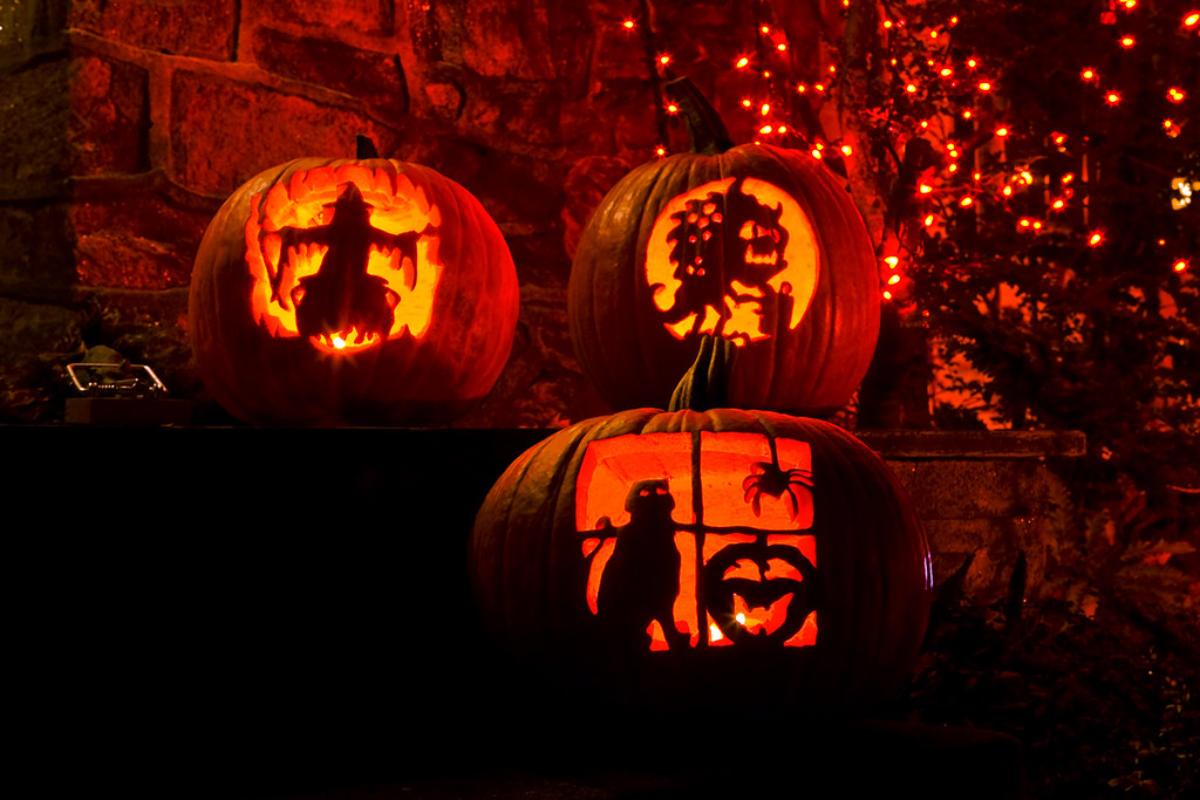
Adults often enjoy Halloween facts with a bit more depth or a surprising twist. Halloween is actually the second-highest-grossing commercial holiday in the United States after Christmas, with total spending regularly topping $10 billion a year. The superstition of avoiding black cats on Halloween dates back to the Middle Ages, when cats were associated with witches and considered bad omens if they crossed your path. Samhainophobia is the clinical term for a fear of Halloween, and it’s recognized as a genuine specific phobia. If fear and the mind interest you, our roundup of psychology facts digs into plenty of other conditions like this one.
Interestingly, more candy is sold in the week leading up to Halloween than in the days immediately after, meaning most people buy their candy well in advance rather than scrambling last minute. Halloween also has strong ties to matchmaking history. In Victorian-era Scotland and Ireland, young women used apple peels, mirrors, and nut-roasting games on Halloween night to try to predict their future husbands.
Fun Halloween Facts for Kids
Kids tend to love Halloween facts that feel a little magical or easy to picture. Bats are one of the most iconic Halloween symbols because they were often seen swarming around bonfires during ancient Samhain celebrations, drawn by the insects the fires attracted. The world’s largest pumpkin ever grown weighed over 2,700 pounds, heavier than a small car. Candy corn, one of the most recognizable Halloween treats, was invented in the 1880s, making it well over 140 years old.
Owls are also strongly linked to Halloween because ancient cultures believed hearing an owl’s call meant someone nearby was about to die, which is how the “spooky owl” association stuck around for centuries. And the tradition of dressing in costumes actually started as a way to disguise oneself from spirits. People believed that wearing a costume would trick roaming ghosts into thinking they were one of them, keeping them safe on Samhain night.
Scary and Creepy Halloween Facts
Scary Halloween facts dig into the darker, more unsettling side of the holiday, from real historical superstitions to eerie traditions that still linger today. This section pulls together the facts most likely to send a chill down your spine.
Spine-Chilling Facts About Halloween’s Dark Side
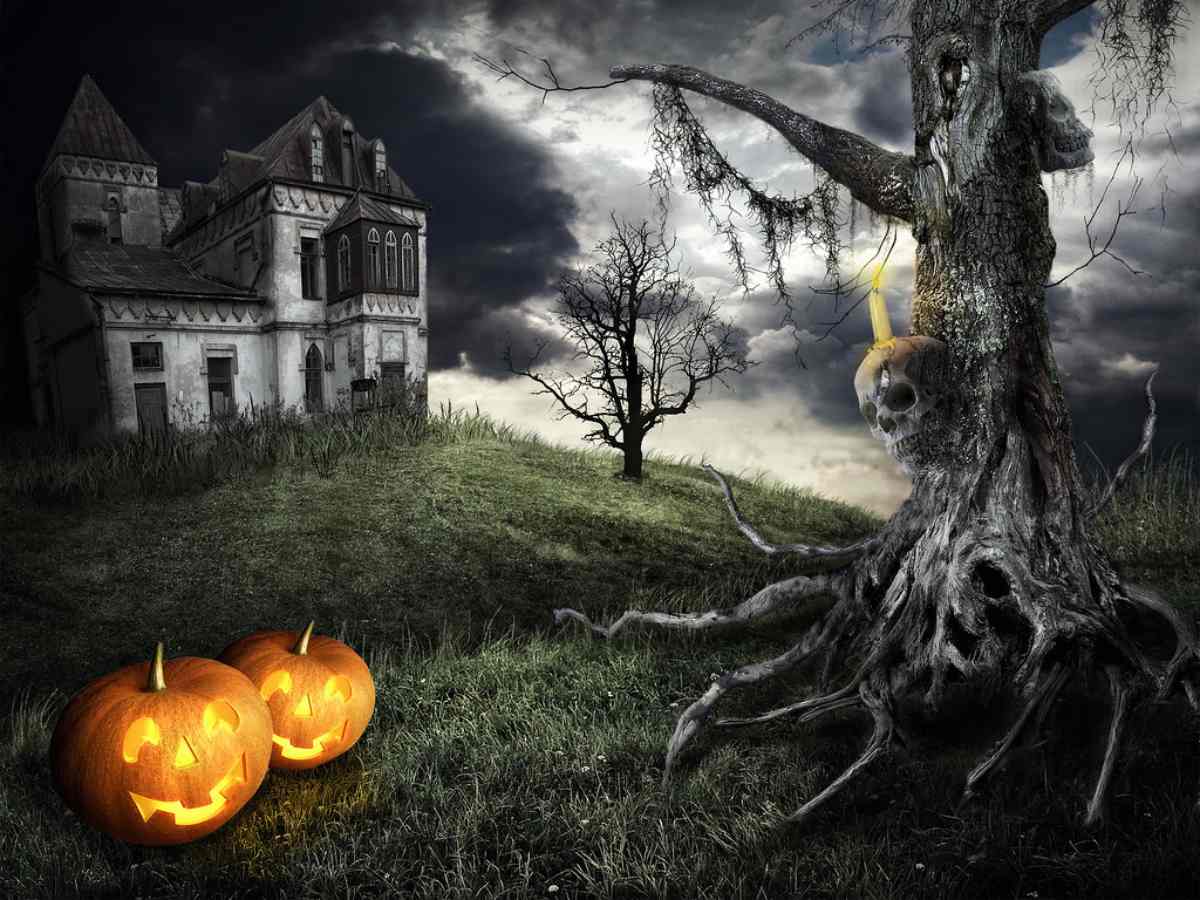
Halloween’s origins are darker than most people realize. The ancient Celts who celebrated Samhain believed that on this one night each year, the veil between the world of the living and the dead grew thin enough for spirits to cross over, and not all of them were friendly. To ward off wandering ghosts, they would dress in animal skins and disguise themselves, a practice widely considered the true origin of the Halloween costume. In medieval Europe, some believed that if you saw your own shadow by candlelight on Halloween night, you were destined to die within the year.
Graveyards were also considered especially dangerous on Halloween, since it was thought spirits could pull the living into the world of the dead if caught wandering among the tombstones after dark. Even the jack-o’-lantern has a grim backstory: Irish folklore tells of “Stingy Jack,” a man condemned to wander the earth forever with only a hollowed-out turnip and a burning coal to light his way after being turned away from both heaven and hell.
Scary Facts Perfect for Halloween Night
Some Halloween facts are unsettling enough to save for the night itself. Studies have shown that fear itself can be physically dangerous; emergency room visits and reports of heart-related incidents tend to spike slightly around Halloween, a phenomenon some researchers link to the stress of haunted houses and startle-based scares. This kind of reaction shows just how deeply psychological Halloween fear really is, something explored further in our piece on Is psychology a social science.
Full moons and Halloween have coincided only a handful of times in the past century, and folklore has long claimed that a Halloween full moon amplifies supernatural activity, even though the two events are astronomically unrelated. The number of reported “haunted house” 911 calls also rises on Halloween night compared to any other night of the year, according to several U.S. police department records. And in a detail that unsettles even seasoned trivia fans: the werewolf legend predates the vampire myth by centuries, with wolf-transformation folklore appearing in European texts as early as the 1st century AD, making it one of the oldest surviving “monster” myths tied to the Halloween season.
Cool and Weird Halloween Facts
Weird Halloween facts prove the holiday looks very different depending on where and how you celebrate it. This section covers unusual traditions from other countries and a few genuinely strange records tied to Halloween.
Bizarre Halloween Traditions From Around the World
Halloween isn’t celebrated the same way everywhere, and some of its global cousins are stranger than the American version. In Ireland, where the holiday originated, a traditional dish called “barmbrack,” a fruitcake-like bread, is baked with small trinkets hidden inside, and whichever object you find in your slice is said to predict your fortune for the coming year. In Mexico, Día de los Muertos overlaps with Halloween in timing but flips the tone entirely, celebrating deceased loved ones with bright marigolds, sugar skulls, and altars rather than fear or fright.
Austria has a lesser-known custom of leaving bread, water, and a lit lamp on the table before bed on Halloween night, believed to welcome the souls of the dead back into the home. In Hong Kong, a similar spirit-focused festival called Yue Lan involves burning pictures of fruit and money, based on the belief that spirits emerge hungry and in need of nourishment. And in parts of Germany, people still hide their knives on Halloween night out of an old superstition meant to prevent returning spirits from being harmed or from harming anyone else. If eerie, atmospheric fall settings interest you, the Tunnel of Trees makes for an equally moody autumn read.
Strange Records and Halloween Oddities
Halloween has generated its share of genuinely odd world records. The largest gathering of people dressed as witches took place in 2021 in Salem, Massachusetts, fittingly, with over 1,500 participants breaking the previous record. The most jack-o’-lanterns ever lit and displayed in one place exceeded 30,000 pumpkins, set during a single festival event in Boston. For more record-setting spectacle, our Burj Khalifa facts cover an entirely different kind of world-record obsession.
Bat Conservation International notes that a single bat can eat up to 1,000 mosquito-sized insects in an hour, which is part of why bats became so tightly associated with bonfire-lit Samhain nights in the first place. Halloween is also the only major U.S. holiday with no fixed federal or religious observance tied to it, which is part of why its traditions have been able to shift so freely from turnip carving to pumpkin carving, and from solemn spirit rituals to a multibillion-dollar costume industry over the past two centuries.
Funny Halloween Facts
Funny Halloween facts prove the holiday isn’t just about fright; plenty of its history and trivia is genuinely amusing once you dig into it.
Halloween Facts That’ll Make You Laugh
Some of Halloween’s silliest details are also its most surprising. The fear of Halloween has an official name, samhainophobia. Still, there’s an equally real (and far more common) condition where surveys show nearly 90% of parents admit to sneaking candy from their kids’ trick-or-treat bags after they’ve gone to bed. Tootsie Rolls were actually the first-ever wrapped penny candy in America, and to this day they remain one of the most commonly “traded away” candies in unofficial kid trick-or-treat economies, according to informal candy-ranking surveys conducted by outlets like CandyStore.com.
The world’s largest candy corn sculpture, built entirely out of real candy corn, once used more than 4,000 pounds of the stuff, enough to make even the most devoted candy corn fan a little queasy. Pet costumes have also exploded in popularity: the National Retail Federation reports that more than $700 million is spent annually just on Halloween costumes for pets, meaning dogs and cats dressed as pumpkins, hot dogs, and tiny superheroes now make up a real slice of the holiday economy.
And in a fittingly ironic twist, the popular Halloween chant “trick or treat” was rarely used before the 1930s; it only became standard after candy companies began actively promoting it in advertising, meaning one of Halloween’s most “ancient-feeling” traditions is largely a marketing invention less than a century old.
Halloween Facts for Kids and Preschoolers
Halloween facts for kids work best when they’re simple, easy to picture, and free of anything too scary. This section is built with young readers and preschoolers in mind, along with a few facts made specifically for classroom use.
Easy, Age-Appropriate Halloween Facts
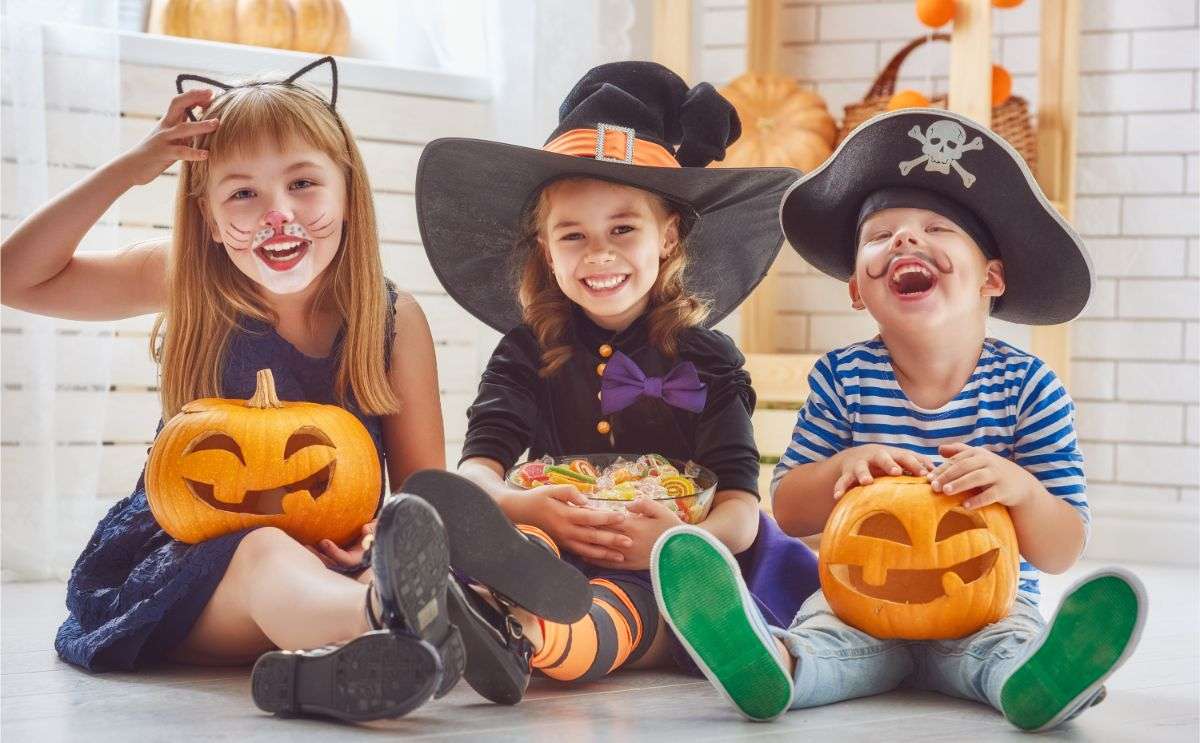
Halloween facts for kids should feel fun rather than frightening, and there are plenty that fit the bill. Pumpkins aren’t actually vegetables; they’re a fruit, since they grow from a flower and contain seeds, just like apples and watermelons. The word “spooky” wasn’t originally about ghosts at all; it comes from an old Dutch word meaning “ghost” or “specter,” which slowly became the friendly, kid-safe word we use today. Black and orange became Halloween’s official colors because orange represents the fall harvest, while black represents the changing of the seasons into winter, not anything scary at all.
Bats, one of Halloween’s most popular symbols, aren’t dangerous to people; most bats found near Halloween decorations and bonfires are actually helpful, since a single bat can eat hundreds of bugs in just one night. And even though costumes today are all about superheroes and princesses, the very first Halloween costumes were simple animal skins worn hundreds of years ago to help people blend in with nature.
Halloween Facts for the Classroom
Teachers often look for Halloween facts that double as quick lessons, and several fit naturally into a classroom setting. Halloween falls on October 31st every single year, making it a reliable, easy date for young students to learn and remember. The tradition of trick-or-treating is believed to have started over 600 years ago, giving teachers an easy way to connect Halloween to lessons on history and the passage of time. Jack-o’-lanterns were first carved from turnips in Ireland, not pumpkins, which makes for a great geography-and-history tie-in when teaching where Halloween traditions actually began.
According to the National Confectioners Association, Americans buy roughly 600 million pounds of candy each Halloween season, a number big enough to spark a fun classroom math lesson on large quantities. And because Halloween blends harvest traditions, folklore, and history from multiple countries, it’s often used by teachers as an easy entry point into broader lessons on world cultures and traditions.
Random Halloween Facts
Random Halloween facts are the ones that don’t fit neatly into any single category quick, standalone tidbits perfect for trivia nights, party small talk, or just satisfying curiosity.
Grab-Bag of Trivia-Style Facts and Fun Tidbits
Some Halloween facts are simply fun on their own, with no deeper theme connecting them. Ireland and Scotland are widely credited as the birthplaces of trick-or-treating, but the modern American version didn’t become widespread until the 1930s and 1940s. The Snickers bar consistently ranks as one of the most popular Halloween candies in the United States, according to annual candy-ranking surveys from retailers like Candystore.com. Halloween is celebrated on October 31st because it falls the night before All Saints’ Day (November 1st) on the Christian calendar, tying the modern secular holiday directly to centuries-old religious observance.
The color combination of orange and black wasn’t officially adopted until the early 1900s, even though Halloween itself dates back roughly 2,000 years. Owl calls, black cats, and spiders all became associated with Halloween not because of any single origin story, but because each was independently linked to death, bad luck, or the supernatural in different European folk traditions that later merged into modern Halloween symbolism.
Weather superstitions have followed a similar path, much like the folklore around storms covered in our hurricane facts; Halloween’s stormy, wind-swept nights have long been linked to omens and bad luck. And despite its costume-and-candy reputation today, Halloween remains one of the only major U.S. holidays with no official day off from work or school, even though it ranks among the most celebrated dates on the calendar.
The History and Origin of Halloween
Halloween originated roughly 2,000 years ago as Samhain, an ancient Celtic festival marking the end of harvest and the start of winter, a night the Celts believed opened a doorway between the world of the living and the dead.
What Originated Halloween?
Halloween’s roots trace back to the Celts, who lived across what is now Ireland, the United Kingdom, and northern France. They celebrated Samhain (pronounced “sah-win”) on the night of October 31st, marking the transition from the harvest season into the dark, cold months of winter. The Celts believed this was the one night of the year when the boundary between the living and the dead grew thin enough for spirits to cross over, which is why they lit bonfires and wore disguises made from animal skins, both meant to ward off wandering ghosts.
When the Roman Empire conquered Celtic territory, Roman festivals honoring the dead and the harvest goddess Pomona gradually blended with Samhain traditions. Centuries later, the Catholic Church designated November 1st as All Saints’ Day (also called All Hallows’ Day), making October 31st “All Hallows’ Eve,” the phrase that eventually shortened into the word “Halloween” we use today.
Halloween in Medieval Times
By the Middle Ages, Halloween had absorbed a mix of pagan superstition and Christian observance. Medieval communities practiced “souling,” where poor people, often children, went door to door on Halloween and All Souls’ Day, offering prayers for the dead in exchange for small cakes called “soul cakes.” This practice is widely considered the direct ancestor of modern trick-or-treating.
Bonfires remained central to Halloween throughout the medieval period, believed to ward off evil spirits and, in some regions, used for divination, where people would toss stones into the fire and interpret the next morning’s ashes to predict who in the village would survive the coming year. Turnip and beet carving also became common during this era, with faces carved into the vegetables and lit with embers to frighten away roaming spirits, laying the groundwork for the modern jack-o’-lantern centuries before pumpkins entered the picture.
How Halloween Traditions Evolved Into Today’s Holiday
Halloween as most people know it today took shape largely in the United States. Irish and Scottish immigrants brought their Samhain and All Hallows’ Eve traditions to America in the 19th century, particularly following the Irish potato famine of the 1840s, when large waves of immigrants arrived and found pumpkins, native to North America, far easier to carve than the turnips used back home. By the early 20th century, Halloween had shifted from a solemn, spirit-focused observance into a community-centered celebration built around parties, pranks, and costumes.
Trick-or-treating as a widespread American custom didn’t fully take hold until the 1930s and 1940s, once candy companies began mass-marketing the phrase and practice. Today, that evolution has turned Halloween into a commercial powerhouse: the National Retail Federation reports that U.S. Halloween spending regularly exceeds $10 billion annually, making a 2,000-year-old harvest ritual one of the biggest consumer holidays in the modern calendar.
Halloween Myths vs Facts
Many popular Halloween “facts” are actually myths that have been repeated so often they’re mistaken for history. This section separates what’s genuinely true from what’s folklore or flat-out fiction.
Common Halloween Myths, Debunked
One of the most persistent Halloween myths is that it originated as a “pagan Satanic holiday.” In reality, Samhain, the Celtic festival Halloween evolved from, had nothing to do with devil worship; it was a harvest and ancestor-honoring festival, and the association with Satanism came much later, largely through 20th-century religious commentary rather than historical fact. Another common myth claims that razor blades and poison are regularly hidden in trick-or-treat candy.
Despite decades of urban legend and media scares, researchers, including sociologist Joel Best, who has tracked reported cases since the 1950s, have found no substantiated case of a stranger deliberately poisoning or hiding blades in candy handed out to trick-or-treaters. It’s also widely believed that black cats were burned as witches during Halloween in medieval Europe.
In contrast, black cats were associated with witchcraft superstition; there’s no solid historical record connecting that superstition specifically to Halloween night rituals. Similarly, many assume Halloween has always centered on candy, when in fact candy didn’t become the dominant trick-or-treat item until the mid-20th century; earlier versions of the tradition just as often involved fruit, nuts, coins, or homemade treats. And while full moons are often claimed to appear on Halloween “almost every year,” astronomically a full moon lands on October 31st only once every few decades, making it far rarer than folklore suggests.
Conclusion
Halloween facts span nearly 2,000 years of history, moving from a solemn Celtic ritual meant to ward off wandering spirits into a $11.6-billion celebration of costumes, candy, and community. What started as Samhain, a night the ancient Celts believed opened a doorway between the living and the dead, has been reshaped by Roman festivals, medieval Christian traditions, and Irish immigration into the holiday celebrated across the world today.
What makes Halloween endlessly interesting isn’t just its age, but how much it’s changed shape along the way: turnips became pumpkins, soul cakes became candy, and a night of genuine fear became a night of costumes and community events. Whether you came here for a quick fact to share, a classroom lesson, or a deeper look at where these traditions actually came from, the throughline is the same: Halloween has always been about marking the turn of the season, honoring what came before, and finding a little magic in the dark. That’s stayed true for two thousand years, and it’s likely to stay true for a long time yet.
Frequently Asked Questions(FAQs)
What is a fun fact about Halloween?
Jack-o’-lanterns were originally carved from turnips and potatoes in Ireland and Scotland, not pumpkins. The switch to pumpkins only happened after Irish immigrants arrived in America and found them easier to carve.
What are 5 facts about Halloween?
Halloween dates back roughly 2,000 years to the Celtic festival of Samhain, and the name itself comes from “All Hallows’ Eve.” Trick-or-treating evolved from medieval “souling,” black cats became linked to witchcraft in the Middle Ages, and Americans now spend over $11 billion on the holiday each year.
Where did Halloween originate?
Halloween originated with the ancient Celts, who celebrated Samhain to mark the end of harvest and the start of winter. They believed this night opened a doorway between the living and the dead.
Is Halloween based on a myth?
Halloween’s origins are historical, not mythical; it evolved from the real Celtic festival of Samhain and later Christian observances. Many popular “facts” about it, like poisoned candy or Satanic origins, are myths with no historical evidence.