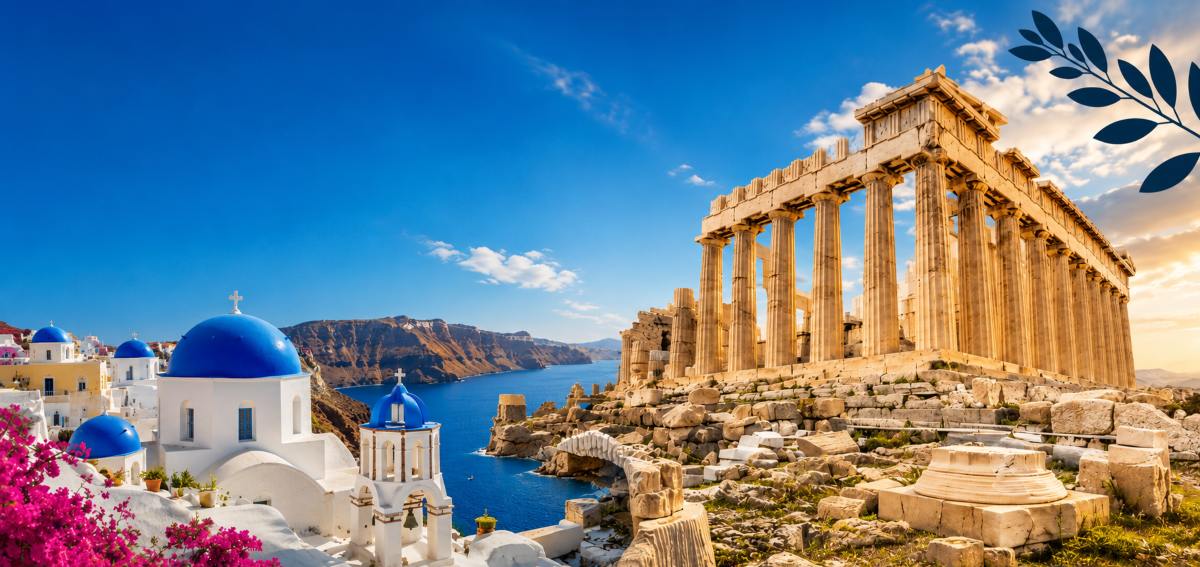
Greece is a country where myth and history blend into everyday life, where ancient ruins share the skyline with modern cafés, and a 3,000-year-old alphabet still shapes the words we use today. From the birthplace of democracy in Athens to over 6,000 islands sprinkled across the Aegean and Ionian Seas (only about 227 of which are inhabited), Greece offers far more than postcard-perfect beaches. This collection of facts about Greece dives into the country’s rich culture, surprising history, unique traditions, and quirky trivia that most travelers and even many Greeks don’t know. If you enjoy this kind of deep dive, you might also like exploring geography trivia from around the world or discovering countries that start with F.
Quick Facts About Greece (Snapshot)
Greece, officially the Hellenic Republic, sits at the southern tip of the Balkan Peninsula in southeastern Europe, bordered by Albania, North Macedonia, Bulgaria, and Turkey. Here’s a fast overview of the essentials:
- Capital: Athens, one of the oldest continually inhabited cities in the world, with a history spanning over 3,400 years
- Population: Roughly 10.4 million people
- Official language: Greek, which uses its own alphabet and has been spoken for more than 3,000 years, making it one of the oldest recorded living languages
- Currency: Euro (€), adopted in 2002 after Greece joined the Eurozone
- Islands: More than 6,000 islands and islets, with only around 227 inhabited
- Government: Parliamentary republic, and the birthplace of democracy itself, dating back to Athens in the 5th century BCE
- Religion: Predominantly Greek Orthodox Christianity, followed by roughly 90% of the population
- Known for: Ancient philosophy, mythology, the Olympic Games (founded in 776 BCE), Mediterranean cuisine, and iconic destinations like Santorini, Mykonos, and the Acropolis
This snapshot barely scratches the surface. Greece’s influence on language, science, politics, and art still shapes daily life across the globe today.
Historical Facts About Greece
Greece’s history stretches back over 4,000 years, making it one of the most historically significant countries on Earth, home to the birthplace of democracy, Western philosophy, and the Olympic Games. Long before Rome rose to power, Greek city-states like Athens and Sparta were already shaping politics, warfare, and thought in ways that still influence the modern world.
Byzantine, Ottoman and Independence Era
After the fall of the Western Roman Empire in 476 CE, Greece became the heart of the Byzantine Empire, which preserved and transmitted the Greek language, art, and Orthodox Christianity for over a thousand years until Constantinople fell in 1453. That collapse ushered in nearly 400 years of Ottoman rule, a period during which Greek culture, language, and religion survived largely underground through the church and secret schools, even as political independence was lost.
The turning point came in 1821, when Greeks launched the War of Independence against Ottoman control. This brutal, decade-long struggle drew support from philhellenes across Europe, including the poet Lord Byron. Greece officially became an independent nation in 1830, making it one of the first countries in the Balkans to break free from Ottoman rule and re-establish itself as a sovereign state after centuries of foreign domination.
Ancient Greece And Mythology Facts
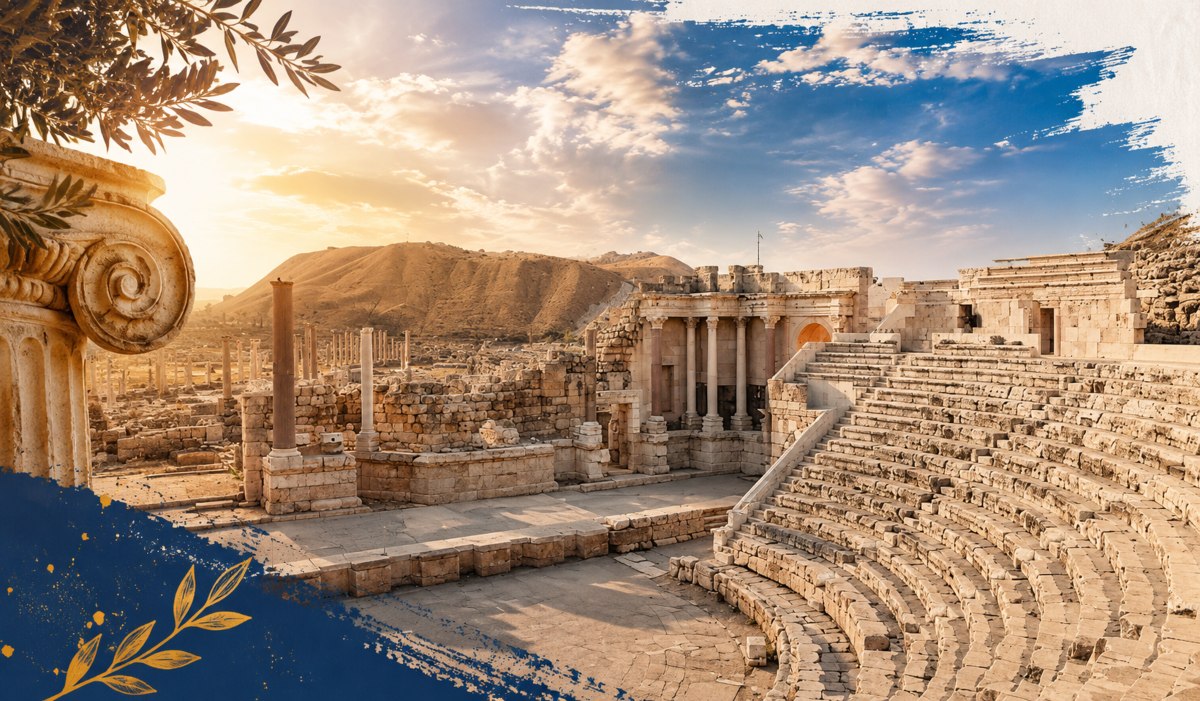
Ancient Greece gave the world its first systems of philosophy, drama, and democratic government and its mythology, filled with gods, heroes, and epic tales, remains one of the most influential storytelling traditions in history. These myths weren’t just entertainment; they shaped Greek religion, art, and daily decision-making for over a thousand years.
Gods, Myths and Legends
The ancient Greeks worshipped a pantheon of twelve major deities known as the Olympians, led by Zeus, the god of the sky and sovereign of the gods, who reigned from Mount Olympus alongside figures like Athena, Poseidon, and Apollo. Greek mythology explained everything from the changing seasons through the story of Persephone’s descent into the underworld to the origins of humanity itself, as told in the myth of Prometheus stealing fire from the gods. These tales were passed down orally for centuries before being recorded in texts such as Homer’s Iliad and Odyssey, epic poems composed around the 8th century BCE that are still studied in schools worldwide.
Heroes such as Hercules, Perseus, and Odysseus became cultural touchstones, embodying ideals of courage, cunning, and resilience that continue to appear in modern films, books, and video games.
Philosophy and Sacred Sites
Ancient Greece is widely considered the birthplace of Western philosophy, with thinkers such as Socrates, Plato, and Aristotle laying the groundwork for logic, ethics, and political theory that are still taught in universities today. Socrates never wrote anything down himself; nearly everything we know about his teachings comes from his student Plato, who launched the Academy in Athens around 387 BCE, considered one of the first organisations of higher understanding in the Western world.
Beyond philosophy, sacred sites like Delphi held enormous religious and political significance; the Oracle of Delphi, a priestess believed to channel prophecies from Apollo, was consulted by kings and city-states before major decisions for nearly a thousand years. Another key site, the Sanctuary of Olympia, was home to the actual Olympic Games, which began in 776 BCE, an event so sacred that all wars between Greek city-states were paused during the competition, a tradition known as the Olympic Truce.
Geography And Nature Facts About Greece
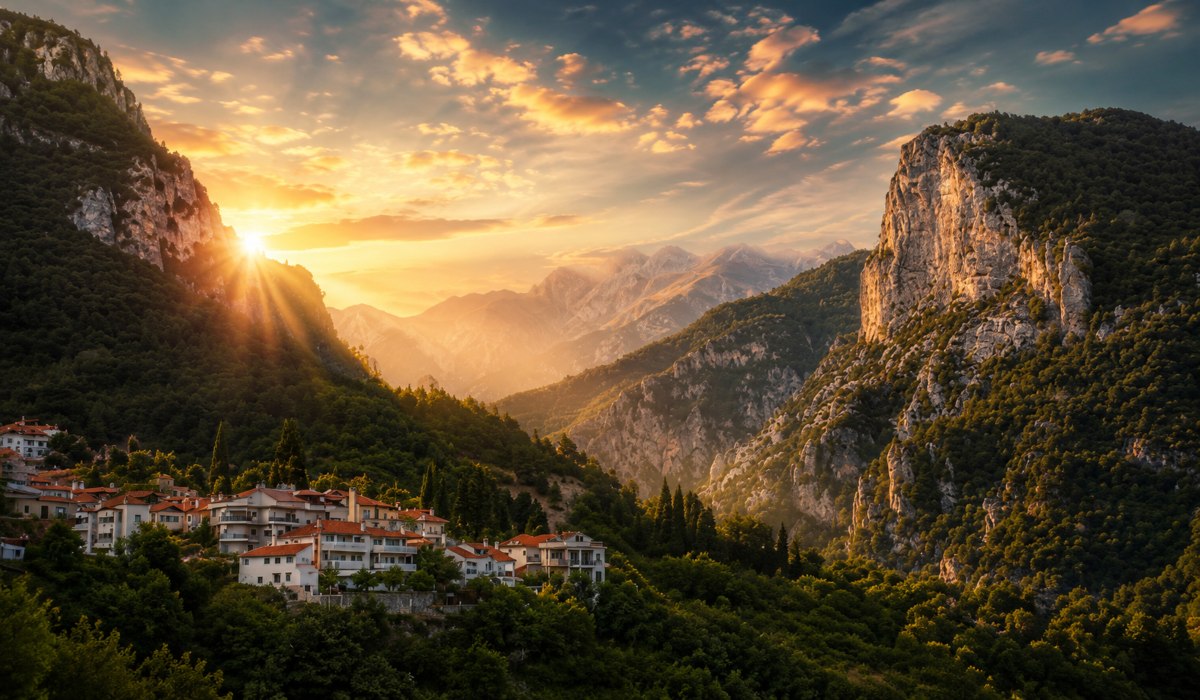
Greece’s dramatic landscape of jagged mountains, sun-drenched coastline, and thousands of islands has shaped its history, economy, and culture just as much as its ancient ruins have. Roughly 80% of the country is mountainous, making it one of the most rugged regions in Europe, a stark contrast to the flatter destinations featured in guides to East Coast national parks.
Mountains, Borders and Climate
Greece sits at the crossroads of Europe, Asia, and Africa, giving it a strategic position that has drawn traders, conquerors, and travelers for millennia. Its highest peak, Mount Olympus, rises to 2,917 meters (9,570 feet) and was believed by ancient Greeks to be the literal home of the gods, a myth so enduring that the mountain remains a UNESCO Biosphere Reserve and a popular hiking destination today. For comparison to other giants around the globe, see our roundup of the tallest mountains in the world.
The country shares land borders with Albania, North Macedonia, Bulgaria, and Turkey. At the same time, its coastline stretches over 13,600 kilometers (8,500 miles), one of the longest in Europe despite Greece’s relatively modest overall size.
Greece enjoys a Mediterranean climate characterized by hot, dry summers and mild, wet winters. However, mountainous regions in the north can experience significant snowfall, creating surprising contrasts within a single country, quite different from the arid extremes explored in our piece on the world largest desert.
Islands, Heritage Sites and Wildlife
Greece is home to more than 6,000 islands and islets scattered across the Aegean and Ionian Seas, though only about 227 are inhabited, ranging from tourist hubs like Santorini and Mykonos to quiet, little-visited outposts, some rivaling the world smallest city in scale. The country also boasts 18 UNESCO World Heritage Sites, including the Acropolis of Athens, the medieval city of Rhodes, and the archaeological area of Delphi, reflecting a cultural and natural legacy that spans thousands of years .
Greek waters and forests support a surprising range of wildlife, including the endangered loggerhead sea turtle, which nests on beaches like Zakynthos’ Lagana Bay, and the Mediterranean monk seal, one of the rarest marine mammals on Earth, with an estimated global population of only around 700 individuals, a significant portion of which live in Greek waters.
For more on how oceans and seas shape ecosystems like these, check out our ocean facts. This blend of dramatic geography and biodiversity makes Greece as much a destination for nature lovers as it is for history enthusiasts.
Facts About the Greek Flag And National Symbols
The Greek flag features nine horizontal blue and white lines with a white cross on a blue canton, symbols that represent the country’s Orthodox Christian faith and its long fight for independence. Officially adopted in 1978 (though its core design dates back to 1822), the flag is one of the most visually distinctive in Europe and carries meaning in nearly every element.
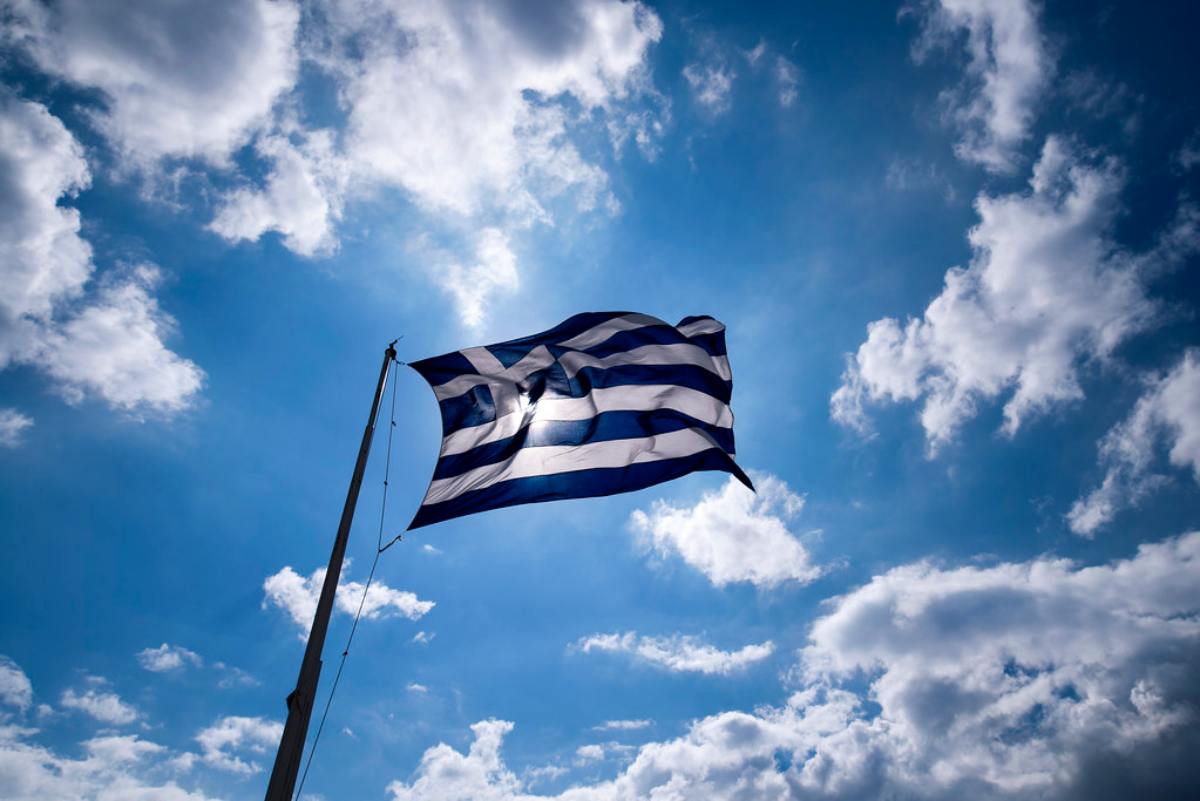
The nine stripes are widely believed to represent the nine syllables of the Greek term “Eleftheria I Thanatos” (“Freedom or Death”), the rallying cry of the Greek War of Independence against Ottoman power. The white cross in the upper-left corner symbolizes Greek Orthodoxy, the dominant religion practiced by roughly 90% of the population, reflecting how deeply intertwined faith and national identity became over centuries of foreign occupation. Blue and white, the flag’s only colors, are said to represent the sea and sky, though some traditions also link them to the purity and freedom the nation fought to reclaim.
Beyond the flag, Greece’s national symbols reflect its layered identity. The national emblem features a blue shield with a white cross, encircled by an olive branch wreath, the olive tree holding deep symbolic weight in Greek culture as a mark of peace and prosperity, dating back to ancient mythology, when Athena reportedly gifted the olive tree to Athens. The phoenix, a legendary bird associated with rebirth, has also appeared throughout modern Greek history as a symbol of the nation’s repeated recovery from occupation and hardship. Together, these symbols tell a story that spans from ancient mythology to the hard-won independence of the 19th century.
Greek Culture And Traditions Facts
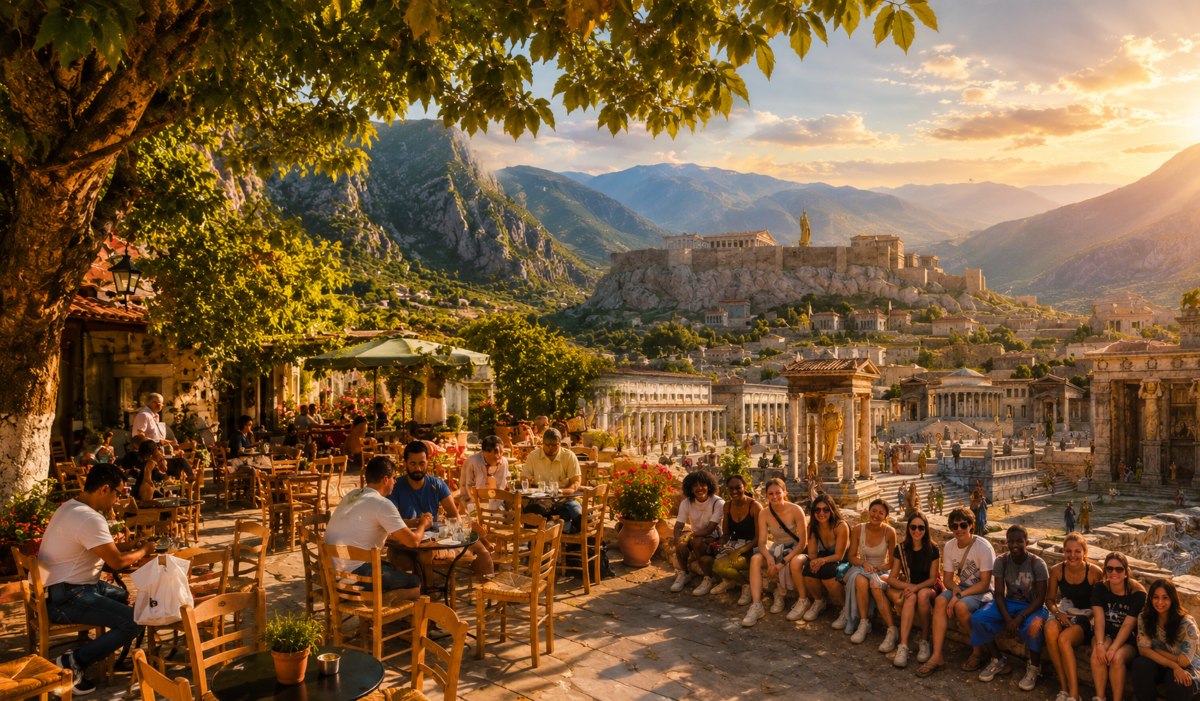
Greek culture is built on a deep sense of community, hospitality, and pride in tradition, values that trace back to ancient concepts still practiced today. At the center of it all is philotimo , a uniquely Greek Word with no direct English translation, roughly meaning “love of honor”,,, a guiding principle that shapes how Greeks treat family, guests, and strangers alike.
Everyday Customs and Hospitality
Hospitality, or filoxenia (literally “friend to a stranger”), is one of the most defining traits of Greek culture, rooted in ancient customs where hosting travelers was considered a sacred duty overseen by Zeus himself. This tradition still shows up in daily life: it’s common for Greek households to offer food or coffee to visitors, even unexpected ones, and refusing hospitality can be seen as mildly offensive. Family also sits at the core of Greek society, with multiple generations often living close together or gathering weekly for extended meals that can stretch on for hours, blending conversation, food, and storytelling into a single social event.
Greeks are also known for their expressive communication style; animated hand gestures, direct eye contact, and passionate debate are all considered normal parts of everyday conversation rather than signs of conflict.
Religion, Superstition and Celebrations
Greek Orthodox Christianity plays a central role in cultural life, with roughly 90% of the population identifying as Orthodox, and religious holidays like Easter (Pascha) are often celebrated with more significance than Christmas. Easter traditions include midnight church services, the cracking of red-dyed eggs symbolizing rebirth, and festive lamb roasts that bring entire communities together. Alongside religion, superstition remains surprisingly woven into daily life; many Greeks still guard against the “evil eye” (mati), a belief that envy or admiration can unintentionally bring bad luck, often countered with a blue-eye amulet called a mati charm worn for protection.
Name days, which celebrate the saint a person is named after, are traditionally considered more important than birthdays in Greek culture and are often marked with open-house gatherings where friends and family drop by unannounced to offer congratulations. These customs, blending ancient belief with modern faith, continue to shape how Greeks celebrate, connect, and mark the passage of time.
Greek Food And Cuisine Facts
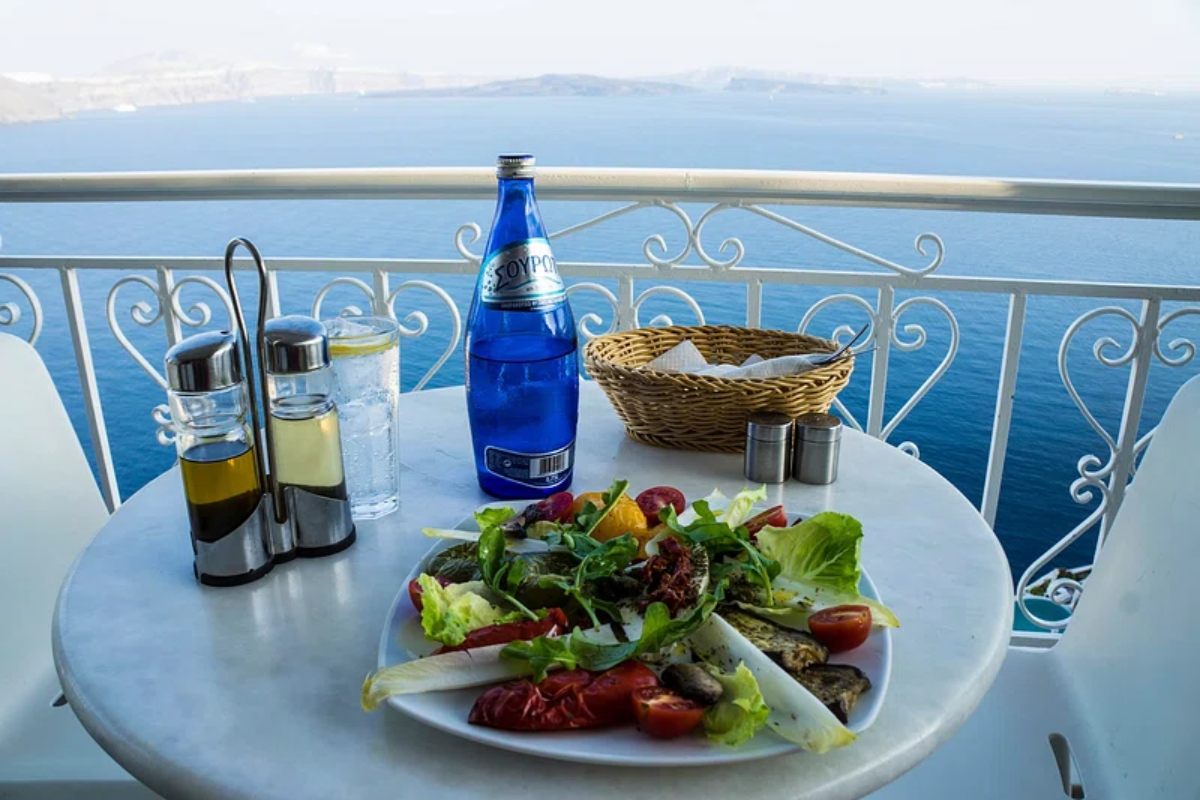
Greek cuisine is one of the oldest documented food traditions in the world, built around fresh, simple ingredients like olive oil, vegetables, and grains that have sustained the Mediterranean diet for thousands of years. This eating style is so influential that UNESCO recognized the Mediterranean diet, with Greece as one of its founding regions, as an official element of the world’s Intangible Cultural Heritage in 2013.
Staples: Olive Oil, Cheese and Yogurt
Olive oil is the spine of Greek cooking, used so extensively that Greece ranks among the world’s top olive oil producers. The average Greek consumes an estimated 20 liters of olive oil per person each year, one of the highest rates globally. Feta cheese, made from sheep’s or goat’s milk, is another cornerstone of Greek cuisine and carries a Protected Designation of Origin (PDO) level in the European Union, meaning authentic feta can legally only be created in specific regions of Greece.
Greek yogurt, now a global health-food staple, differs from regular yogurt through an extra straining process that removes whey, resulting in a thicker texture and higher protein content, a preparation method with roots stretching back centuries in Greek households. Together, these three staples form the foundation of countless traditional dishes, from simple village salads to slow-cooked stews.
Iconic Dishes and Drinks
Few dishes represent Greece as clearly as moussaka, a layered casserole of eggplant, spiced ground meat, and creamy béchamel sauce that varies slightly from region to region but remains a household staple across the country. Souvlaki, skewered and grilled meat often served with pita, tzatziki, and fresh vegetables, is considered Greece’s most popular street food, sold at small stands called souvlatzidika found on nearly every corner in every city. On the drink side, ouzo, an anise-flavored spirit that turns cloudy white when mixed with water, holds cultural significance as Greece’s unofficial national drink, traditionally sipped slowly alongside small plates known as mezedes.
Greek coffee, prepared unfiltered in a small pot called a briki, is another tradition rooted in ritual; it’s often served with a glass of water and enjoyed slowly over long conversations rather than rushed like a quick caffeine fix. From casual street food to slow-sipped drinks, Greek cuisine reflects the same values of community and patience found throughout the country’s broader culture.
Fun, Weird and Random Facts About Greece
Beyond the ancient ruins and philosophy, Greece is full of quirky, lesser-known facts that surprise even seasoned travelers, from bizarre historical trivia to everyday habits that outsiders find charming or downright strange.
Odd History and Hidden Gems
Greece has more archaeological museums than any other country in the world, a reflection of just how much ancient history remains buried beneath its soil. Discoveries are still made regularly during routine construction projects, sometimes delaying subway lines or building developments for months. The country is also home to one of the strangest ancient computers ever found: the Antikythera Mechanism, a 2,000-year-old bronze device discovered in a shipwreck in 1901, which experts now believe was used to indicate astronomical positions and eclipses decades in advance, a level of mechanical sophistication not seen again until over a thousand years later.
Santorini’s famous volcanic caldera, meanwhile, was formed by one of the biggest volcanic eruptions in recorded human history around 1600 BCE, an event so massive that some historians believe it may have inspired the legend of Atlantis.
If eerie legends intrigue you, you might also enjoy our collection of scary facts about Lake Tahoe. Even Greece’s monasteries hold surprises: the Meteora monasteries were built atop towering rock pillars in the 14th century, originally accessible only by climbing removable ladders or being hoisted up in nets, a security measure against invaders that made them nearly impossible to reach for centuries.
Everyday Quirks
Greeks shake their heads differently than most of the world; an upward nod or a slight head tilt can actually mean “no,” while what looks like a nod in other cultures may be interpreted as disagreement, a common source of confusion for visitors. Napping, or the tradition of an afternoon rest, is still culturally respected in many parts of Greece, particularly on the islands, where shops often close for a few hours in the early afternoon before reopening later in the evening.
Name-calling in Greek can also be surprisingly poetic: it’s common to hear affectionate nicknames rooted in mythology or nature, like calling a loved one “my little star” or “my sun,” reflecting the same expressive, warm communication style found throughout daily Greek life.
Even something as simple as spitting has cultural meaning. Light, symbolic “spitting” (usually just saying “ftou ftou ftou”) is a common superstitious gesture used to ward off bad luck after complimenting someone, especially a baby, tying back to the country’s deep-rooted belief in the evil eye. These small, everyday quirks reveal just how much ancient belief and modern life still overlap in Greece today.
Modern Greece Facts
Modern Greece is a European Union member state and a vital link between Europe, the Middle East, and North Africa, blending its ancient legacy with a 21st-century economy built on tourism, shipping, and agriculture. Despite a challenging economic decade, Greece remains one of the most visited countries in the world, welcoming over 30 million tourists annually, roughly three times its total population.
EU Membership and Global Standing
Greece joined the European Union in 1981, becoming the tenth member state and one of the first Southern European countries to enter the bloc, a move that reshaped its economy and political alignment for decades to come. In 2002, Greece adopted the euro as its official currency, replacing the drachma, which had been in use in various forms for nearly 2,650 years, making it one of the longest-running currencies in recorded history before its retirement.
Greece also holds a permanent seat in international organizations like NATO, which it joined in 1952, reflecting its strategic military and geopolitical importance at the crossroads of Europe and the Middle East. Its global standing extends beyond politics, too: Greek shipping companies control roughly 21% of the world’s merchant fleet by capacity, making Greece the single largest ship-owning nation on Earth, a modern echo of its ancient maritime dominance in the Aegean.
Economy and Society Today
Tourism remains the backbone of the modern Greek economy, contributing roughly 25% of the country’s GDP and supporting one in five jobs nationwide, driven largely by visitors drawn to islands like Santorini and Mykonos as well as historical sites like the Acropolis. Agriculture also continues to play a major role, with Greece ranking among the world’s top producers of olives, olive oil, and feta cheese, industries that trace their roots back thousands of years but remain economically significant today.
Despite facing a severe debt crisis between 2009 and 2018 that required multiple international bailout packages, Greece has since stabilized its economy and returned to steady GDP growth, regaining investment-grade credit status in recent years. Education and literacy also reflect Greece’s modern development, with a literacy rate of over 97% and Greek universities continuing to draw students interested in fields ranging from archaeology to maritime studies, disciplines deeply tied to the country’s historical identity. Together, these factors paint a picture of a nation balancing ancient heritage with a firmly modern, interconnected role on the world stage.
Greek Language Facts
Greek is one of the oldest recorded living languages in the world, with a written history spanning over 3,400 years and an unbroken tradition of use that continues to this day. Roughly 13 million people speak Greek worldwide, primarily in Greece and Cyprus, but its influence stretches far beyond the number of native speakers.
Science, Language and Ideas
The Greek alphabet, developed around the 8th century BCE, was the first writing system in history to include distinct symbols for vowels. This breakthrough made written Greek clearer and easier to read than earlier scripts like Phoenician, from which it borrowed its foundation. This innovation didn’t just shape Greek; it directly influenced the Latin alphabet, which forms the basis of English and most Western languages used today.
English itself owes an enormous debt to Greek, with an estimated 150,000 English words tracing their origins back to Greek roots, prefixes, or suffixes, particularly in fields like science, medicine, and philosophy. Words like “democracy” (from demos, meaning “people,” and kratos, meaning “power”), “biology,” “psychology,” and “telephone” all derive directly from Greek components, showing how deeply the language is embedded in modern vocabulary even outside Greek-speaking countries.
Ancient Greek thinkers also gave the world foundational scientific concepts still taught today: Pythagoras formalized principles of geometry, Euclid wrote Elements, one of the most influential mathematics texts in history, and Hippocrates developed early medical ethics that still echo through the modern Hippocratic Oath taken by physicians. This blend of linguistic innovation and intellectual achievement explains why Greek continues to shape science, medicine, and everyday language across the globe, more than two millennia after its golden age.
A Closer Look at the Greek Islands
Greece is home to more than 6,000 islands and islets scattered across the Aegean and Ionian Seas, though only about 227 of them are actually inhabited, meaning the vast majority remain wild, uninhabited stretches of rock, forest, and coastline. This sheer number makes Greece one of the most island-dense countries in the world, similar in spirit to the tucked-away charm found when exploring Curaçao location in the Caribbean, with each inhabited island carrying its own distinct culture, dialect, and identity despite belonging to the same nation.
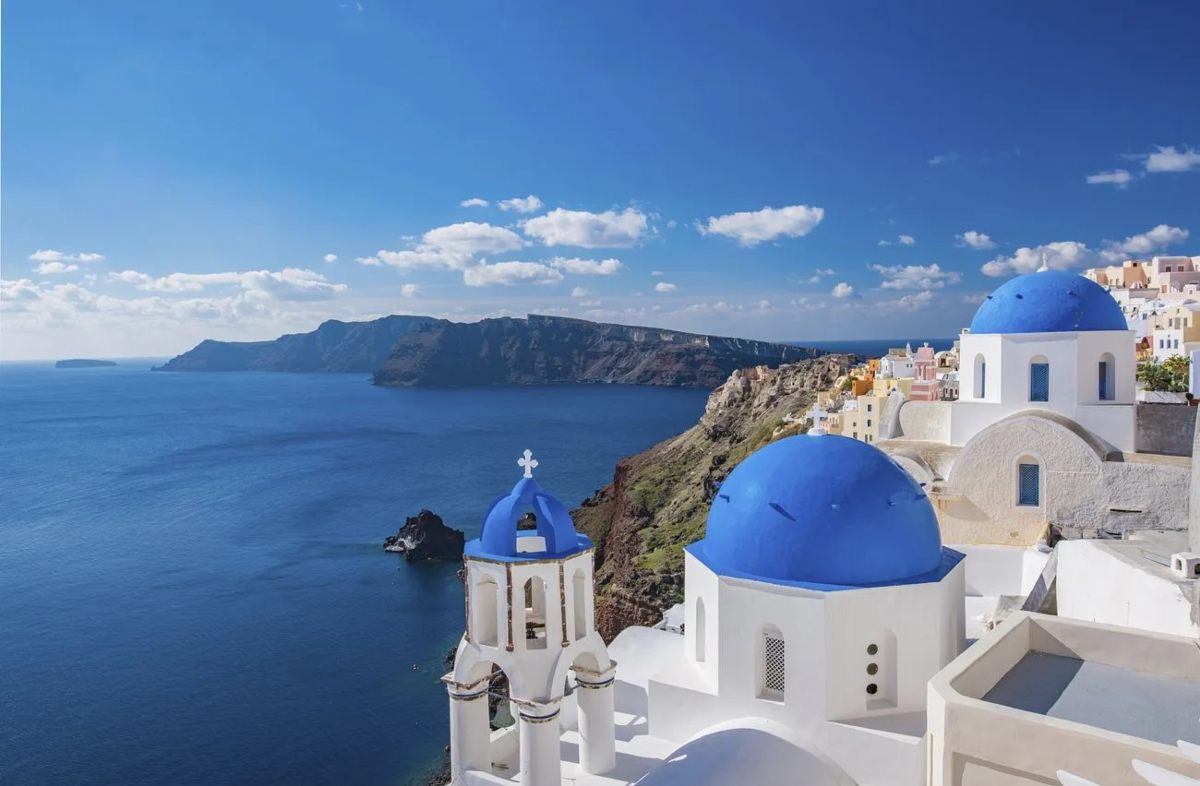
The islands are traditionally grouped into several island chains, each with a different character. The Cyclades, which include famous names like Santorini and Mykonos, are known for their whitewashed buildings, blue-domed churches, and dramatic volcanic landscapes. Santorini’s iconic caldera was actually formed by one of the largest volcanic eruptions in human history, around 1600 BCE.
The Ionian Islands, located on Greece’s western side, including Corfu and Zakynthos, have a notably different feel, shaped by centuries of Venetian rule that left behind Italian-influenced architecture and a greener, more lush landscape than the arid Cyclades. Crete, the largest Greek island, is almost a country unto itself, home to the ruins of the Minoan civilization at Knossos, considered Europe’s oldest advanced civilization, dating back over 4,000 years.
Beyond their beauty, the islands hold real ecological significance. Zakynthos’ Laganas Bay is one of the most significant nesting sites in the Mediterranean for the endangered loggerhead sea turtle, which is protected within a national marine park established in 1999. Many smaller, less-visited islands remain largely untouched by mass tourism, offering a quieter glimpse into traditional Greek island life, some with populations under a few hundred people, where fishing and small-scale agriculture still define daily routines, not unlike the low-key charm found in destinations covered in our guide to safest countries in South America or safest countries in Africa.
Whether famous or obscure, each island contributes to a larger mosaic that makes Greece’s island geography as culturally rich as its ancient mainland history.
Conclusion
Greece is a country where ancient history isn’t confined to museums; it’s woven into the language people speak, the food they eat, and the customs they still practice every day. From the philosophical breakthroughs of Socrates and Aristotle to the modern-day dominance of Greek shipping fleets, few nations can claim a legacy that spans both the birth of democracy and a thriving 21st-century economy. Whether it’s the more than 6,000 islands dotting the Aegean and Ionian Seas, the deep-rooted traditions of hospitality and family, or the surprising scientific achievements like the 2,000-year-old Antikythera Mechanism, Greece offers layers of fascination that go far beyond typical travel-guide highlights.
If you enjoyed this deep dive, you might also like our facts about Chicago for a completely different kind of city history. These facts about Greece only scratch the surface of a country that continues to shape the world’s language, culture, and ideas, proof that a nation’s oldest stories can still feel remarkably alive today.
Frequently Asked Questions(FAQs)
What are some fun facts about Greece?
Greece is home to the 2,000-year-old Antikythera Mechanism, an ancient device used to predict astronomical events decades in advance. It also has more archaeological museums than any other country, and discoveries are still uncovered regularly during routine construction.
What is Greece best known for?
Greece is best known as the birthplace of democracy, Western philosophy, and the Olympic Games, founded in 776 BCE. It’s also famous for iconic destinations like Santorini and the Acropolis, as well as its Mediterranean cuisine and mythology.
What are some unique or weird facts about Greece?
In Greece, an upward nod of the head can mean “no,” which often confuses visitors expecting the opposite. Light symbolic spitting (“ftou ftou ftou”) is also a common superstition used to ward off the evil eye after a compliment.
How many islands does Greece actually have?
Greece has more than 6,000 islands and islets scattered across the Aegean and Ionian Seas. However, only about 227 of them are actually inhabited, leaving the majority wild and largely untouched.
What is Greece most famous historical landmark?
The Acropolis of Athens, home to the Parthenon, is Greece’s most iconic historical landmark and a UNESCO World Heritage Site. Built in the 5th century BCE, it remains one of the most recognizable symbols of ancient Greek civilization.
What are some facts about the Greek flag specifically?
The Greek flag features nine blue and white stripes, believed to represent the syllables of “Eleftheria I Thanatos” (“Freedom or Death”). The white cross symbolizes Greek Orthodoxy, reflecting the religion practiced by about 90% of the population.