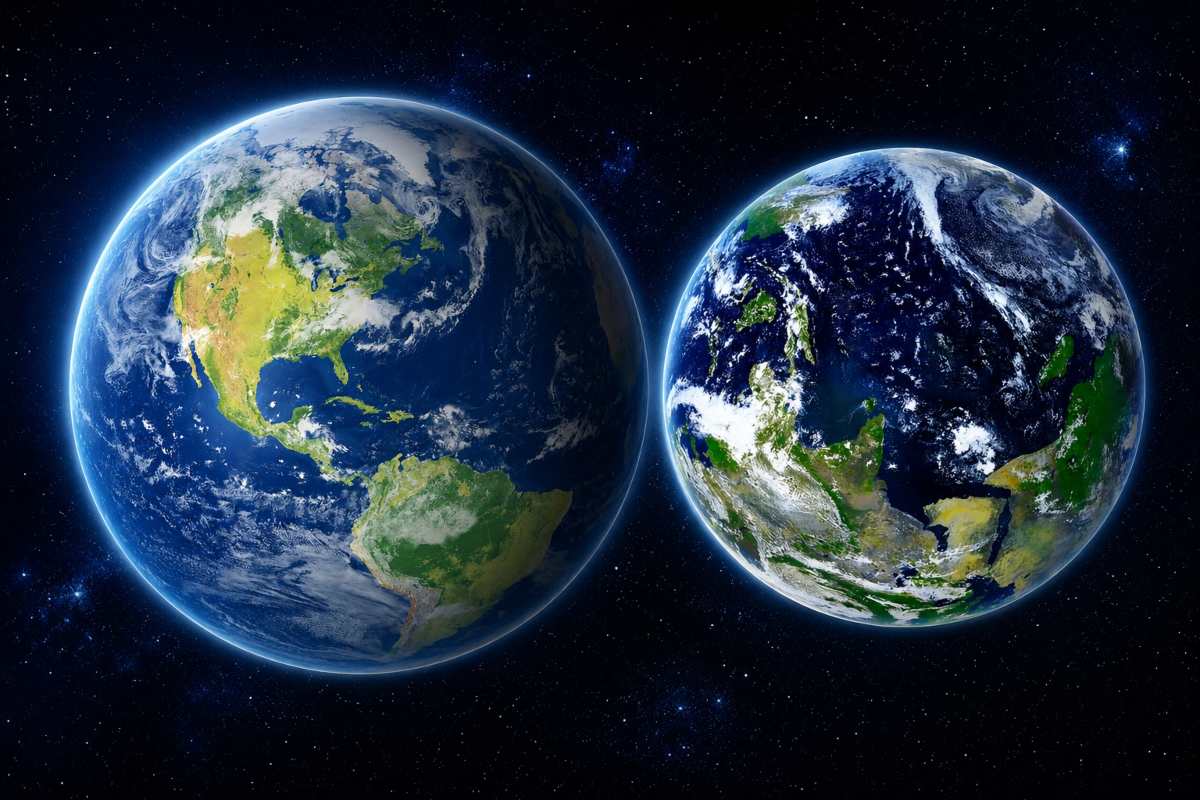
Earth is the only known planet in the universe that supports life, and some of the most interesting facts about Earth reveal just how unlikely and precise that balance really is. From a molten core hot enough to melt iron to an atmosphere that filters out deadly radiation, our planet is a study in extremes hiding beneath a surface that looks calm from space.
What makes Earth genuinely fascinating isn’t just its size or its place in the solar system; it’s the sheer improbability of its conditions. Earth sits in what scientists call the “Goldilocks zone,” the narrow band of distance from the sun where temperatures permit liquid water to exist on the surface. Move too close to the sun, and the oceans boil away; move too far, and they freeze solid. According to NASA, Earth is the only planet in our solar system known to have this liquid water on its surface, a fact that underlies nearly every other characteristic that makes life here possible.
This directory breaks down the most interesting Earth facts into digestible sections, from its internal layers and crust composition to its place among the planets and the surprising numbers behind its atmosphere, oceans, and age. If you enjoy this kind of deep dive, you might also like our geography trivia collection for more quiz-style facts about the world. Whether you need a quick fact for a school project or want a deeper look at what makes Earth unique, you’ll find it below.
Interesting Earth Facts at a Glance
Before diving into Earth’s layers, orbit, and atmosphere in detail, here are the essential facts distilled into quick, shareable bites, perfect whether you need a single standout fact or a broader list to satisfy your curiosity.
Quick Earth Facts
Earth is roughly 4.54 billion years old, based on radiometric dating of meteorite material that formed alongside the planet. It’s also the densest planet in the solar system, with an average density of about 5.51 grams per cubic centimeter, a result of its heavy iron-nickel core packed beneath rocky layers. Finally, Earth doesn’t actually take a full 24 hours to rotate on its axis; the true figure is closer to 23 hours, 56 minutes, and 4 seconds, understood as a sidereal day, with the extra minutes in our clock day accounting for Earth’s simultaneous movement around the sun.
Fascinating Facts About the Earth
Earth is the only planet not named after a Greek or Roman god, with its name instead derived from Old English and Germanic words simply meaning “the ground.” It’s also the fifth-largest planet in the solar system, smaller than the four gas giants but larger than Mercury, Venus, and Mars.
Roughly 71% of Earth’s surface is covered in water, yet less than 3% of that is freshwater, and most of it is locked in glaciers and ice caps. Earth’s magnetic field, induced by the churning molten iron in its outer core, extends far into space and shields the planet from most of the sun’s dangerous solar wind. And despite feeling perfectly still, Earth is hurtling through space at about 67,000 miles per hour as it orbits the sun.
Fun Facts for Kids vs Adults
The same facts about Earth can land differently depending on the audience, so framing matters. Kids tend to connect with vivid, easy-to-picture details. Earth is the only planet where you can find liquid water, ice, and water vapor all at once, or that a day on Earth is slowly getting longer by about 1.7 milliseconds per century as the moon’s gravity gradually slows the planet’s spin.
Adults, meanwhile, often gravitate toward the mechanics behind the wonder: how plate tectonics reshapes continents over millions of years, or how Earth’s tilted axis, not its distance from the sun, is actually what causes the seasons. Both angles pull from the same well of facts; the difference is simply how much explanation sits underneath the headline.
Earth Structure and Layers
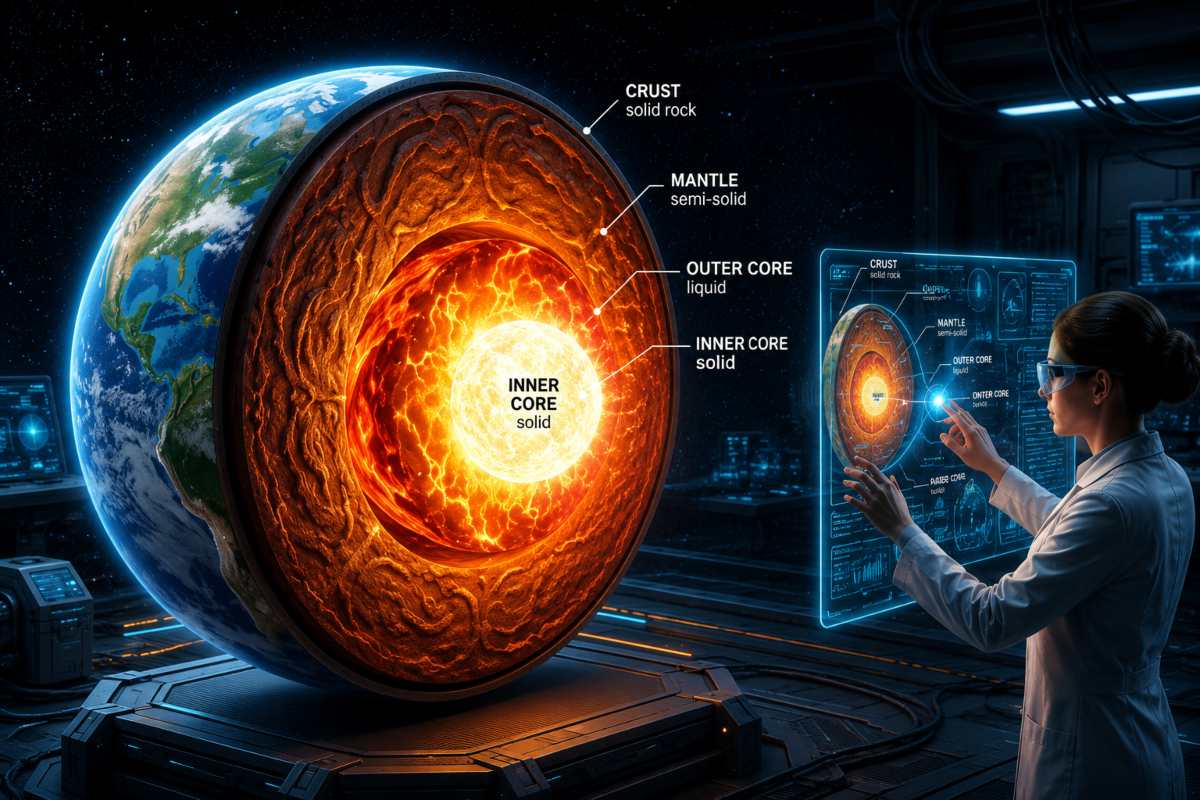
Earth is made up of four main layers: the crust, mantle, outer core, and inner core, each with distinct composition, temperature, and physical state, formed through billions of years of gravitational sorting as heavier elements sank toward the center.
What Are Earth Layers?
The crust is Earth’s thin, rocky outer shell, making up less than 1% of the planet’s total volume despite being the only layer humans have ever directly touched. Beneath it sits the mantle, a thick layer of slow-flowing, semi-solid rock that accounts for roughly 84% of Earth’s volume and drives the plate tectonics responsible for earthquakes, volcanoes, and continent formation. Below that lies the outer core, a layer of liquid iron and nickel whose churning motion generates Earth’s magnetic field, and finally the internal core, a stable ball of iron and nickel under such extreme pressure that it stays solid despite temperatures rivaling the feeling of the sun.
Interesting Facts About the Earth Crust
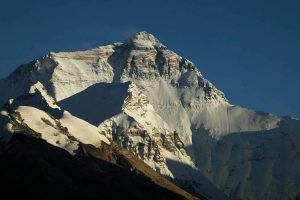
The crust comes in two distinct types: oceanic crust, which is thinner and denser, and continental crust, which is thicker but lighter, allowing continents to “float” higher on the mantle than ocean floors. The thickest parts of the crust lie beneath mountain ranges like the Himalayas, where it can extend more than 43 miles deep, compared to an average of just 3 to 6 miles under the ocean floor.
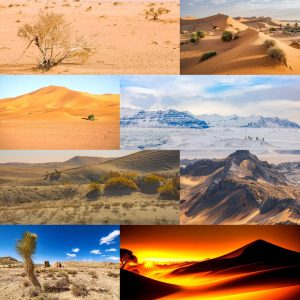
This same tectonic activity has shaped extreme landscapes across the globe, including the world largest desert, which formed over millions of years of crustal shifting and climate change. The crust is also constantly moving, broken into roughly 15 major tectonic plates that drift a few centimeters each year, about the same rate human fingernails grow. Finally, the crust is the only layer scientists have ever sampled directly; the deepest hole ever drilled, Russia’s Kola Superdeep Borehole, reached about 7.5 miles down and still didn’t reach the mantle.
Facts About the Mantle and Core
The mantle behaves like an extremely slow-moving fluid solid enough to transmit seismic waves like a solid, yet capable of flowing over millions of years which is what drives the convection currents behind continental drift. Temperatures. Temperatures in the mantle range from about 1,000°F near the crust to over 6,000°F near the core boundary. The outer core, constructed of liquid iron and nickel, is the engine behind Earth’s magnetic field, and its constant motion is why compasses point north.
According to NASA’s Jet Propulsion Laboratory, the inner core is estimated to be nearly as hot as the sun’s surface, around 9,800°F, yet stays solid due to the immense pressure exerted by the layers above it, a combination found nowhere else in the solar system in quite the same way.
Earth in the Solar System
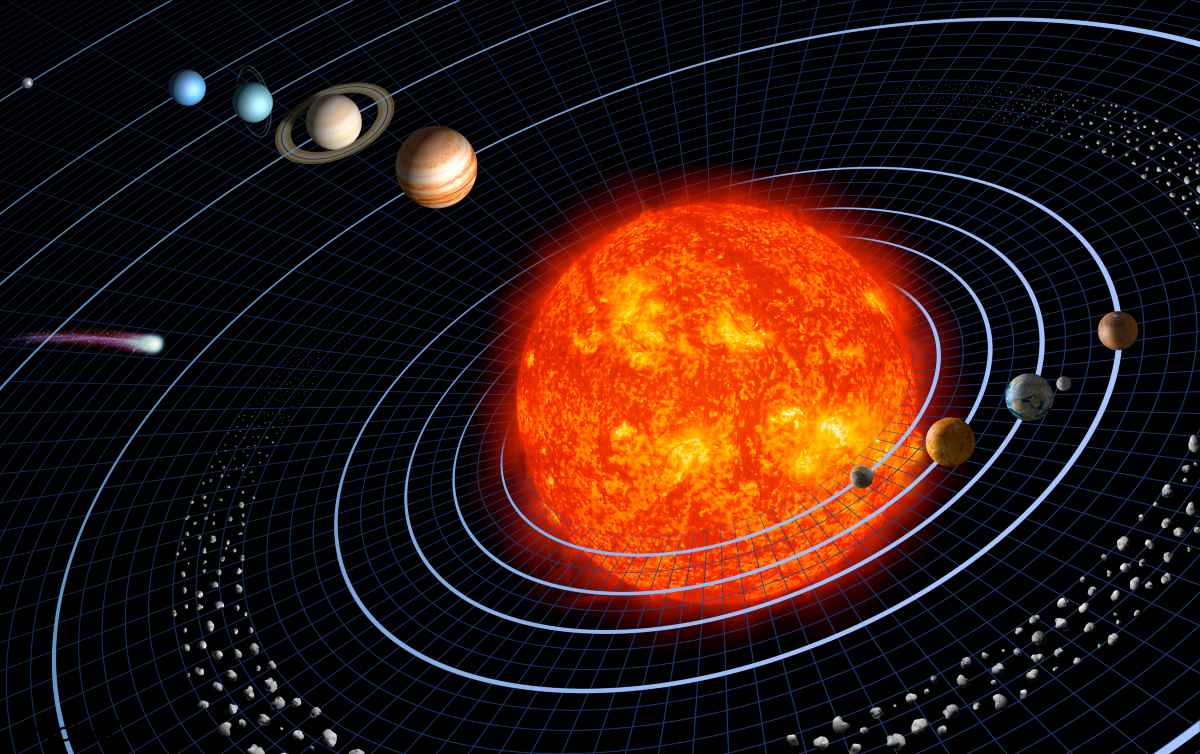
Earth is the third planet from the Sun and the fifth-largest in the solar system, orbiting at an average distance of about 93 million miles, a position precise enough to keep water liquid on its surface. At the same time, every other rocky planet nearby is either too hot or too cold to sustain life.
Earth Size, Orbit and Rotation
Earth has a diameter of roughly 7,918 miles at the equator. However, it isn’t a perfect sphere; the planet bulges barely at the equator and flattens at the poles due to the centrifugal force of its rotation, a shape scientists call an “oblate spheroid.” It takes Earth about 365.25 days to complete one orbit around the sun, which is why calendars add a leap day every four years to keep pace with the extra quarter-day that accumulates annually.
Earth’s orbit isn’t a perfect circle either; it’s a slight ellipse, meaning the planet is actually most comparable to the sun in early January and farthest away in early July, the opposite of what many assume based on Northern Hemisphere seasons. And while Earth’s rotation feels constant, it’s gradually slowing down, with days lengthening by about 1.7 milliseconds per century as tidal friction from the moon saps a small amount of the planet’s rotational energy.
How Earth Compares to Other Planets
Among the eight planets, Earth is the only one known to support life, largely because of its unique combination of a stable atmosphere, liquid surface water, and a magnetic field strong enough to deflect solar radiation. It’s the largest of the four terrestrial planets Mercury, Venus, Earth, and Mars yet dramatically smaller than any of the gas giants; more than 1,300 Earths could fit inside Jupiter alone, a scale-defying comparison explored further in our breakdown of how many Earths can fit in Jupiter.
Earth also stands out for its single large moon, which is unusually massive relative to its host planet compared to other moon-planet pairings in the solar system, and this size is part of why Earth experiences relatively mild axial wobble and stable seasons over long timescales. According to NASA, Earth’s average surface temperature sits around 59°F, a narrow and stable range compared to Venus’s scorching 900°F surface or Mars’s frigid average of -80°F, underscoring just how precisely Earth’s distance from the sun and atmospheric composition work together to keep conditions livable.
Life-Supporting Facts
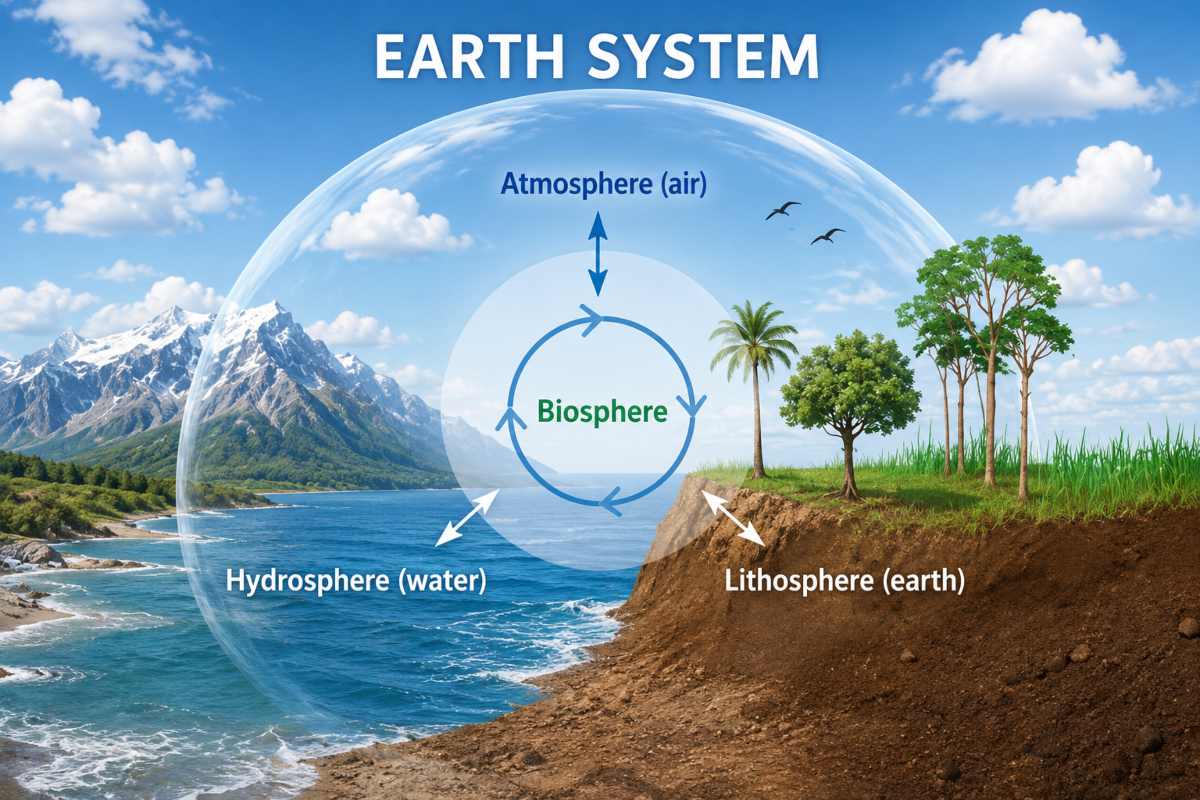
Earth supports life because of a rare combination of factors working together: a protective atmosphere, abundant liquid water, and a stable climate, none of which exist in this exact balance anywhere else we’ve discovered in the universe.
Atmosphere and Water Facts
Earth’s atmosphere is made up of about 78% nitrogen and 21% oxygen, with the remaining 1% consisting of trace gases like argon and carbon dioxide. This mixture took billions of years to develop, largely thanks to early photosynthetic organisms that pumped oxygen into the air. This atmosphere does more than let us breathe; it also filters out harmful ultraviolet radiation through the ozone layer and burns up roughly 25 million meteors a day before they can reach the surface.
Water is equally central to Earth’s habitability, covering about 71% of the planet, though the vast majority of it, around 96.5%, is saltwater held in oceans; for a closer look at what lies beneath those waters, see our full collection of ocean facts. Earth is also the only planet where water exists naturally in all three states, solid, liquid, and gas, simultaneously, a condition tied directly to its position in the Sun’s habitable zone.
Facts About Earth Ecosystems
Earth hosts an estimated 8.7 million species, according to a widely cited 2011 study published in PLOS Biology. However, scientists believe the true number could be far higher since so much of the deep ocean remains unexplored. Life on Earth exists in an extraordinary range of conditions, from hydrothermal vents on the ocean floor with no sunlight to microorganisms found in Antarctic ice and even within solid rock miles underground.
This diversity plays out differently across the globe, from the biodiversity-rich landscapes highlighted in our fascinating facts about Greece to the wildlife corridors found across the safest countries in Africa. Rainforests, though covering only about 6% of Earth’s land surface, are home to more than half of the world’s plant and animal species, making them some of the most concentrated pockets of biodiversity on the planet. This web of ecosystems isn’t static either; it’s constantly shaped by Earth’s climate, tectonic activity, and atmospheric composition, all of which trace back to the same planetary conditions that make Earth habitable in the first place.
Surprising and Lesser-Known Facts
Beyond the well-known statistics about size, orbit, and atmosphere, Earth holds a handful of stranger truths that rarely make it into textbooks. These details reveal just how dynamic and unusual the planet really is beneath its familiar surface.
Mind-Blowing Earth Facts
Earth technically has more than one moon, at least temporarily; small asteroids occasionally get captured by Earth’s gravity and orbit as “mini-moons” for months or years before drifting away again. The planet also isn’t a fixed shape; it’s constantly reshaping itself, with tectonic plates shifting continents into new configurations over millions of years, meaning the map we know today would have looked completely different 250 million years ago, when all landmasses were joined in a single supercontinent called Pangaea.
This same reshaping is why human settlements have ended up in such varied and surprising places, including the smallest city in the world, tucked into a landscape shaped by millions of years of geological change. Lightning strikes the Earth roughly 8 million times a day, and at any given moment, around 2,000 thunderstorms are active somewhere on the planet. Perhaps the strangest of all, Earth’s rotation is gradually slowing due to friction from the moon’s gravitational pull, meaning that a day 1.4 billion years ago lasted only about 19 hours, a fact confirmed by cyclical patterns preserved in ancient sedimentary rock layers.
Historical/Geological Milestones
Earth’s 4.54-billion-year history is divided into distinct geological eras, each marked by dramatic shifts in climate, life, and continental arrangement. The Great Oxidation Event, which occurred roughly 2.4 billion years ago, was one of the most transformative moments in Earth’s history, as photosynthetic microbes flooded the atmosphere with oxygen for the first time, permanently altering the planet’s chemistry and paving the way for complex life.
Earth has also weathered at least five mass extinction events, the most famous being the asteroid impact roughly 66 million years ago that wiped out the non-avian dinosaurs and reshaped the trajectory of evolution. According to the U.S. Geological Survey, Earth’s current geological period, the Holocene, began about 11,700 years ago at the end of the last major ice age a relatively short and stable climatic window that has allowed human civilization to develop and flourish, and one that eventually gave rise to some of today’s most sought-after destinations, from the safest countries in South America to ancient landscapes across the Mediterranean.
Conclusion
Earth’s story is really one of precise, almost improbable balance: a planet positioned at exactly the right distance from the sun, wrapped in an atmosphere that took billions of years to form, and shaped by internal forces still reworking its surface today. From the solid iron ball at its core to the thin film of crust we walk on, every layer and system plays a part in making it the only known place where life has taken hold.
What makes these interesting Earth facts worth revisiting isn’t just their novelty. Still, how they connect: the same magnetic field generated by a molten core also shields the atmosphere that allows water to exist in liquid form, which in turn supports the 8.7 million species calling this planet home. Even Earth’s oddities, mini-moons, shrinking days, and shifting continents are reminders that the planet isn’t static. It’s a system still in motion, 4.54 billion years in the making.
Whether you came here for a quick fact to share or a deeper understanding of how Earth actually works, the takeaway is the same: our planet’s ordinary appearance from space hides an extraordinary amount of complexity underneath.
Frequently Asked Questions(FAQs)
What is an interesting fact about Earth?
One of the most interesting facts about Earth is that it’s the only planet known to have liquid water on its surface, a condition directly tied to its precise distance from the Sun. This “Goldilocks zone” positioning is also what allows Earth to support the estimated 8.7 million species living on it today.
What are 5 interesting facts about Earth?
Earth is roughly 4.54 billion years old, spins once every 23 hours and 56 minutes, and circles the sun at about 67,000 miles per hour. It’s also the densest planet in the solar system and the only one where water naturally exists as a solid, liquid, and gas simultaneously. Together, these facts highlight just how unique Earth’s physical makeup really is.
What are Earth layers made of?
Earth is composed of four main layers: a thin rocky crust, a thick semi-solid mantle, a liquid outer core of iron and nickel, and a solid inner core under extreme pressure. Each layer differs in composition and state, with the crust making up less than 1% of Earth’s total volume.
How old is planet Earth?
Earth is about 4.54 billion years old, a figure determined through radiometric dating of meteorite material that formed alongside the planet. This age places Earth’s formation early in the solar system’s history, shortly after the sun itself ignited.
Why is Earth called the Blue Planet?
Earth earned the nickname “Blue Planet” because roughly 71% of its surface is covered in water, giving it a distinct blue appearance when viewed from space. This abundance of surface water is also central to why Earth remains the only known planet capable of supporting complex life.