Ancient Egypt was one of the longest-lasting civilizations in human history, spanning roughly 3,000 years along the banks of the Nile River, and it left behind a legacy of engineering, art, religion, and governance that still shapes how we understand the ancient world today. From the exact placement of the Great Pyramid’s sides aligned to true north with an accuracy of within a fraction of a degree to the intricate social hierarchy that placed the pharaoh at the top of a system connecting farmers, scribes, priests, and nobility, these interesting facts on Egypt reveal a society far more sophisticated than popular imagination often gives it credit for.
This guide brings together everything worth knowing about ancient Egypt in one place: where it sat on the map and how its borders shifted across the Old, Middle, and New Kingdoms; what daily life actually looked like for ordinary Egyptians; how its economy, politics, and social structure functioned; and which achievements, cities, and monuments made it one of the most influential civilizations the world has ever seen. Whether you’re researching for school, satisfying curiosity, or looking for quick, reliable facts to share, you’ll find clear answers organized by topic below no digging through scattered sources required.
Quick Facts on Egypt at a Glance
Ancient Egypt combined engineering precision, religious devotion, and administrative sophistication in ways that still surprise researchers today, and a handful of core facts capture just how remarkable the civilization was. It thrived for roughly 3,000 years (from around 3100 BCE to 30 BCE), making it one of the longest continuous civilizations on record, far outlasting the Roman Empire or any single modern nation-state. If you’re the kind of reader who enjoys collecting interesting facts on Egypt, the list below is a good place to start, followed by the story behind the country’s name.
20 Fun Facts About Ancient Egypt You Didn’t Know
Ancient Egypt’s history is packed with details that rarely make it into textbooks, from unusual beauty standards to engineering feats that remain difficult to replicate even with modern tools. Here are 20 of the most interesting:
- Ancient Egyptians created one of the earliest writing systems, hieroglyphics, over 5,000 years ago.
- The Great Pyramid of Giza was the tallest artificial structure in the world for more than 3,800 years.
- Both men and women in ancient Egypt wore makeup, including kohl eyeliner, believed to have protective and medicinal properties.
- Cats were considered sacred, and harming one, even accidentally, could carry the death penalty.
- Ancient Egyptians practiced an early form of dentistry and even had toothpaste made from crushed eggshells and ox hooves.
- Cleopatra VII, the last functional ruler of the Ptolemaic Kingdom, was actually of Greek descent, not ethnically Egyptian.
- Workers who made the pyramids were paid laborers, not enslaved people, and were provided with housing, food, and medical care.
- Ancient Egyptian doctors performed basic surgeries and understood the connection between the pulse and the heart.
- The Nile River flooded predictably every year, depositing nutrient-rich silt that made farming in the surrounding desert possible.
- Board games like Senet were popular pastimes, with sets found buried in tombs for the afterlife.
- Egyptians believed the heart, not the brain, was the center of intelligence and emotion; the brain was often discarded during mummification.
- Wigs were common accessories, worn by both genders to protect against the sun and lice.
- Egyptian bread was often gritty from sand and stone particles, which wore down teeth significantly over a lifetime.
- Women in ancient Egypt had notably more legal rights than in many other ancient societies, including the ability to own property and initiate divorce.
- The pyramids at Giza were built without the wheel, which wasn’t introduced to Egypt until centuries later.
- Ancient Egyptians used a 365-day calendar, an early version of the one still used today.
- Beer was a dietary staple, often safer to drink than water and consumed by workers, including pyramid builders.
- Mummification could take up to 70 days and involved removing internal organs, which were preserved separately in canopic jars.
- The Sphinx’s nose is missing, but historical evidence suggests it was deliberately damaged, not simply eroded.
- Ancient Egyptian children played with toys strikingly similar to modern ones, including dolls, spinning tops, and balls.
Egypt’s Name: Where Does “Egypt” Come From?
The name “Egypt” doesn’t come from the Egyptians themselves; it’s a Greek adaptation of an older term. Ancient Greeks called the country “Aigyptos,” likely derived from “Hut-ka-Ptah,” meaning “House of the Spirit of Ptah,” a reference to a major temple of the god Ptah in Memphis. The name eventually passed into Latin and then English as “Egypt.” The Egyptians themselves referred to their homeland as “Kemet,” meaning “Black Land,” a nod to the fertile black soil deposited by the Nile’s annual floods as opposed to the surrounding “Red Land” of the barren desert.
Ancient Egypt on the Map: Geography Explained
Ancient Egypt occupied a narrow strip of land in northeastern Africa, hugging the Nile River as it flowed north from present-day Sudan into the Mediterranean Sea. Nearly all of ancient Egyptian civilization was concentrated within a few miles of the riverbanks. Since roughly 96% of Egypt’s land is desert, the Nile wasn’t just a convenience; it was the only reason large-scale settlement was possible at all. Anyone who enjoys geography-driven history alongside these interesting facts about Egypt may also want to explore our geography trivia collection or see how the safest countries in modern Africa compare to the region Egypt still calls home.
Ancient Egypt Map (Interactive/Visual)
A map of ancient Egypt typically shows two core regions: Upper Egypt in the south, a long, narrow valley following the Nile’s path, and Lower Egypt in the north, where the river fans out into the wide, fertile Nile Delta before reaching the Mediterranean. These two regions were politically distinct before roughly 3100 BCE, when they were unified under a single ruler, traditionally credited to King Narmer, an event considered the founding moment of ancient Egyptian civilization. Major cities like Memphis, Thebes, and later Alexandria were positioned at strategic points along this river corridor, and most surviving monuments, including the Giza pyramid complex, sit close to the Nile’s western bank.
Old Kingdom, Middle Kingdom and New Kingdom Territory Maps
Egypt’s borders and political reach shifted considerably across its three major kingdoms, expanding and contracting with changes in military strength and internal stability. During the Old Kingdom (c. 2686–2181 BCE), Egypt’s territory was largely confined to the Nile Valley and Delta, with the capital at Memphis and the era best known for pyramid construction. The Middle Kingdom (c. 2055–1650 BCE) saw expansion southward into Nubia and increased control over trade routes, with Thebes rising as a political and religious center.
By the New Kingdom (c. 1550–1070 BCE), Egypt reached its greatest territorial extent, extending its influence into the Levant and controlling an empire that stretched from Nubia in the south to parts of modern-day Syria in the north. This was Egypt’s era of greatest military and economic power, under rulers like Thutmose III and Ramesses II.
Climate and Geography of Ancient Egypt
Egypt’s climate was, and remains, predominantly hot and arid, with the Sahara Desert bordering the Nile Valley on both sides. What made civilization possible in this harsh environment was the Nile’s predictable annual flooding, which occurred every summer and deposited a layer of nutrient-rich black silt across the floodplain the same silt that gave the region its ancient name, Kemet, or “Black Land.”
This flood cycle was so reliable that ancient Egyptians built their entire agricultural calendar around it, dividing the year into three seasons tied directly to the river’s behavior: Akhet (flooding), Peret (growing), and Shemu (harvest). Without this yearly cycle, the surrounding desert conditions would have made large-scale farming, and therefore any lasting civilization, essentially impossible. It’s a striking contrast to regions shaped by more violent weather patterns, like those covered in our facts about hurricanes guide, where unpredictability rather than reliability defines the landscape.
Daily Life in Ancient Egypt
Daily life in ancient Egypt spun around the rhythm of the Nile, family and community ties, and a mix of hard agricultural labor and genuine leisure time; it wasn’t the grim, work-only existence often portrayed in popular media. Most Egyptians were farmers or craftspeople whose days followed the seasonal flooding cycle. Still, evidence from tombs, artwork, and household remains shows a society that valued play, family, and comfort just as much as productivity.
What Did Ancient Egyptians Do for Fun?
Ancient Egyptians had a rich culture of games, music, and social activities that filled their free time, much of which was recorded in tomb paintings and preserved in game pieces. Board games were especially popular, with Senet, a strategy game involving moving pieces across a grid of squares, so widely loved that sets have been found in tombs dating back over 5,000 years, including the tomb of Tutankhamun, suggesting Egyptians wanted to keep playing even in the afterlife.
Beyond board games, wrestling, swimming, and boating on the Nile were common physical pastimes. At the same time, music and dance played a major role at festivals and religious celebrations, accompanied by instruments such as harps, flutes, and sistra. Children played with toys strikingly familiar to modern eyes, including spinning tops, dolls with movable limbs, and small carved animals.
Food, Family and Homes in Daily Egyptian Life
Family sat at the center of Egyptian daily life, with most households built around a nuclear family unit, though multiple generations often lived together or nearby. Bread and beer formed the dietary backbone of nearly every social class, supplemented by vegetables like onions and leeks, fruits such as dates and figs, and fish pulled directly from the Nile. Meat was more of an occasional luxury, typically reserved for wealthier households or special occasions.
Homes were built from mudbrick, a practical choice given Egypt’s hot, dry climate and the scarcity of timber, with flat roofs often used as extra living space during cooler evenings. Women held a notably active role within the household and beyond it, managing domestic affairs while also retaining legal rights uncommon elsewhere in the ancient world, including the ability to own property, run businesses, and initiate divorce a level of legal standing that wouldn’t be matched in many parts of the world for centuries afterward.
Egyptian Culture and Traditions
Ancient Egyptian culture was built on a deeply held belief in the afterlife, a rich artistic tradition governed by strict conventions, and one of the world’s earliest writing systems three pillars that shaped nearly every aspect of how Egyptians lived, worked, and were remembered. Unlike many ancient cultures where religion, art, and language existed somewhat separately, in Egypt these three elements were tightly interwoven, with art serving religious purposes and writing existing largely to preserve religious and administrative knowledge for eternity.
Readers who find these interesting facts about Egypt compelling often enjoy comparing them with other ancient cultures, such as the mythology and traditions covered in our fascinating facts about Greece guide, or the distinct customs explored in our facts about Japan piece.
Religion, Art and Language in Ancient Egyptian Culture
Religion permeated nearly every part of Egyptian life, built around a pantheon of over 2,000 gods and goddesses, each governing different aspects of nature, human experience, and the afterlife. Central to this belief system was the concept of Ma’at, representing truth, balance, and cosmic order, which pharaohs were expected to uphold as both political rulers and religious intermediaries between gods and people. Death was treated not as an ending but as a transition, which is why elaborate mummification practices, tomb construction, and funerary texts like the Book of the Dead were so central to Egyptian culture. Preserving the body and providing spiritual guidance were seen as essential steps to a successful afterlife.
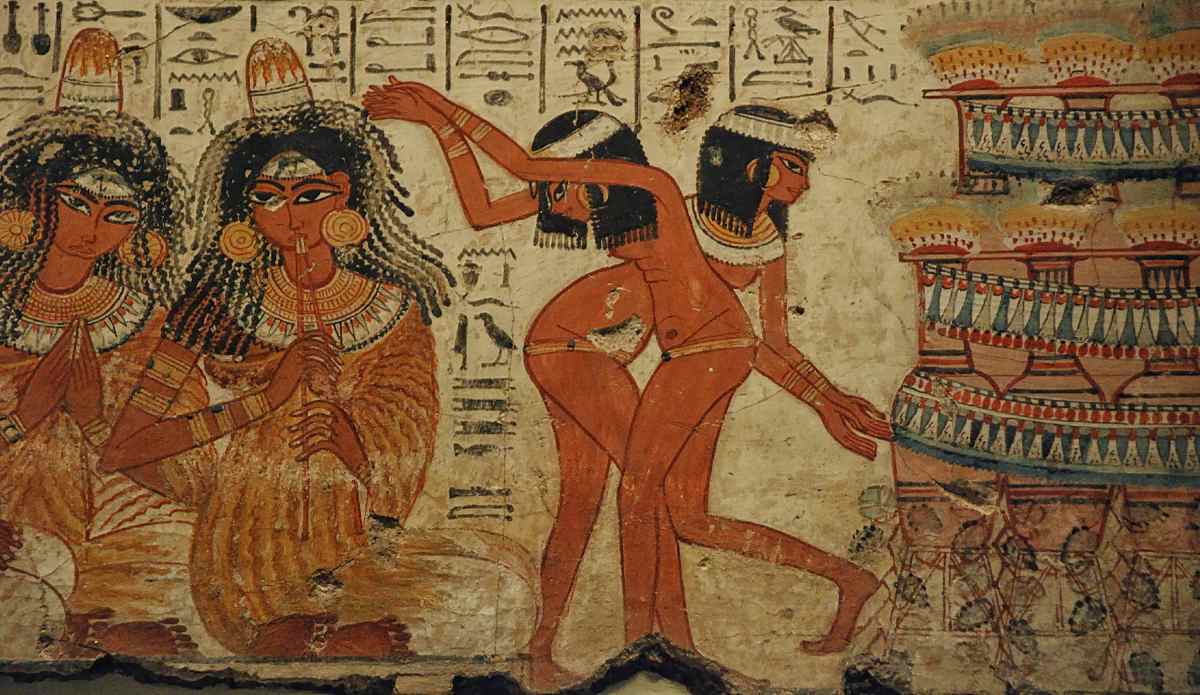
Egyptian art followed remarkably consistent conventions for thousands of years, with figures typically shown in a composite pose: head and legs in profile, torso facing forward a stylistic choice meant to represent the human form as completely and permanently as possible rather than realistically. This artistic consistency wasn’t a lack of skill; tomb paintings, statues, and reliefs served religious and symbolic functions first, aesthetic ones second, which is why proportions and poses remained largely unchanged across dynasties spanning nearly 3,000 years.
Language and writing were equally foundational, with hieroglyphics emerging as one of the earliest known writing systems, developed by around 3200 BCE. This complex script combined logographic and alphabetic elements and was used primarily for religious texts, royal inscriptions, and monumental architecture. In contrast, a simpler cursive script, hieratic, was used for everyday administrative and literary writing. Hieroglyphics remained largely unreadable to the modern world until 1822, when French scholar Jean-François Champollion deciphered the script using the Rosetta Stone. This discovery unlocked centuries of Egyptian history, religion, and daily life that had otherwise been lost to time.
Social Structure and Hierarchy of Ancient Egypt
Ancient Egyptian society operated as a strict, pyramid-shaped hierarchy, with the pharaoh at the top wielding absolute religious and political authority, and the vast majority of the population farmers and laborers forming its wide base. This structure wasn’t just about wealth or power; it was viewed as a reflection of Ma’at, the cosmic order Egyptians believed governed the universe, meaning everyone’s place in society was seen as part of a divinely sanctioned system rather than an accident of birth. It’s one of the more interesting facts about Egypt that this same principle of order extended into governance, architecture, and even city planning.
The Egyptian Social Pyramid Explained (Pharaoh to Farmer)
At the very top sat the pharaoh, regarded not just as a political ruler but as a living god and the essential link between the divine and human worlds. Directly below the pharaoh were the vizier and high priests, who managed the day-to-day administration of the kingdom and oversaw religious institutions that controlled significant land and resources. Nobles and regional governors, known as nomarchs, came next, managing local districts and collecting taxes on the pharaoh’s behalf.
Scribes occupied a uniquely respected position; literacy was rare, estimated at less than 1% of the population, which made trained scribes indispensable for running the government, temples, and trade. Skilled artisans and craftsmen, including sculptors, jewelers, and pyramid builders, sat in the middle tiers, followed by merchants and traders who facilitated commerce. At the base of the pyramid were farmers and unskilled laborers, who made up the overwhelming majority of Egypt’s population and whose agricultural output, tied directly to the Nile’s flooding cycle, sustained the entire economy.
Political System and Governance in Ancient Egypt
Egypt’s political system was a centralized theocratic monarchy, meaning that governance and religion were inseparable, with the pharaoh holding supreme authority over law, military command, and religious ceremonies. Beneath the pharaoh, the vizier functioned much like a modern prime minister, overseeing the bureaucracy, judicial system, and treasury. At the same time, regional nomarchs handled local governance and tax collection across Egypt’s roughly 42 administrative districts, called nomes. This system proved remarkably durable, allowing Egypt to maintain political continuity across three major kingdoms and more than 30 ruling dynasties over nearly three millennia a level of institutional stability rarely matched by other ancient civilizations, most of which fractured or collapsed far sooner.
Economy and Achievements of Ancient Egyptian Civilization
Ancient Egypt’s economy ran on agriculture, centralized taxation, and a barter-based trade system, and its achievements in engineering, medicine, and mathematics were advanced enough that some still puzzle experts today. The two are closely linked: Egypt’s economic stability, built on predictable Nile harvests and efficient resource management, gave the civilization the surplus labor and wealth needed to pursue the monumental building projects and scientific advances it’s remembered for. Among the many interesting facts about Egypt worth noting here is just how far that surplus stretched, funding not only pyramids but also trade expeditions across three continents.
How Did Egypt’s Economy Work?
Egypt operated without currency for most of its history, relying instead on a barter and redistribution system in which goods and labor were exchanged directly, and grain often served as a de facto standard of value. The state played a central role in this economy, with the pharaoh technically owning all land, which was then worked by farmers who paid taxes in the form of a portion of their harvest, typically enforced through a class of scribes who measured and recorded crop yields with striking precision.
This surplus grain wasn’t just consumed locally; it was stored in state granaries and used to pay laborers, including the workers who built the pyramids, and to fund trade expeditions that brought back gold, ivory, and incense from Nubia, as well as cedar wood and other goods from the Levant. Egypt’s economic strength peaked during the New Kingdom, when territorial expansion into the Levant and Nubia gave the state access to significantly more resources, tribute, and trade routes than earlier periods.
Top Achievements and Inventions of Ancient Egypt
Ancient Egypt’s list of innovations reads like a foundation for much of the ancient and modern world, starting with one of the earliest 365-day calendars, which divided the year into 12 months and closely mirrors the calendar structure still used globally today. Egyptian medicine was remarkably progressive for its time, with physicians performing basic surgeries, setting broken bones, and understanding the pulse’s connection to the heart; knowledge preserved in medical texts like the Edwin Smith Papyrus, one of the oldest known surgical documents, dated to around 1600 BCE.
In mathematics, Egyptians developed practical geometry sophisticated enough to calculate the precise dimensions needed to build the Great Pyramid of Giza, which was constructed with such accuracy that its four sides are aligned to true north within roughly 0.05 degrees a level of precision modern engineers still find difficult to explain given the tools available at the time. That kind of record-setting ambition has echoes in modern engineering too; the Great Pyramid’s 3,800-year reign as the world’s tallest structure was eventually surpassed only by feats like those detailed in our Burj Khalifa facts guide.
Beyond engineering and science, Egyptians pioneered papermaking from papyrus and developed one of the world’s first writing systems, hieroglyphics. They built irrigation systems that harnessed the Nile’s annual floods for agriculture, setting a template for organized water management that is still studied today.
Kingdoms, Pharaohs, Cities and Monuments
Ancient Egypt’s history is defined by three major kingdoms, a succession of powerful pharaohs, and monumental cities and structures that still stand thousands of years later as proof of the civilization’s engineering and cultural ambition. The Old Kingdom laid the foundation with pyramid construction; later kingdoms produced Egypt’s most iconic rulers and its greatest territorial reach; and the cities and monuments built across this span remain among the most visited and studied archaeological sites on Earth.
The Old Kingdom of Egypt: Key Facts
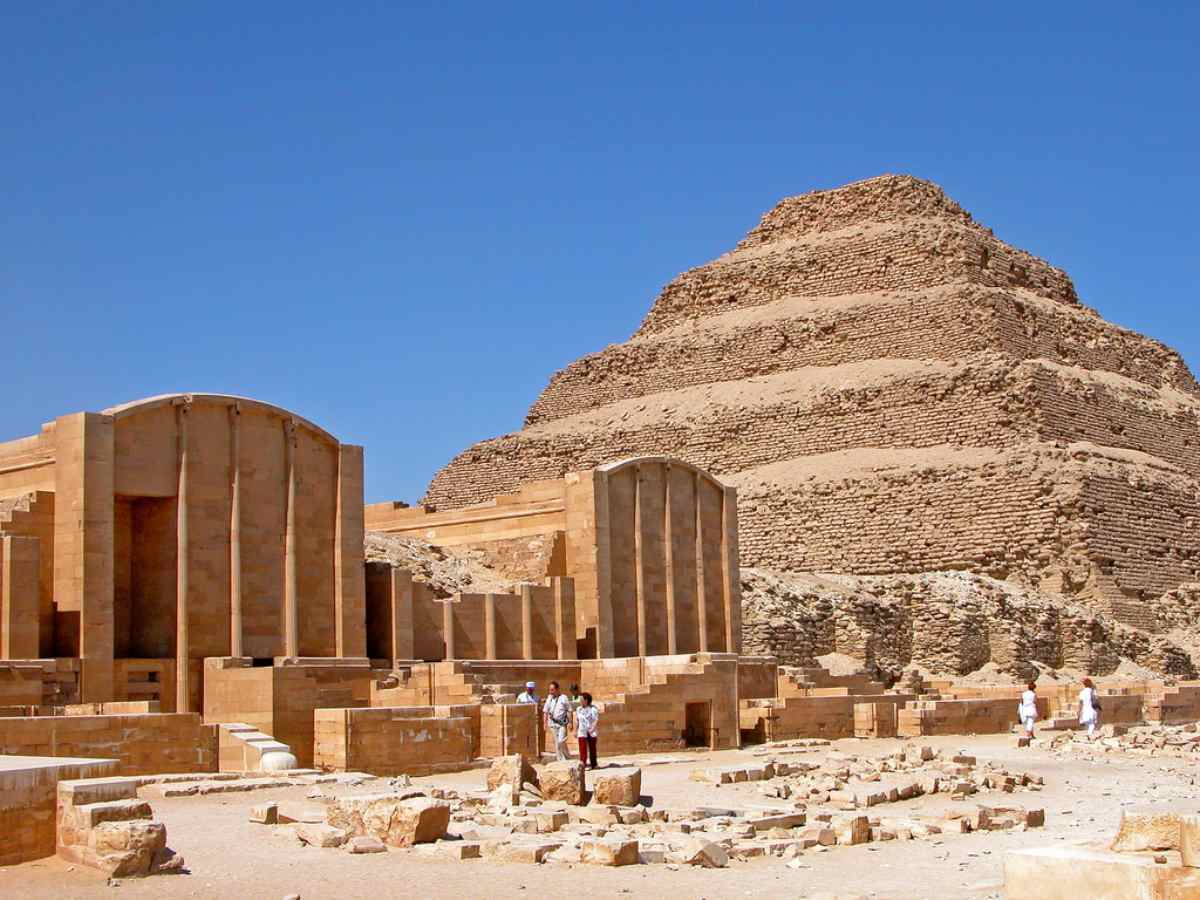
The Old Kingdom (c. 2686–2181 BCE) is often called the “Age of the Pyramids,” marking the period when Egypt’s rulers had both the political stability and economic resources to undertake the era’s most ambitious building projects. It was during this period that pharaoh Djoser commissioned the Step Pyramid at Saqqara, widely regarded as Egypt’s first major stone monument and a precursor to the smooth-sided pyramids that followed.
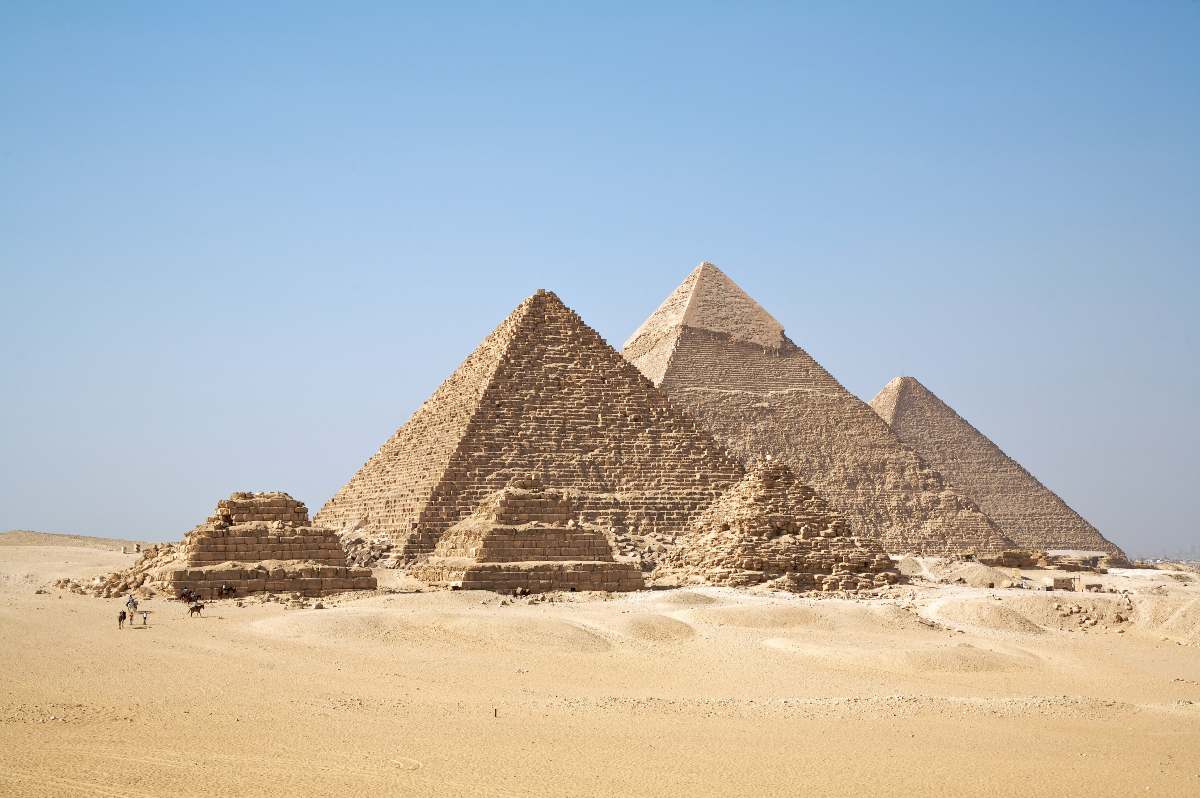
The Old Kingdom reached its peak under the Fourth Dynasty, when pharaohs Khufu, Khafre, and Menkaure oversaw the construction of the Giza pyramid complex, with Khufu’s Great Pyramid remaining the tallest human-made structure in the world for roughly 3,800 years, a record unmatched by any other single building in history. Memphis served as the kingdom’s capital throughout this era, functioning as the political and administrative center of a unified Egypt.
Famous Pharaohs and Their Legacies
Certain pharaohs stand out for reshaping Egypt’s political landscape, religious practices, or cultural legacy in ways that still resonate today. Ramesses II, often called Ramesses the Great, ruled for 66 years during the New Kingdom and left behind more monuments and inscriptions than any other pharaoh, including the temple complex at Abu Simbel. Akhenaten attempted a radical religious revolution by shifting Egypt toward monotheistic worship of the sun disk Aten, a change so disruptive that it was largely reversed after his death.
His son, Tutankhamun, is far better known today not for his brief and largely uneventful reign, but because his nearly intact tomb, discovered in 1922 by Howard Carter, provided an unprecedented look into royal burial practices and wealth. Hatshepsut, one of the few female pharaohs to rule in her own right rather than as a regent, oversaw a period of successful trade expansion and extensive building projects, proving remarkably effective despite ruling in a system built around male succession.
Great Cities of Ancient Egyptian Civilization
Egypt’s major cities shifted in importance across its history, each reflecting the political and religious priorities of its era. Memphis, founded around 3100 BCE near modern-day Cairo, served as the capital during the Old Kingdom and remained an important religious and economic center for centuries afterward. Thebes rose to prominence during the Middle and New Kingdoms, becoming both the political capital and the religious heart of Egypt, home to the massive Karnak and Luxor temple complexes dedicated to the god Amun.
Alexandria, founded much later by Alexander the Great in 331 BCE, became one of the ancient world’s greatest centers of learning, home to the famed Library of Alexandria, and marked Egypt’s transition into the Greco-Roman period. If sprawling ancient capitals interest you, it’s worth comparing Egypt’s scale to some of today’s more surprising urban extremes, like those covered in our smallest city in the world roundup.
Pyramids and Ruins Still Standing Today
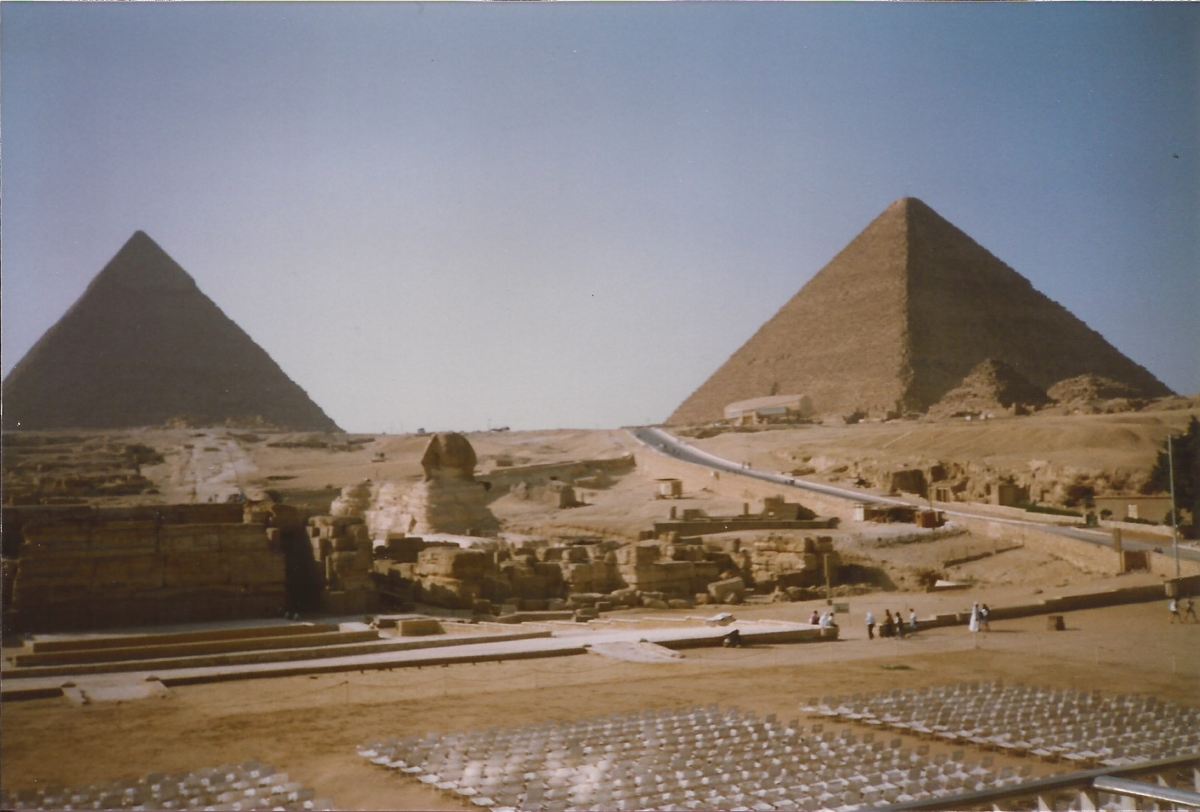
Many of ancient Egypt’s most significant structures have survived for thousands of years, offering direct physical evidence of the civilization’s engineering skill and religious priorities. The Giza pyramid complex, including the Great Pyramid, the Pyramid of Khafre, and the Great Sphinx, remains the most visited and recognizable site, having endured for roughly 4,500 years despite erosion, looting, and the wear of time. The temples at Karnak and Luxor, built over centuries by successive pharaohs, still display intact columns, inscriptions, and statuary that reveal how Egyptian religious architecture evolved.
Further south, the twin temples at Abu Simbel, carved directly into a mountainside under Ramesses II, were so significant that in the 1960s they were relocated in their entirety to avoid submersion by the Aswan Dam’s reservoir a modern engineering effort undertaken specifically to preserve ancient Egyptian achievement for future generations.
Fun Facts About Cairo (Modern Egypt Connection)
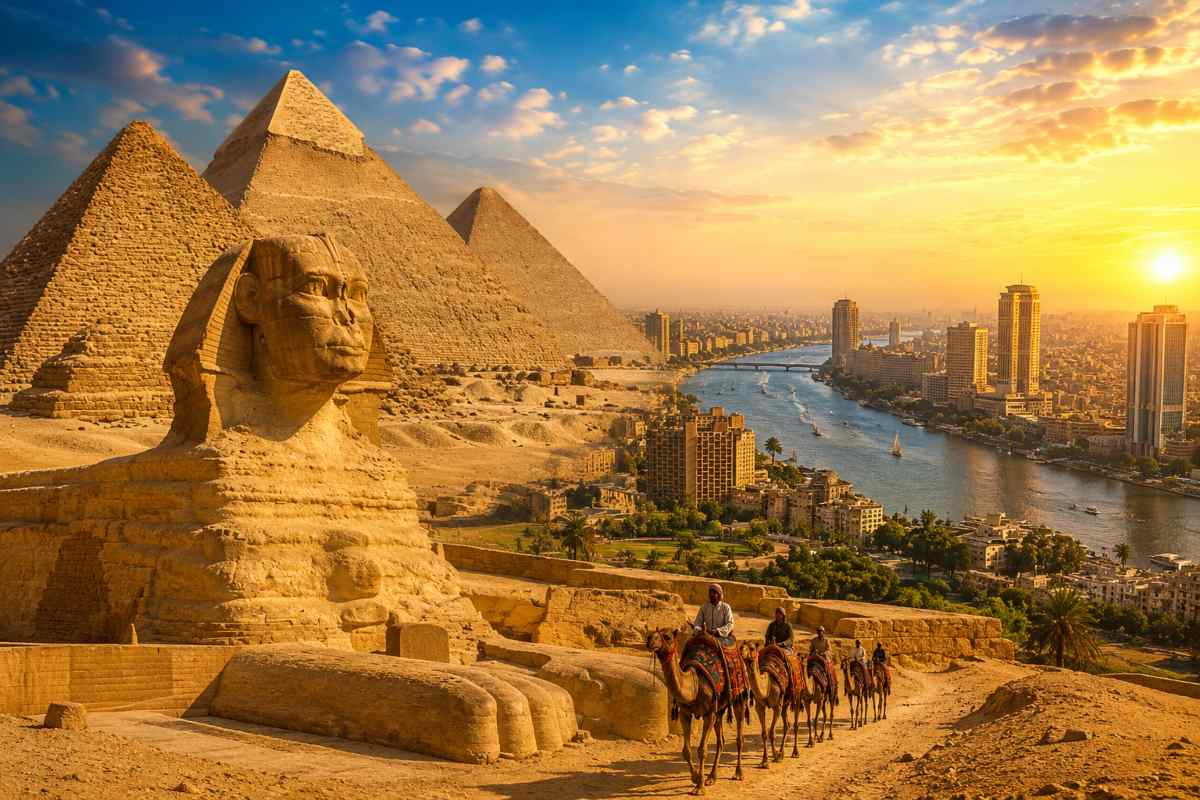
Cairo, Egypt’s capital and largest city, sits just a few miles from the Giza pyramid complex, making it one of the only major world capitals where a resident can look out from a modern skyscraper and see a 4,500-year-old wonder of the ancient world on the horizon.
Established in 969 CE by the Fatimid dynasty, Cairo grew near the site of ancient Memphis and today functions as the living bridge between ancient Egyptian civilization and the modern nation, home to over 20 million people in its greater metropolitan area, making it the largest city in Africa and the Middle East. It’s a scale of urban life worth comparing to other iconic cities, like the history and character explored in our fun facts about Chicago guide.
Cairo’s Egyptian Museum houses one of the world’s largest collections of pharaonic antiquities, including thousands of artifacts recovered from Tutankhamun’s tomb, giving visitors direct access to objects associated with the same dynasties and pharaohs that span ancient Egyptian history. The city’s Islamic Cairo district, meanwhile, is recognized as a UNESCO World Heritage Site in its own right, reflecting a different, later chapter of Egyptian history layered atop the ancient one. This proximity between old and new mosques and minarets, sharing a skyline with pyramids just visible in the distance, is part of what makes Cairo such a distinctive entry point for understanding how deeply ancient Egypt still shapes the country today.
Conclusion
Ancient Egypt’s staying power comes down to a rare combination: a predictable river that made prosperity possible, a belief system that turned that prosperity into monumental architecture and art, and a political structure stable enough to hold it all together for nearly 3,000 years longer than almost any civilization in recorded history. From the exact-to-the-degree alignment of the Great Pyramid to the everyday rhythms of bread, board games, and family life along the Nile, these interesting facts on Egypt show a society that was as practical as it was ambitious, building systems of governance, medicine, and engineering that still inform how we understand civilization itself.
Whether you came here for a quick fact to settle a debate, a deeper look at how ancient Egyptian society was structured, or a starting point for further research into a specific kingdom, pharaoh, or monument, this guide covers the full picture in one place: geography, daily life, culture, politics, economy, and the physical remnants still standing today. And if Cairo’s modern skyline, just miles from 4,500-year-old pyramids, proves anything, it’s that ancient Egypt was never really confined to the past; it’s still very much part of the world we live in.
Frequently Asked Questions(FAQs)
What was ancient Egypt’s social structure?
Ancient Egypt’s social structure was a strict pyramid hierarchy, with the pharaoh at the top as a living god, followed by viziers, priests, and nobles, then scribes, artisans, and merchants, and finally farmers and laborers forming the wide base. This system was viewed as a reflection of Ma’at, the cosmic order Egyptians believed governed the universe.
What was the geography of ancient Egypt?
Ancient Egypt was concentrated along the Nile River in northeastern Africa, divided into Upper Egypt in the south and Lower Egypt’s fertile delta in the north, with desert covering roughly 96% of the surrounding land. This narrow river corridor was where nearly all major cities, farmland, and monuments were built.
What is the climate of ancient Egypt?
Ancient Egypt’s climate was hot and arid, with the Sahara Desert bordering it on both sides of the Nile Valley, making the river’s annual flooding essential to survival. This predictable flood cycle deposited nutrient-rich silt, making large-scale farming possible in an otherwise inhospitable environment.
How long did ancient Egyptian civilization last?
Ancient Egyptian civilization lasted roughly 3,000 years, from around 3100 BCE to 30 BCE when it became a Roman province. This makes it one of the longest continuous civilizations in recorded history, spanning over 30 ruling dynasties.
Who were the most famous pharaohs of ancient Egypt?
Some of the most famous pharaohs include Ramesses II, known for his 66-year reign and extensive monument-building; Tutankhamun, whose nearly intact tomb was discovered in 1922; and Hatshepsut, one of the few women to rule Egypt in her own right. Each left a distinct mark on Egypt’s political, religious, or architectural legacy.
How were the pyramids of ancient Egypt built?
The pyramids were built by paid laborers, not enslaved people, using ramps, sleds, and copper tools to move and shape massive limestone and granite blocks with remarkable precision. The Great Pyramid of Giza was so accurately constructed that its sides align to true north within about 0.05 degrees.
What language did ancient Egyptians speak and write?
Ancient Egyptians spoke Egyptian and primarily wrote using hieroglyphics for religious and monumental texts, alongside a simpler cursive script called hieratic for everyday use. Hieroglyphics remained undeciphered until 1822, when scholar Jean-François Champollion cracked the script using the Rosetta Stone.